CLIMB Works

How to Safely See Black Bears in the Smoky Mountains

This image is by CLIMB Works.

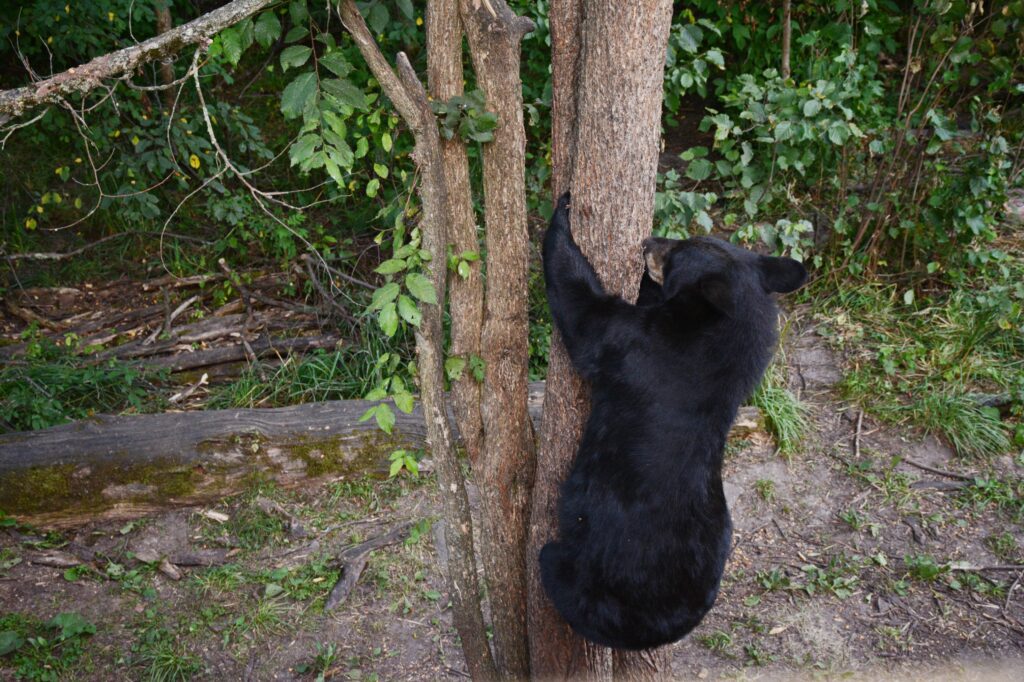
Few things make a Smoky Mountains trip feel real like spotting a black bear moving through the tree line; they’re unhurried, wild, and completely indifferent to the fact that you’re holding your breath. It’s the moment people talk about for years, and it’s one of the main reasons visitors come here. Great Smoky Mountains National Park protects some of the best smoky mountain wildlife habitat in the eastern United States, and with a little planning, your chances of a sighting are better than you might think.

But here’s the thing: bears aren’t performing for anyone. They aren’t on a schedule, and they don’t care about your itinerary. The visitors who see the most wildlife are the ones who show up to the right places, at the right times, with the right expectations. This guide covers all of it: where to go, when to go, what to do if you see one, and how to build a full day around the experience.

Black Bears in the Smoky Mountains: What to Expect

CLIMB Works

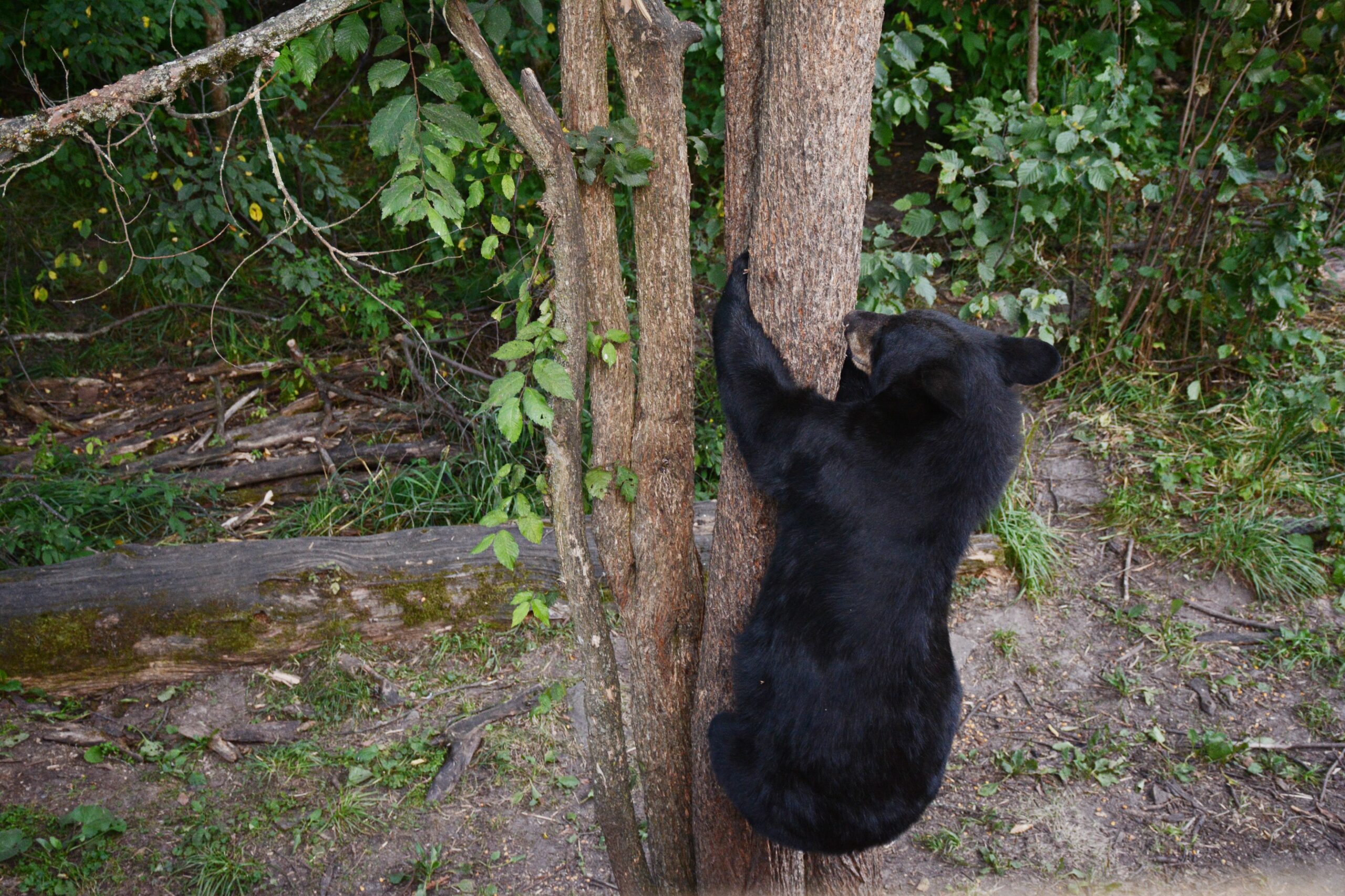
Great Smoky Mountains National Park is home to approximately 1,500 black bears, making it one of the densest black bear populations anywhere in the eastern U.S. The park spans over 800 square miles of protected forest, which works out to roughly two bears per square mile. Those numbers mean your odds of a sighting are genuinely good, especially if you’re strategic about where and when you look.

That said, these are wild animals. Not props. Not photo opportunities that exist for your Instagram grid. Every year, park rangers deal with situations where visitors get too close, try to feed bears, or follow them off-trail for a better picture. This almost always ends badly — for the bear. Bears that become habituated to people and food often have to be relocated or, in worst cases, euthanized. So the first and most important expectation to set is this: a successful bear sighting is one where the bear never knows you’re there, or at least doesn’t care.

Most people searching for black bears in Great Smoky Mountains want the real thing. Not a bear park behind a fence. Not a carved wooden statue outside a Gatlinburg gift shop (though you’ll see plenty of those too). The good news is that this park delivers. The terrain, the food sources, and the sheer size of the protected area mean that bears roam freely through valleys, ridgelines, and — yes — sometimes right along the road. Your job is to be in the right spot, be patient, and keep a respectful distance.

One thing we’ve noticed from talking with guests at our location on Branam Hollow Road is that first-time visitors often underestimate how close the wildlife really is. You don’t have to hike ten miles into the backcountry for a sighting. Bears forage in the lower elevations, cross roads, and occasionally wander through developed areas. The park isn’t a zoo, but it isn’t the remote Alaskan wilderness either. It’s somewhere in between, and that’s what makes it so accessible.

Best Spots to See Black Bears Safely

If you only have a day or two and want to maximize your chances of seeing bears, focus on these locations. They’re ranked roughly by reliability and ease of access:

  • Cades Cove: The most reliable wildlife viewing loop in the entire park, with frequent bear sightings especially at dawn and dusk
  • Roaring Fork Motor Nature Trail: A quieter, wooded drive near Gatlinburg with regular bear activity in spring and summer
  • Newfound Gap Road: Higher elevation roadside sightings, particularly productive in fall

Cades Cove

CLIMB Works

Photo by Luke Miller

This is the one everyone tells you about, and for good reason. Cades Cove is an 11-mile one-way loop road through a broad, open valley surrounded by mountains. The combination of meadows, forest edges, and relatively low elevation makes it prime bear habitat. Bears feed on berries, grasses, and insects along the tree line, and the open sightlines mean you can often spot them from your car without leaving the road.

The catch? Cades Cove is popular. Very popular. During peak season (summer and especially October), traffic on the loop can slow to a crawl. When someone spots a bear, a “bear jam” forms; you’ll have cars stopping, people getting out, and phones raised. It’s part of the Cades Cove experience, for better or worse. Our advice: arrive before 8 a.m. The earlier you get there, the fewer cars you’ll encounter and the more active the wildlife will be. Cades Cove is about an hour’s drive from Gatlinburg, so plan accordingly.

Roaring Fork Motor Nature Trail

CLIMB Works

Photo by Jeff Wiles

If Cades Cove is the main stage, Roaring Fork is the intimate acoustic set. This one-way motor trail starts near downtown Gatlinburg and winds through dense hardwood forest. It’s slower, narrower, and much less trafficked than Cades Cove. Bears are frequently spotted along the roadside, especially in spring when they’re foraging at lower elevations after winter. The canopy is thick here, so sightings can feel more sudden. You might round a curve and find a bear just 30 yards off the road, turning over logs for grubs.

Because it’s so close to Gatlinburg (less than a 10-minute drive to the trailhead), Roaring Fork is easy to pair with other things to do in Gatlinburg. It’s a great option for families who don’t want to commit to the full Cades Cove loop.

Newfound Gap Road

CLIMB Works

Photo by Jeremy Li

The main road through the park, connecting Gatlinburg to Cherokee, North Carolina, climbs to over 5,000 feet at Newfound Gap. Bears are sometimes spotted along the roadside at higher elevations, particularly during fall when they’re feeding on acorns and wild cherries before winter. Sightings here are less predictable than Cades Cove, but the drive itself is worth making regardless. Pull-offs and overlooks give you a chance to scan the forest, and the elevation change means you pass through multiple habitat types in a single drive.


A Note About Location

Our CLIMB Works Smoky Mountains location sits at 155 Branam Hollow Rd in Gatlinburg, directly across from the national park. We mention this not just as a plug (okay, partly as a plug) but because it’s actually useful context. If you’re basing your wildlife-watching day out of Gatlinburg, you’re already close to Roaring Fork, the Cherokee Orchard area, and the Sugarlands Visitor Center. Cades Cove requires more of a commitment, but the other spots are practically in your backyard.

CLIMB Works

Best Time of Year to Spot Bears

Seasonal timing matters more than most visitors realize. Bears aren’t equally active year-round, and each season offers a different kind of Smoky Mountain wildlife viewing experience. Understanding the rhythm helps you plan not just which month to visit, but what to expect when you get here.

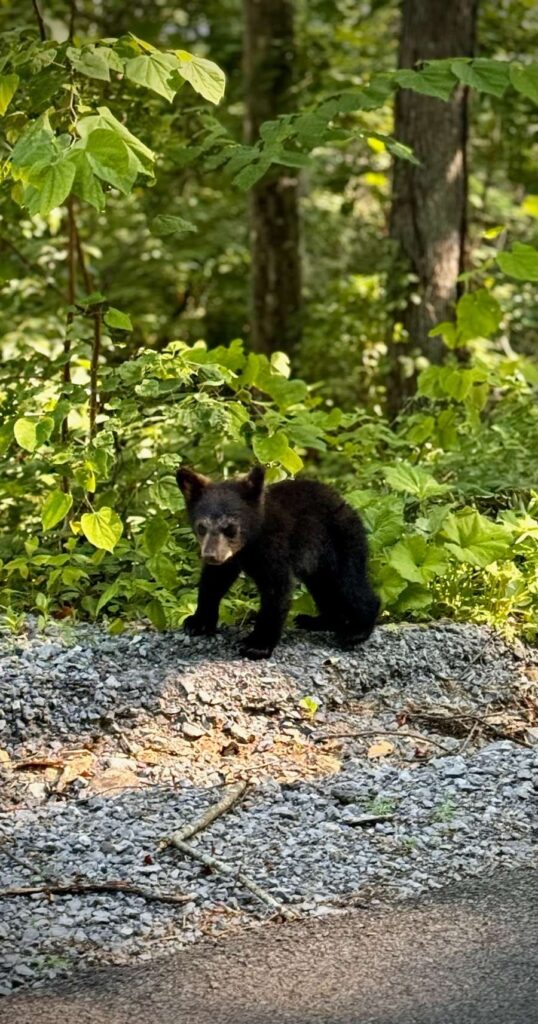
Spring (April–May): This is when mother bears emerge from dens with cubs, and it’s one of the most exciting times for wildlife watching. Bears are hungry after months of torpor and actively foraging at lower elevations where food greens up first. You’ll see them along roads, near streams, and in meadows. Cubs are small, curious, and endlessly entertaining to watch from a distance. Spring also brings wildflower blooms, which makes the best time to visit the Smoky Mountains arguments even more interesting.

Summer (June–August): Bears range more widely in summer, spreading across the park as food sources become abundant at all elevations. Sightings are still common, but less concentrated than spring. Early morning and evening are your best windows, as midday heat sends bears into the shade (most visitors too). The upside of summer is longer daylight hours, giving you more time at dawn and dusk.

Fall (September–November): This is prime time. Bears enter a phase called hyperphagia, which is a biological drive to consume as many calories as possible before winter. They eat 20,000+ calories a day during this period, which means they’re active, visible, and less cautious about foraging near roads and trails. October is the peak of both bear activity and fall foliage in the Smokies. Our guides and staff see the most bear activity around this time, and it lines up with the leaf season that draws visitors from across the Southeast. A local detail worth knowing: fall color peaks at higher elevations first and moves downhill over several weeks. So if you’re visiting early October, look up. By late October, the valleys are on fire.

Winter (December–March): Bears enter torpor (not true hibernation) and are generally denned up at higher elevations. Sightings are rare but not impossible, especially on unseasonably warm days when bears may briefly emerge. Winter is the quietest season in the park and has its own appeal — no crowds, frost on the mountains, clear visibility. But if bears are your primary goal, don’t plan around winter.


Best Time of Day to See Wildlife

Dawn and dusk. That’s the short answer, and it applies to nearly every wildlife species in the Smokies, not just bears. Animals are crepuscular, meaning they’re most active in the transitional light at the edges of the day. If you’re at Cades Cove by 7 a.m. in summer, you might have the loop nearly to yourself, and the meadows will be alive with deer, turkeys, and bears moving along the tree line.

Midday sightings happen. We’ve heard plenty of guests say they saw a bear at noon on Roaring Fork or along Newfound Gap Road. But those sightings are the exception, not the rule. If you’re building a day around wildlife watching, plan to be in the field early, take a break during the middle of the day (perfect time for lunch and an activity), and then head back out in the late afternoon. This rhythm also happens to be the most comfortable way to spend a Smokies day, especially in summer when midday heat and humidity can be intense.

For Cades Cove specifically, an early arrival isn’t just about wildlife, but also logistics. During fall weekends, the one-way loop can take two to three hours because of traffic. An early start means you’ll see more animals and spend less time idling behind a line of SUVs.

Wildlife Safety: How to Behave Around Black Bears

CLIMB Works

Photo by Riedelmax

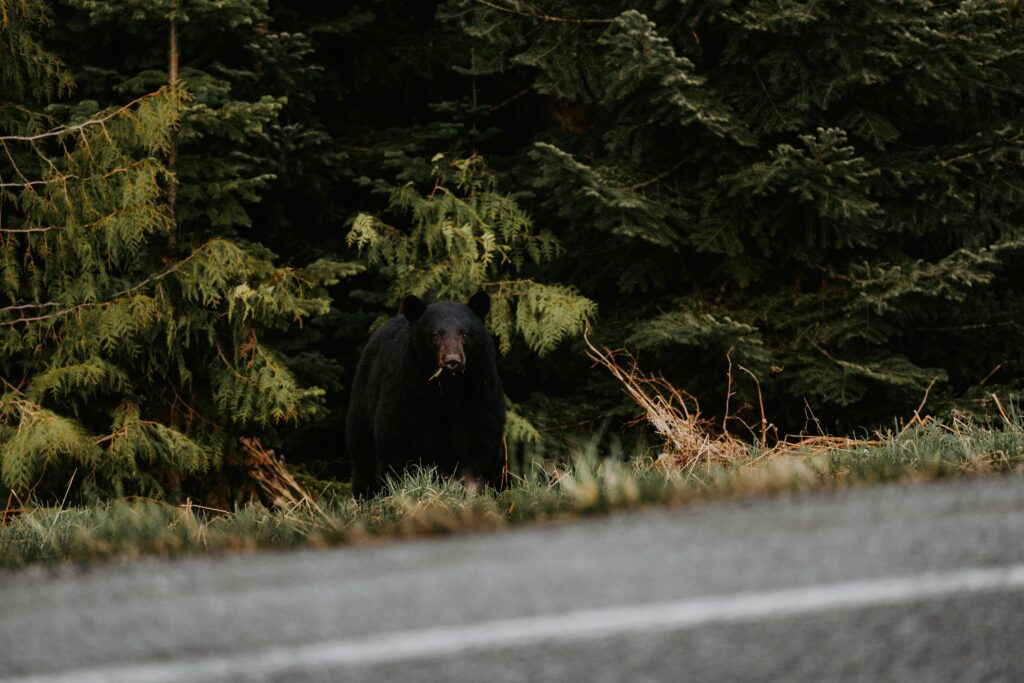
The National Park Service requires that visitors maintain a minimum distance of 50 yards from all bears. That’s 150 feet, or roughly half a football field. This isn’t a gentle suggestion. It’s a regulation, and violating it can result in fines up to $5,000 and even arrest. More importantly, it’s the single most effective thing you can do to protect both yourself and the bear.

Here’s what responsible bear viewing looks like in practice:

Never feed bears. This is the cardinal rule. A bear that associates humans with food becomes a dangerous bear, and a dangerous bear often becomes a dead bear. Don’t leave food out at picnic areas. Don’t toss apple cores out the car window. Don’t approach a bear with a granola bar because it “looked hungry.” Park rangers have had to relocate and euthanize bears because of human feeding, and it’s entirely preventable.

If a bear approaches you, don’t run. Stand your ground, make yourself look large (raise your arms, stand on a rock), and make noise. Talk loudly, clap, bang pots together if you’re at a campsite. Black bears are generally not aggressive toward humans, but they are curious and can be bold, especially if they’ve been fed before. Backing away slowly while facing the bear is the textbook response. Never turn your back or run because that can trigger a chase instinct.

Store food properly. The park requires that all food, coolers, and scented items be stored in vehicle trunks or bear-proof containers when not in active use. This applies at campsites, picnic areas, and trailhead parking lots. Bears have excellent noses, they can smell food from over a mile away.

In your vehicle, keep windows up if a bear approaches. Don’t get out for a closer look. Use binoculars or a zoom lens. If you stop for a roadside sighting, pull completely off the road and keep your engine running so you can move if needed. The “bear jam” situation at Cades Cove can feel festive, but treat it with respect. People have been charged by bears after getting too close in exactly these scenarios.

For the most comprehensive safety guidelines, the National Park Service bear safety page is the authority. Read it before your trip, especially if you’re camping or backcountry hiking.

Other Wildlife You Might See in the Smokies

Black bears get all the attention, but the Smokies host a staggering range of wildlife. Focusing only on bears means missing some of the park’s most memorable encounters.

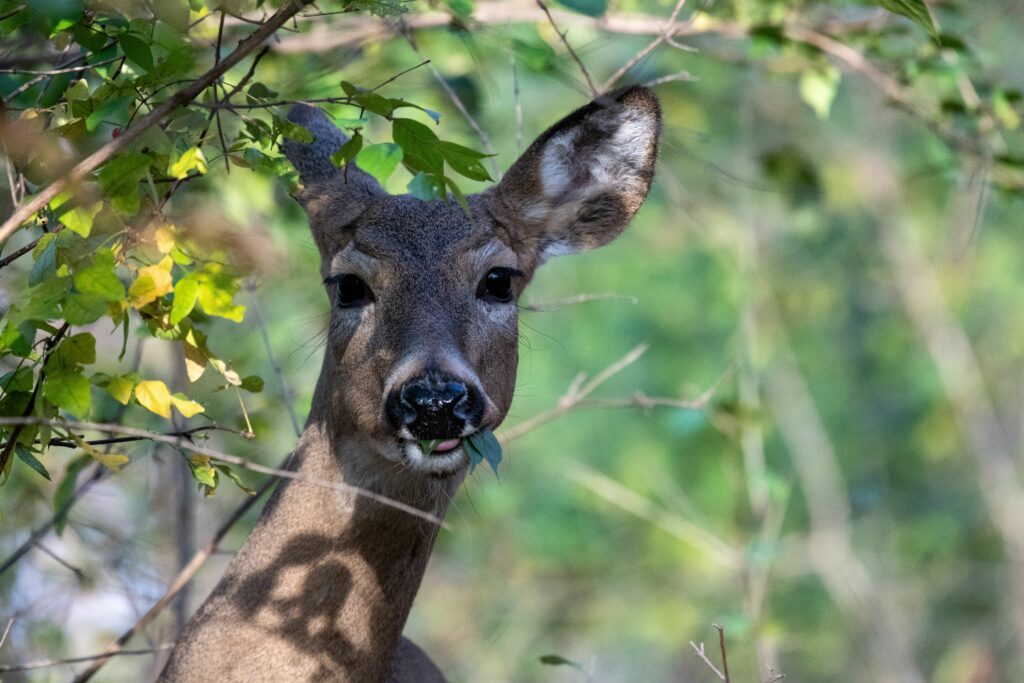
White-tailed deer are everywhere, especially in Cades Cove. You’ll see them grazing in the meadows at dawn, often within easy viewing distance from the road. They’re so common that seasoned visitors barely slow down for them anymore, but watching a doe with two fawns in a misty meadow at sunrise never actually gets old.

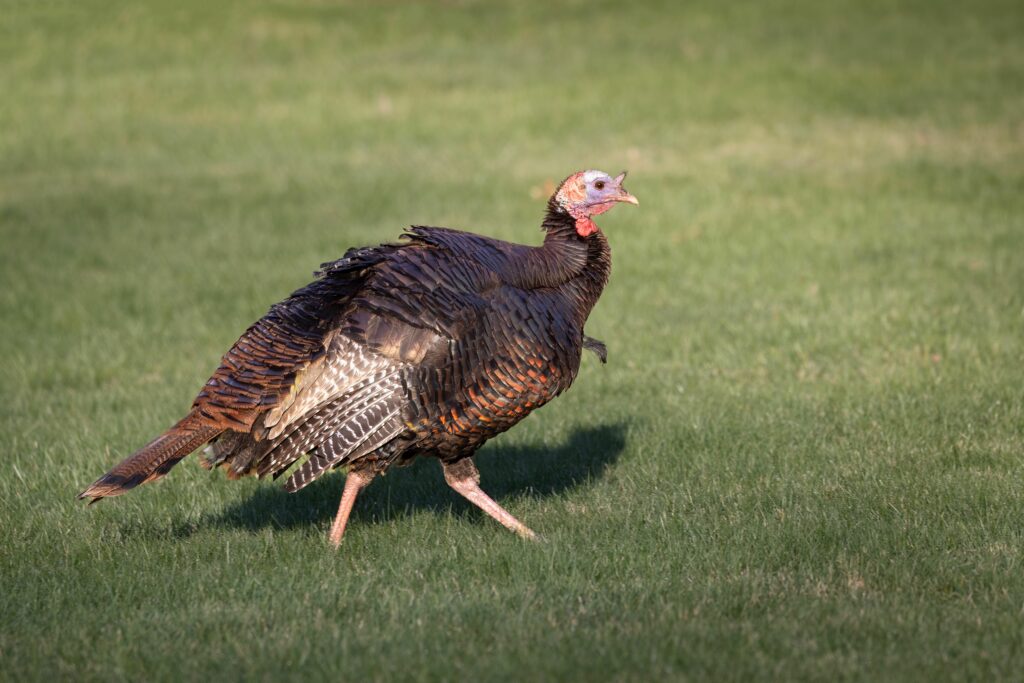
Wild turkeys strut through Cades Cove and along several park roads. Males display their full fan during spring mating season, which is genuinely impressive if you haven’t seen it in person. They’re bold, loud, and surprisingly large up close.

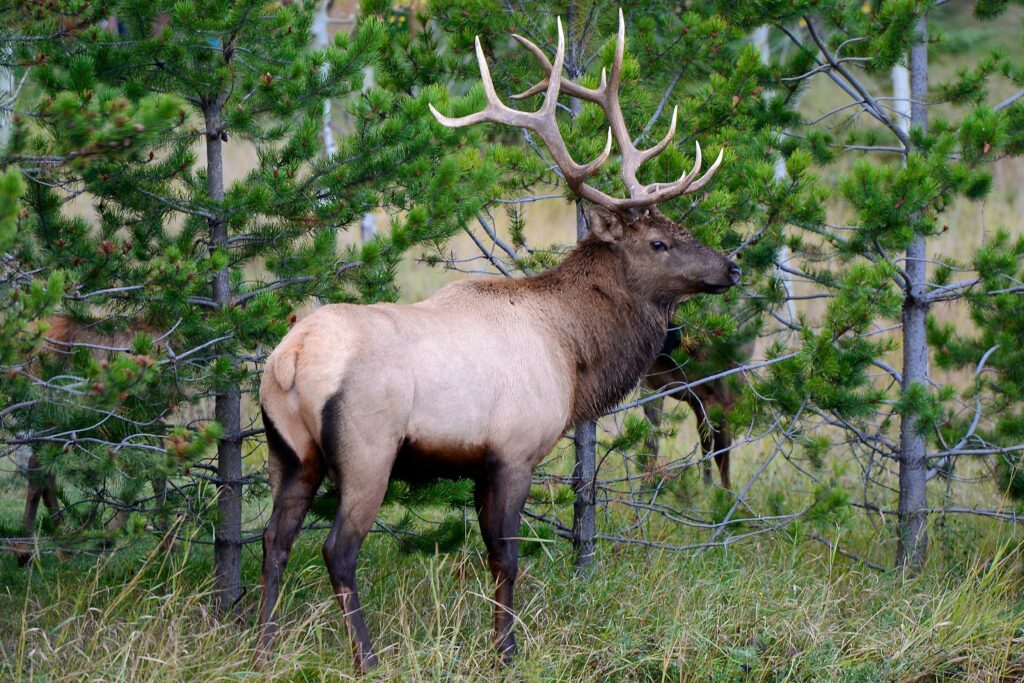
Elk were reintroduced to the park in 2001, and the herd at Cataloochee Valley has grown steadily. Bull elk during fall rut (September–October) are a spectacle; you’ll see massive animals bugling across the valley at dawn. Cataloochee is on the North Carolina side of the park and requires a winding gravel road to reach, but the experience is worth the drive. Get there early. Elk viewing has become almost as popular as bear watching.

There are over 240 species of birds that call the Smokies home at some point during the year. The park is one of the best birding destinations in the Southeast, though it rarely gets that reputation. Warblers, woodpeckers, hawks, owls, and the occasional peregrine falcon are all here. Spring migration brings waves of songbirds through the lower elevations, and higher ridgelines host species typically found much farther north.

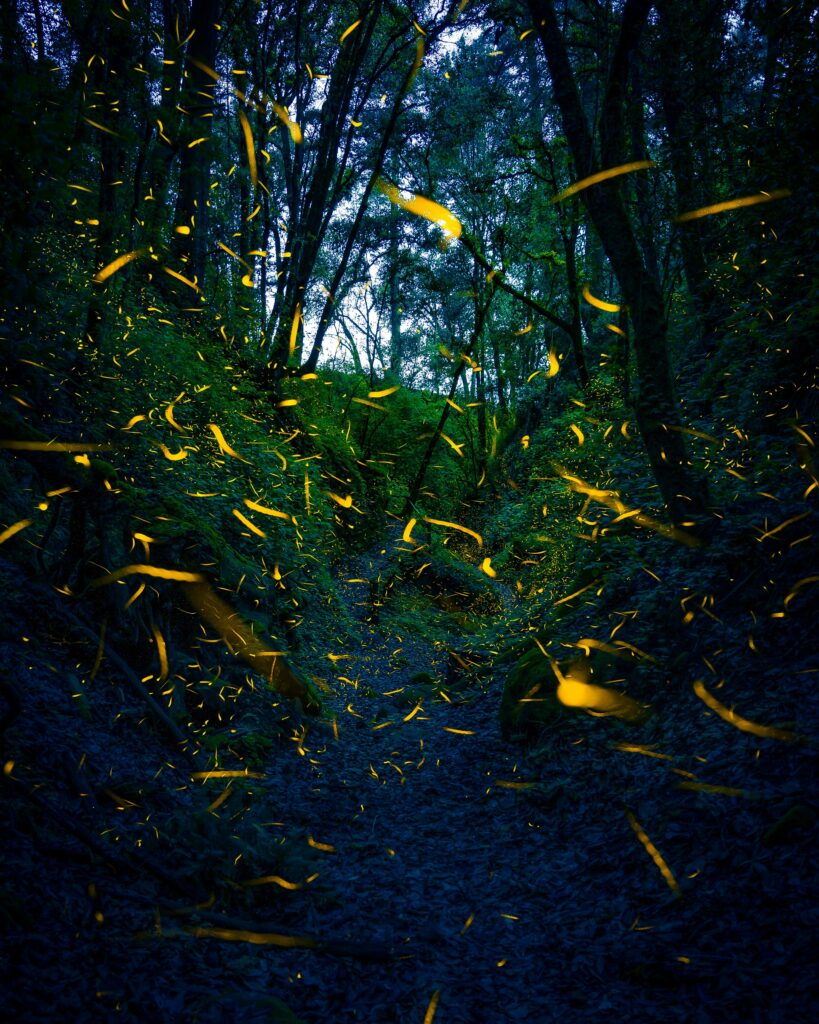
Synchronized fireflies at Elkmont in late May through early June might be the most magical wildlife event in the entire park. For about two weeks, a species of firefly (Photinus carolinus) flashes in perfect unison, creating waves of light across the forest floor after dark. The park runs a lottery system for vehicle passes during the display, and it sells out quickly. If your timing lines up, it’s worth entering the lottery. There’s nothing else quite like it.

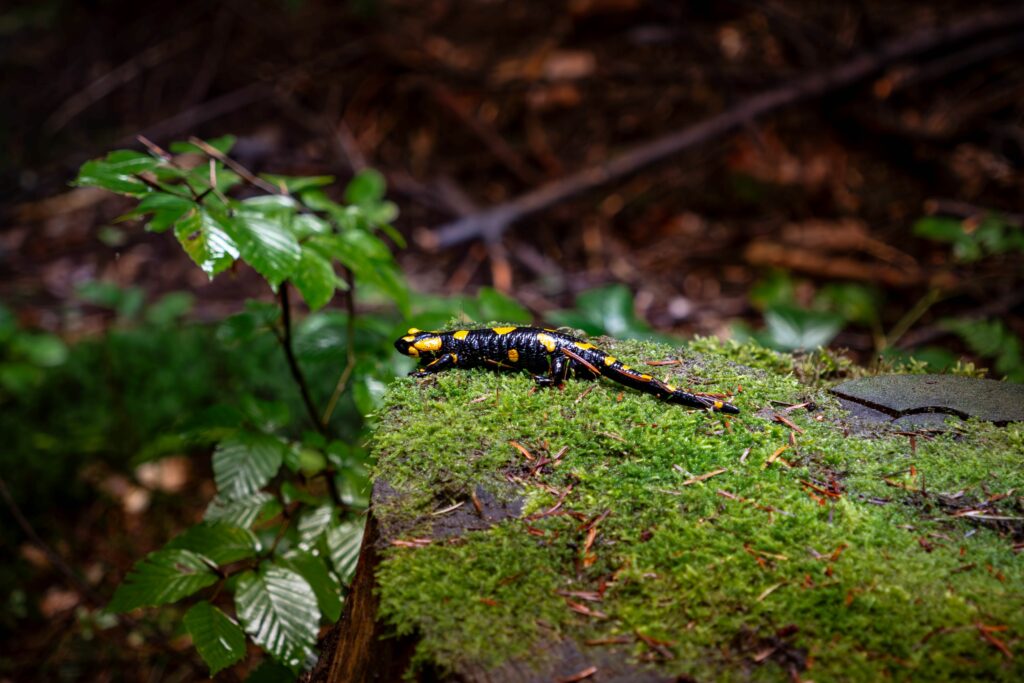
Salamanders — the Smokies are sometimes called the “Salamander Capital of the World,” with over 30 species. You won’t see them from your car, but if you hike near any stream or waterfall, flip a few rocks (gently, and put them back) and you’ll likely find one. The red-cheeked salamander is found nowhere else on Earth.

CLIMB Works

Photo by Michal Robak

All of this Smoky Mountain wildlife viewing — bears, elk, fireflies, salamanders — exists within a single national park. The biodiversity here is genuinely unusual, and it’s one of the reasons the Smokies draw over 12 million visitors a year.

Make It a Full Day: Pair Wildlife Watching with Ziplining

Here’s how we’d plan the perfect wildlife-and-adventure day in the Smokies, based on what we see work for guests over and over again.

Morning: Wildlife viewing. Hit Cades Cove at dawn for the best bear and deer sightings, or head to Roaring Fork Motor Nature Trail if you want to stay closer to Gatlinburg. Spend two to three hours in the field. Bring binoculars, a camera with a zoom lens, water, and snacks you can eat in the car (no food outside the vehicle in bear territory). If you’ve got kids, Laurel Falls is a strong alternative; the paved 2.6-mile round trip is manageable for most ages, and the new viewing platform makes it worth the walk.

Midday: Lunch break. Head back into Gatlinburg for lunch. You’ve been up since before dawn. You’ve earned pancakes, or barbecue, or whatever sounds right. This is also a good window for browsing shops or letting kids burn energy.

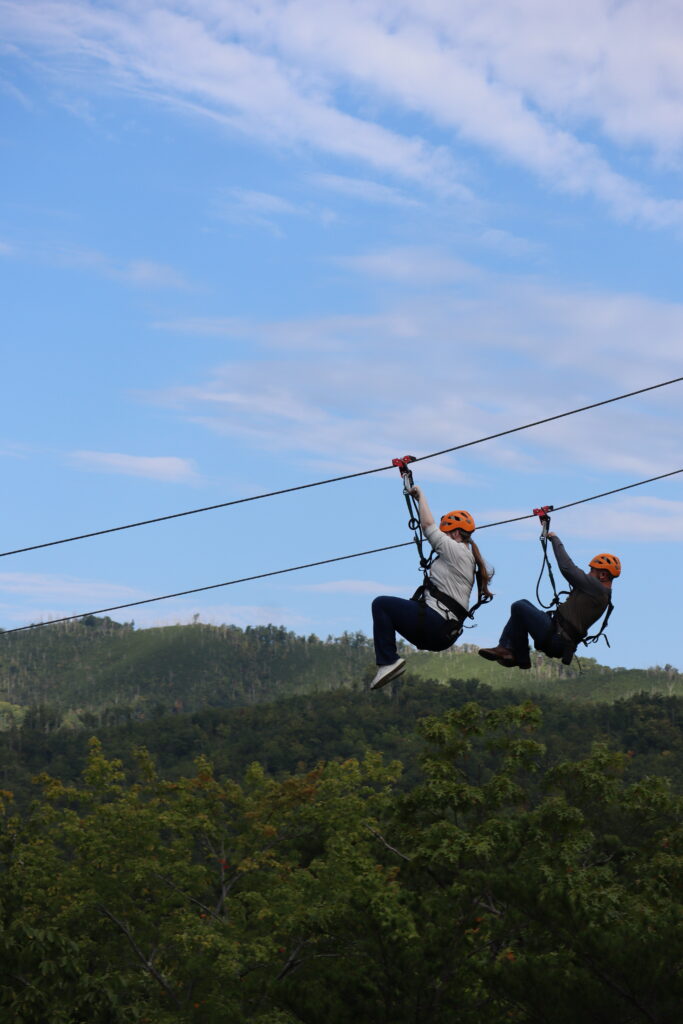
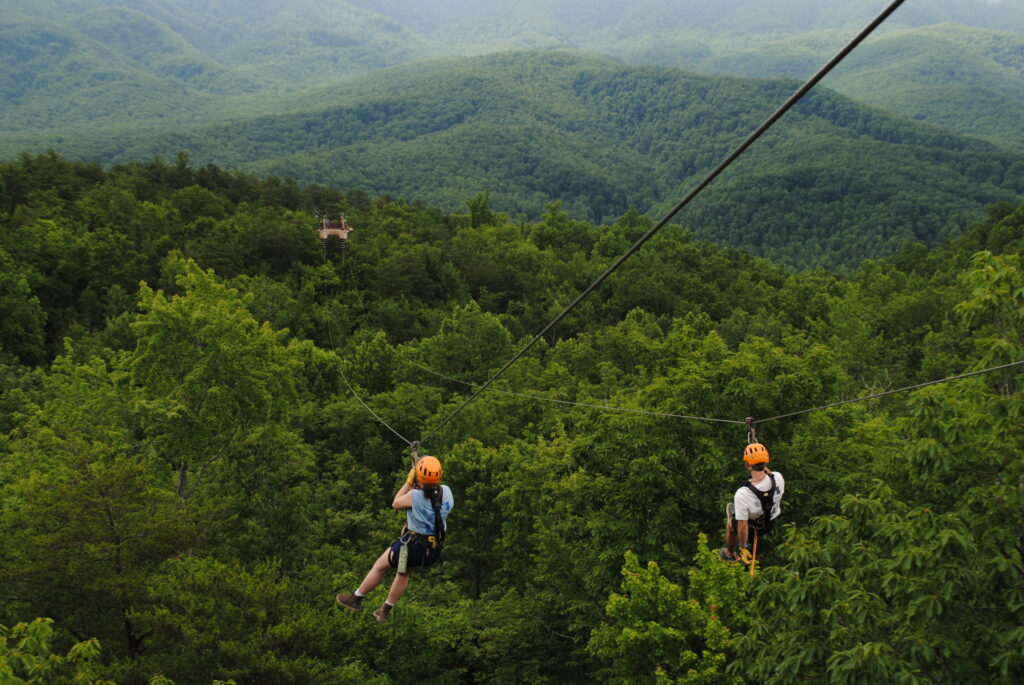
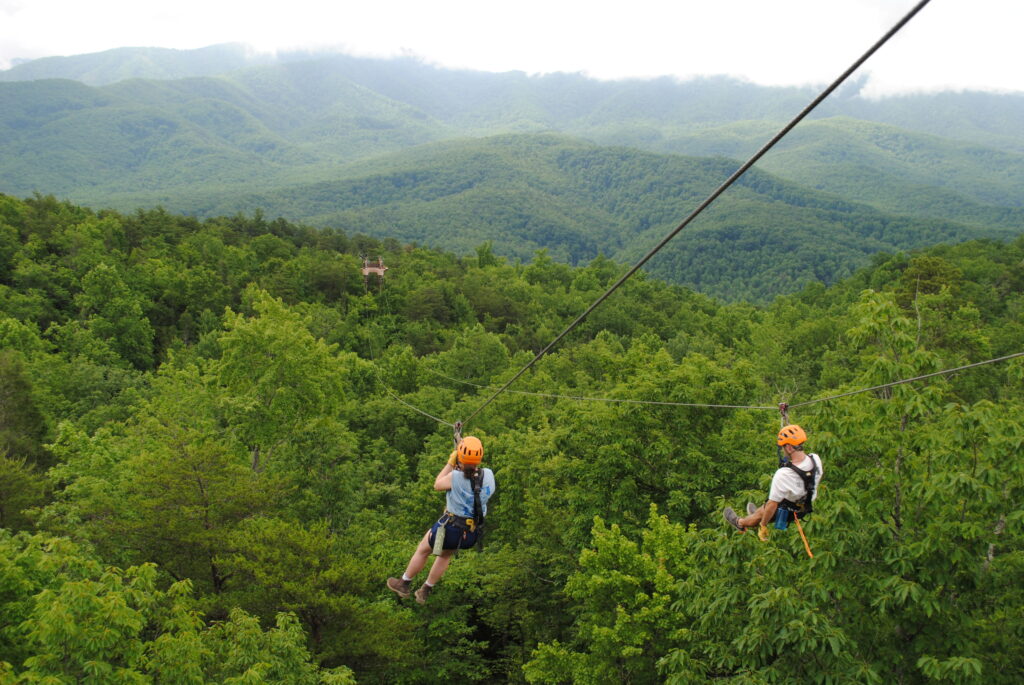
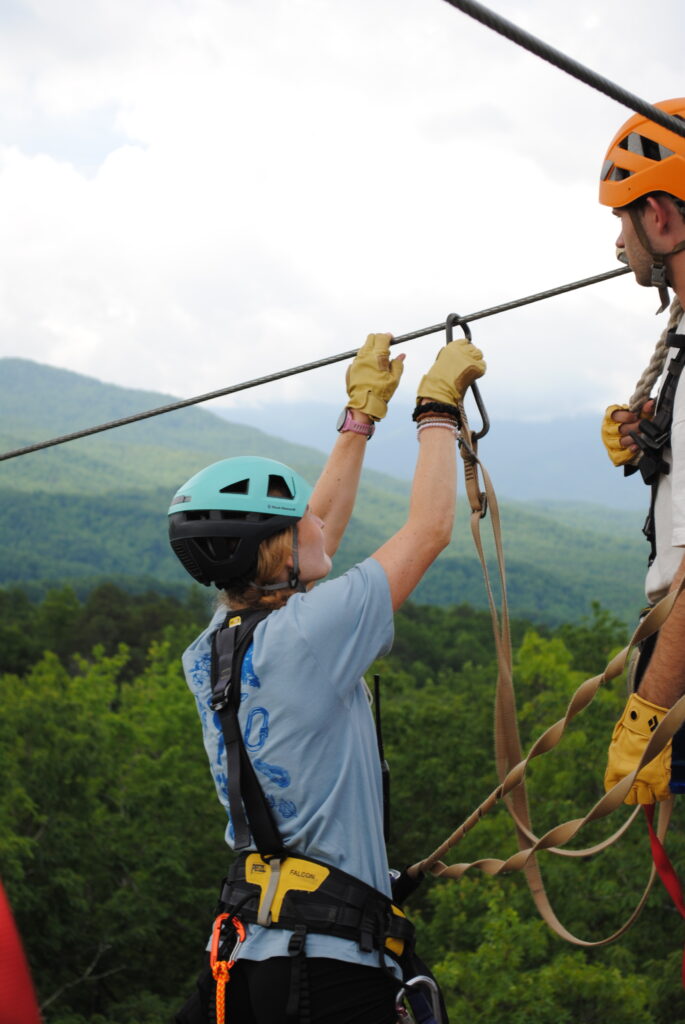
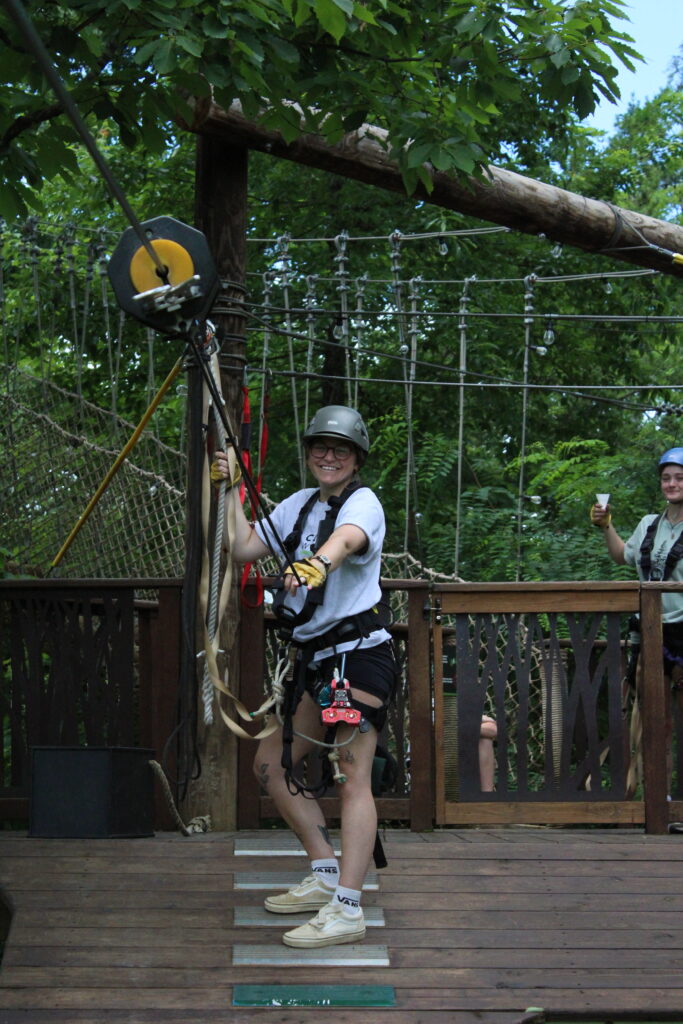
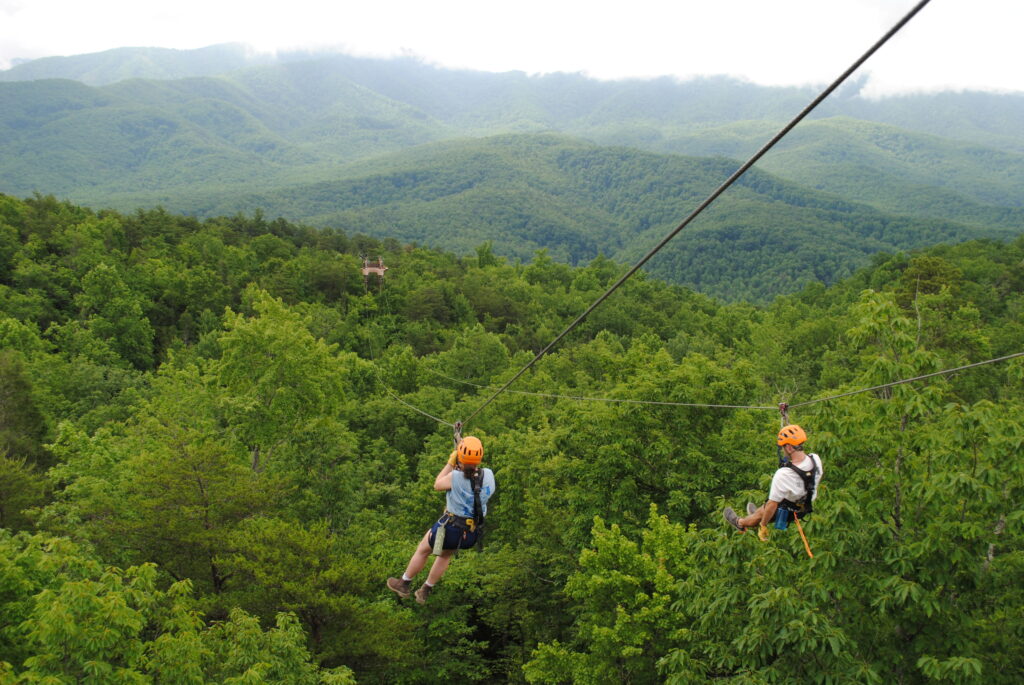
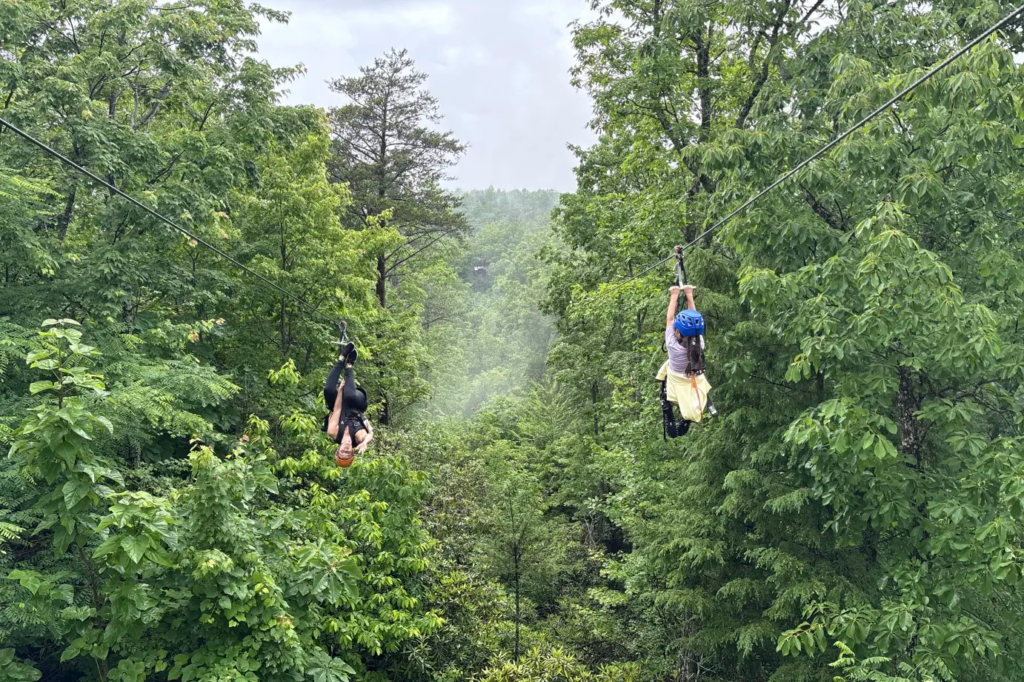
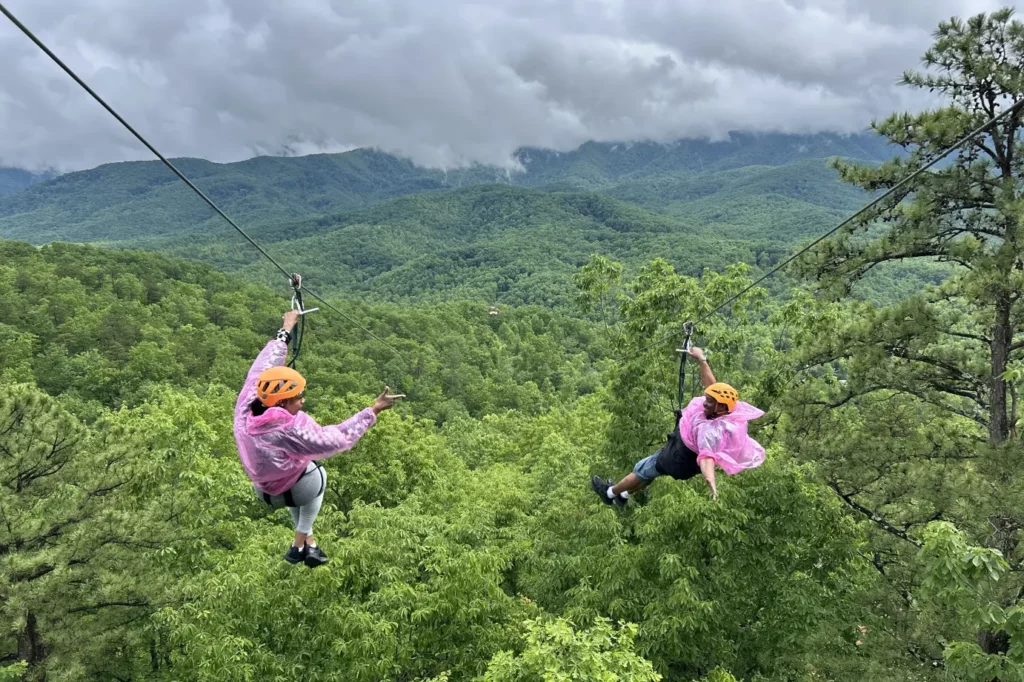
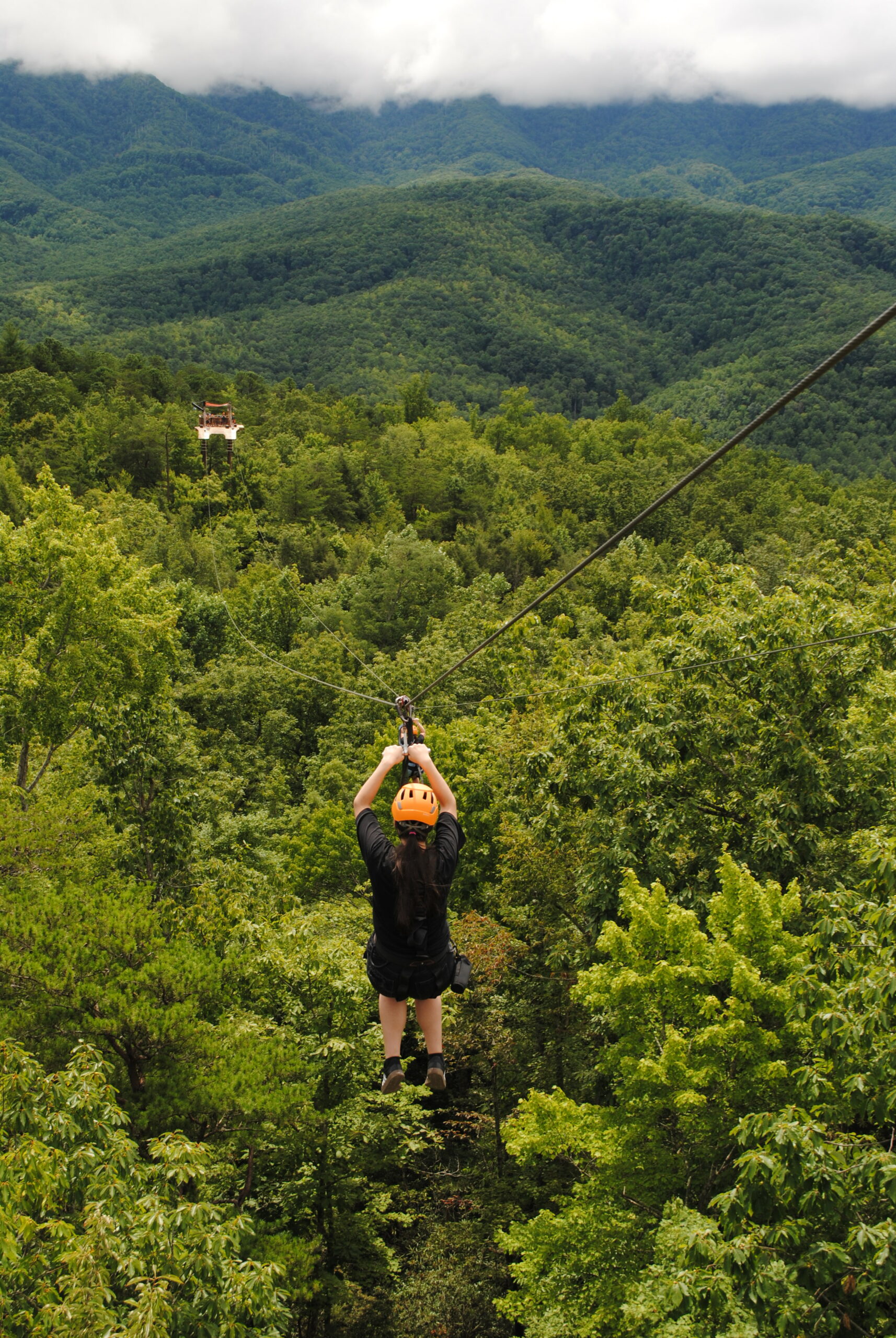
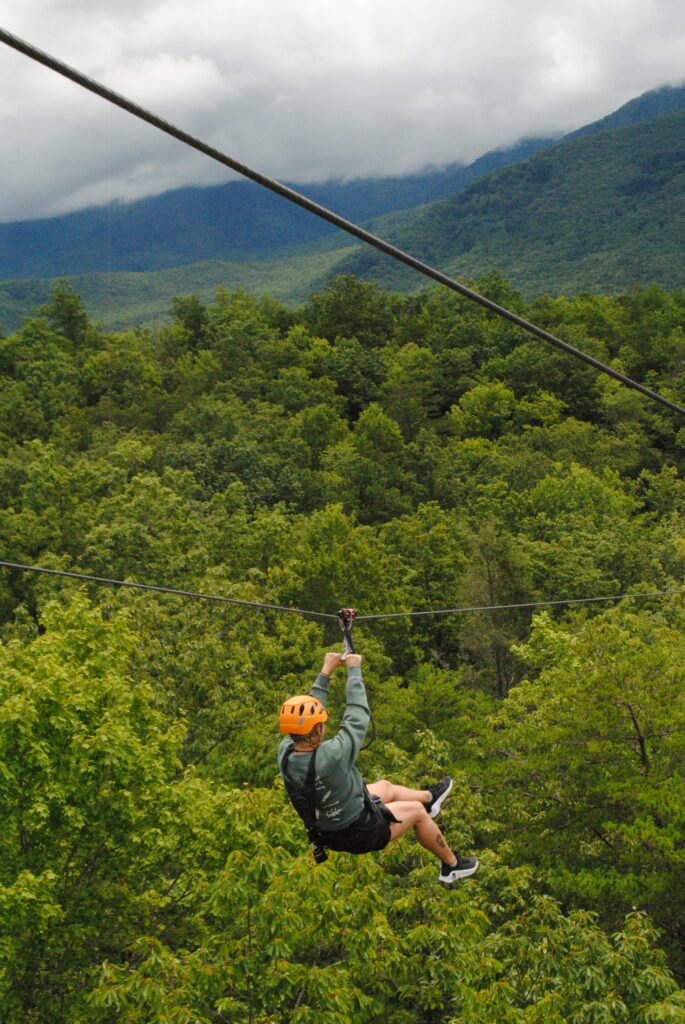
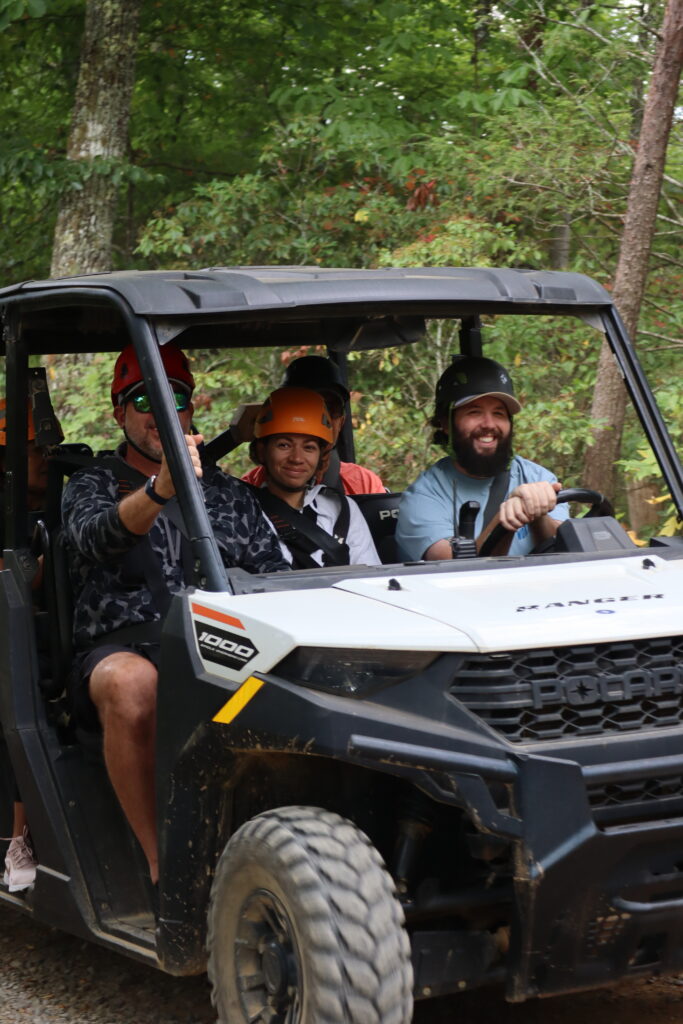
Afternoon: Ziplining. The Mountaintop Zipline Tour at CLIMB Works runs about two hours and packs in 11 adventures, including six dual side-by-side ziplines, four aerial bridges, a controlled rappel, and a scenic UTV ride that gains over 400 vertical feet of elevation. It’s a completely different way to experience the same forested landscape you were scanning for bears that morning. From the elevated zipline platforms, you’re looking out over canopy that rolls right into Great Smoky Mountains National Park.

CLIMB Works


A few practical notes: CLIMB Works operates rain or shine, closing only for lightning or sustained winds above 35 mph. No hand braking is required, our innovative braking system handles everything, so the experience is accessible to ages 5 and up (with weight and height minimums). Arrive 40 minutes early for check-in. Late arrivals forfeit the tour with no refund, so build in buffer time. Closed-toe shoes are required, but we have rentals available. Reservations are strongly recommended, especially during peak season. Book at least five days ahead in summer and October. You can reserve online anytime at our website or call (865) 325-8116.

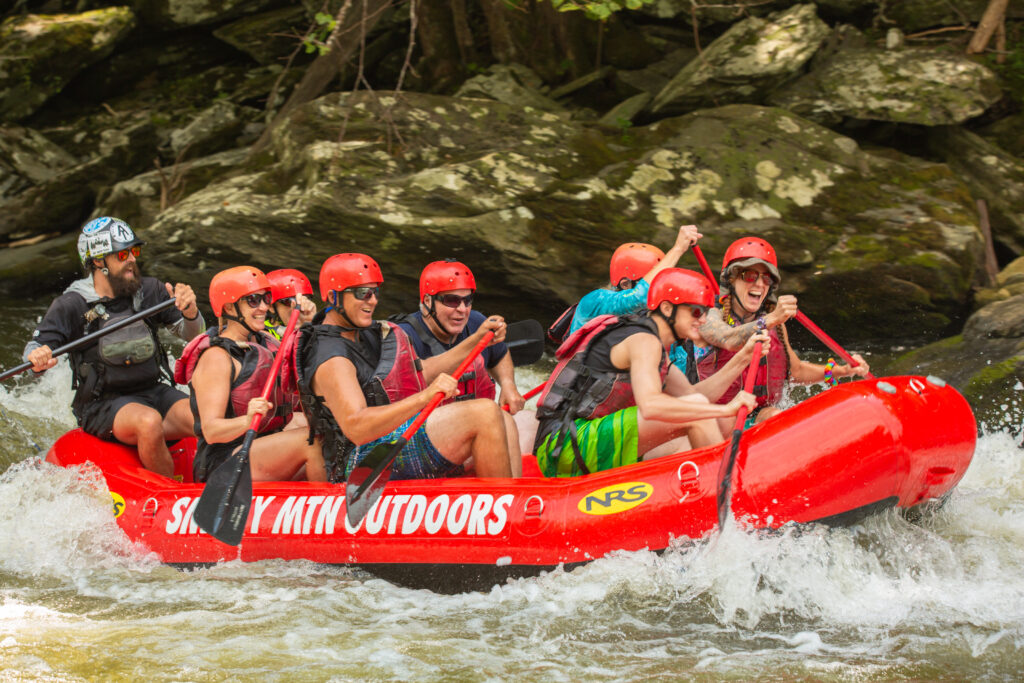
Want to add water to the mix? Smoky Mountain Outdoors rafting is our rafting partner, and combo packages are available. A morning of wildlife watching, an afternoon zipline, and an evening float — that’s a full Smokies day that’s hard to beat.

The Smoky Mountains are one of the few places in the eastern U.S. where you can reliably see black bears in their natural habitat. The experience will require some planning, some patience, and a healthy respect for the animals and the landscape they live in. But that’s exactly what makes a genuine sighting so memorable. It’s wild, it’s unscripted, and it’s yours.

If you’re building a day around smoky mountain wildlife, start early in the field and leave room for adventure in the afternoon. Our Mountaintop Zipline Tour is right across the street from the park, making it a natural next chapter after a morning spent scanning the tree line for bears. Two different ways to see the same mountains, and both worth every minute.

CLIMB Works

The BEST Fourth of July Itinerary Near Gatlinburg, TN

This image is by CLIMB Works.

The Smokies on the 4th of July hit different. There’s something about fireworks echoing off ancient mountains, the smell of barbecue drifting through a town nestled in a valley, and that particular shade of summer green that only happens in Southern Appalachia. If you’re searching for the best things to do in Gatlinburg and Pigeon Forge over Independence Day weekend, you’ve landed in the right place — because we live here, we work on this mountain, and we’ve watched the holiday unfold from 155 Branam Hollow Road more times than we can count.

This isn’t a generic list of “top 10 attractions.” This is an actual itinerary, designed to help you squeeze every ounce of fun out of the holiday without spending half the day stuck in traffic or wandering around wondering what to do next. We’ll anchor the day around the things we know best (ziplining, obviously), then fill in the gaps with the dining, events, and fireworks intel that only comes from being on the ground.

Here’s your day at a glance:

  1. Morning (9:00–11:00 AM): Mountaintop Zipline Tour at CLIMB Works — beat the heat and the crowds
  2. Midday (12:00 AM–2:00 PM): Lunch and a stroll through downtown Gatlinburg during peak 4th of July energy
  3. Afternoon (3:00–5:00 PM): Whitewater rafting with Smoky Mountain Outdoors to cool off
  4. Evening (6:00–11:00 PM): Fireworks, drone show, DJ dance party, and the Gatlinburg Space Needle finale

Let’s break it all down.

Why the 4th of July Is the Best Time to Visit the Smokies

CLIMB Works

The 4th of July in Gatlinburg and Pigeon Forge is an event unto itself. Gatlinburg hosts the nation’s first Independence Day celebration, kicking off at 12:01 AM on July 4th with its famous Midnight Parade. Throughout the day and evening, both towns put on fireworks displays, live music, patriotic festivals, and enough red-white-and-blue energy to make you feel like you’ve walked into a Norman Rockwell painting (with funnel cakes). Pigeon Forge runs its annual Patriot Festival with live entertainment and family activities. Gatlinburg’s evening culminates in a drone show and a massive fireworks display launched from the Space Needle. There’s no shortage of things to do in Gatlinburg and Pigeon Forge during this stretch.

Now, the honest part: it’s crowded. The 4th of July weekend draws some of the largest crowds of the entire year to the Smokies. Traffic on the Parkway can slow to a crawl by mid-afternoon, parking fills up fast, and popular restaurants develop hour-long waits. We see it from our property every year; the steady stream of cars heading into the national park, the parking lots along Branam Hollow filling up earlier and earlier as the week goes on.

The good news? You can beat most of it with smart timing. Mornings are your secret weapon. If you start your day early, you’ll be done with your first adventure before the bulk of visitors even finish breakfast. By the time the Parkway is bumper-to-bumper at 2:00 PM, you’ll be floating down a river somewhere or posted up with a cold drink watching the chaos from a safe distance. The itinerary below is built around that principle: front-load the active stuff, save the evening for the celebrations, and let the middle of the day flex around lunch and whatever catches your eye.

Your Complete 4th of July Itinerary Near Gatlinburg

Think of this as a single packed day that you can easily stretch across two days if you’d rather take things at a slower pace. Some families hit every stop on July 4th itself. Others use July 3rd for the adventure activities and save the 4th for the parade, downtown exploring, and fireworks. Either approach works, but the key is having a plan so you’re not improvising in a town of 100,000 visitors.

Morning: Start With the Mountaintop Zipline Tour at CLIMB Works

CLIMB Works

Here’s our strong suggestion: make ziplining your first activity of the day. Not because we’re biased (okay, a little), but because early morning slots are genuinely the best time to experience the Mountaintop Zipline Tour. The air is cooler, the light is softer, and you’ll be on the mountain before the midday heat settles in. The 9:00 AM tours tend to be the most comfortable and the least crowded, even during peak holiday weekends.

The Mountaintop Zipline Tour packs 11 adventures into roughly two hours. You’ll ride six dual side-by-side ziplines (so you can fly next to your partner, your kid, or your best friend), cross four aerial bridges high above the forest floor, experience a controlled rappel, and take a scenic UTV ride that gains over 400 vertical feet up the mountain. That UTV ride alone is worth showing up for; it carries you up through the hardwood forest until you’re looking out over the national park canopy from an elevation most visitors never reach. The views on a clear July morning, with mist still clinging to the ridgelines, are the kind of thing you’ll remember long after the fireworks fade.

A few logistics to lock in before you go:

  • Arrive 40 minutes early. This is non-negotiable. Late arrivals forfeit their tour with no refund, and on a holiday weekend, you don’t want to be rushing up the mountain road.
  • Closed-toe shoes are required. If you forget, we have rentals available, but save yourself the hassle and wear sneakers or hiking shoes.
  • Secure your loose items. Free lockers are provided for keys and small personal items. Cameras are allowed only if they have a secure strap. Leave the backpack in the car unless you need essential medication.
  • Bathrooms are at check-in only. There are none on the tour itself, so plan accordingly.
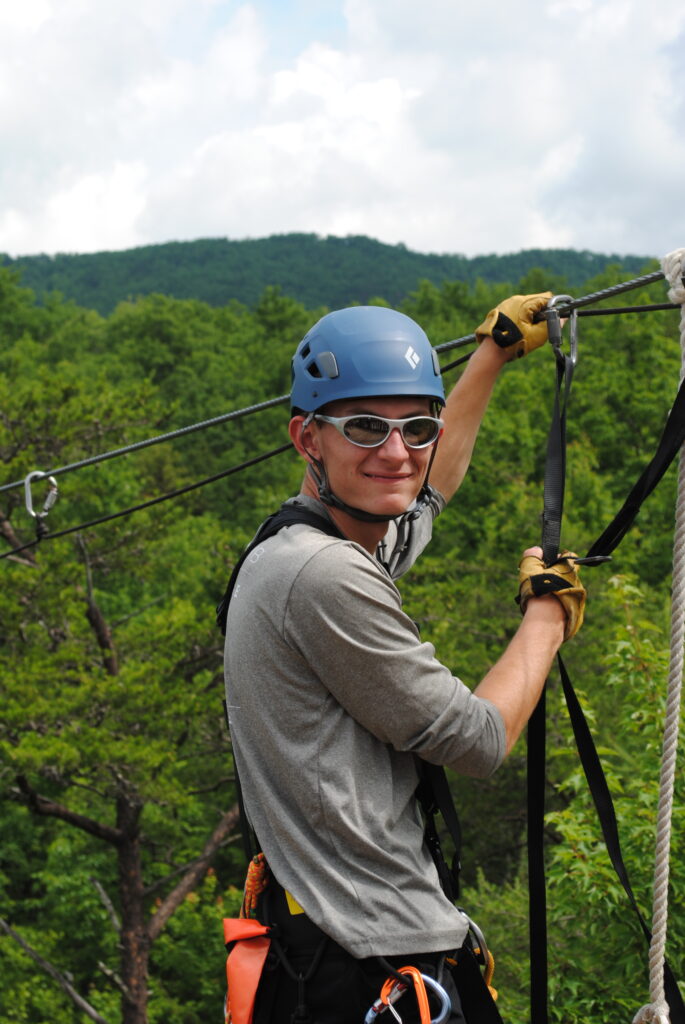
  • No hand braking required. Our innovative braking system handles everything, so you don’t need to worry about squeezing a leather glove for two hours. Your guides hook up all equipment and manage every transfer.

For the 4th of July specifically, book your tour online as far in advance as possible — we’re talking at least 5 days ahead, ideally more. Holiday weekends fill fast. You can also call us at (865) 325-8116 if you prefer to talk to a human. Our address is 155 Branam Hollow Rd, Gatlinburg, TN 37738, and we’re literally across the street from Great Smoky Mountains National Park.

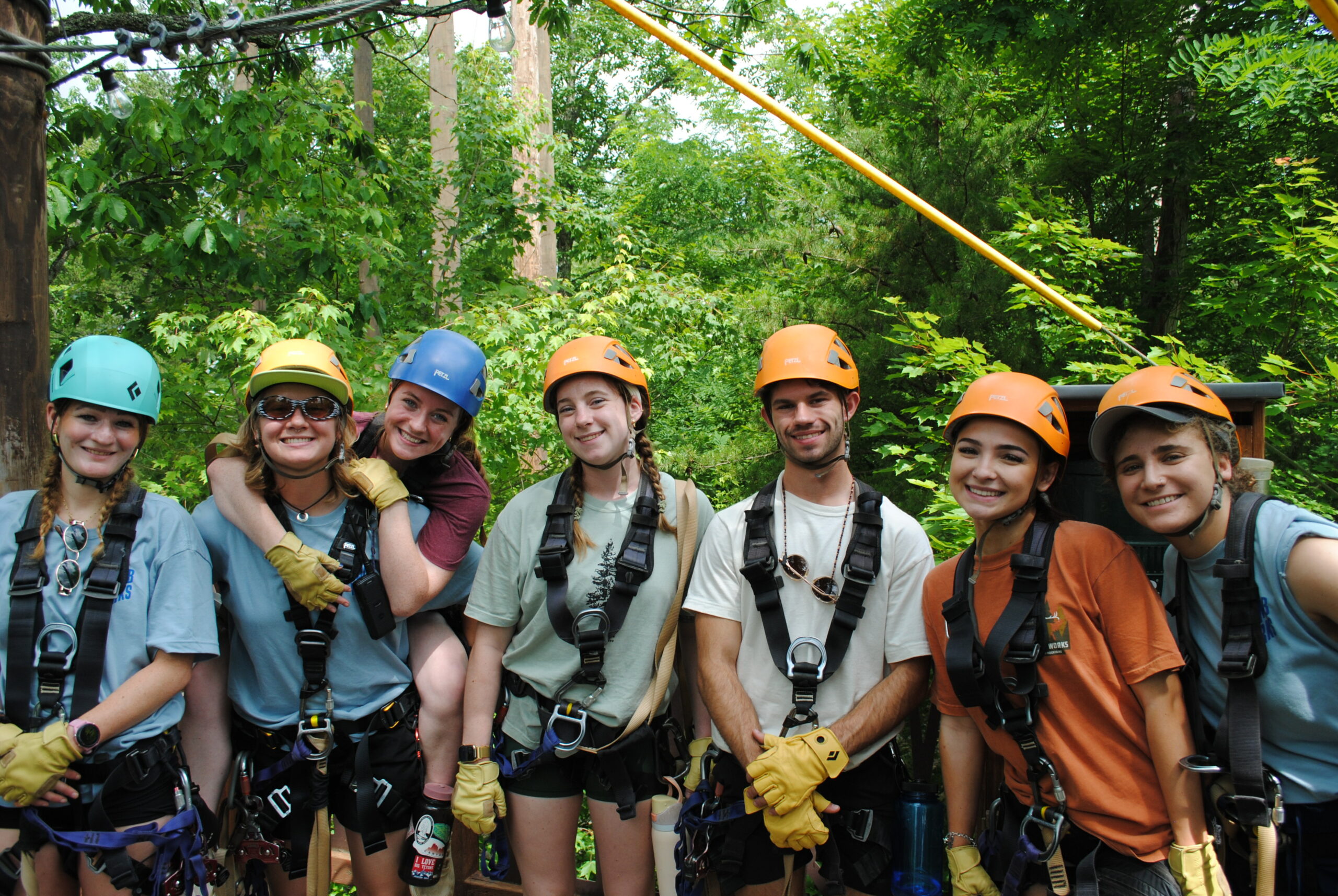
One more thing: the tour is open to guests age 5 and up, with a minimum height of 42 inches and a maximum weight of 270 pounds (250 if you’re under 5’10”). Kids ages 5–14 need an adult on the tour with them. Little ones under 70 pounds may ride tandem with a guide or sibling, which honestly tends to be a highlight for the younger kids.

Midday: Lunch in Downtown Gatlinburg

CLIMB Works

After your tour wraps up around 10:30 or 11:00 AM, you’ll be ready for food. The drive from CLIMB Works into downtown Gatlinburg takes about 10–15 minutes, and by the time you arrive, the Parkway will be buzzing with 4th of July energy; street performers, families in flag-themed outfits, the general festive chaos that makes this town fun even when it’s packed.

For lunch, here are three spots we consistently hear good things about (and have eaten at plenty of times ourselves):

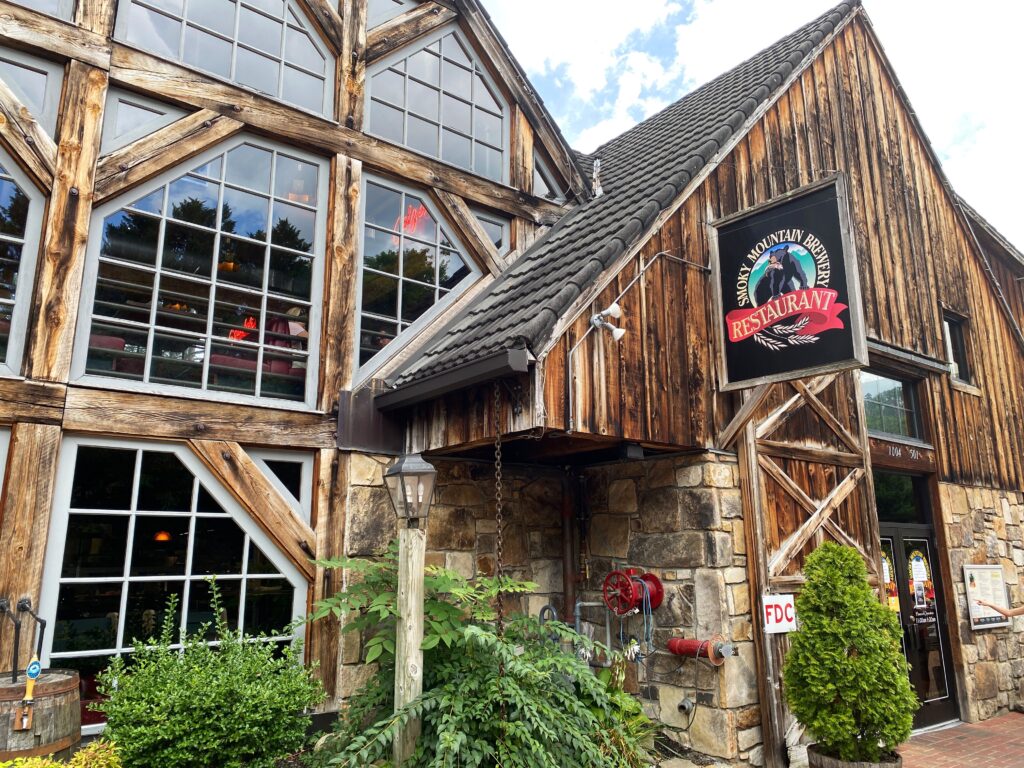
Smoky Mountain Brewery: A solid all-around pick for families and groups. They brew their own beer on-site, the menu covers burgers, pizza, ribs, and salads, and the portions are generous enough to refuel after a morning of ziplining. Expect a wait during peak holiday hours, but it’s worth putting your name in and wandering the strip while your table opens up.

Chesapeake’s Seafood and Raw Bar: If you want something beyond the typical burger-and-fries tourist fare, Chesapeake’s serves up fresh seafood in a casual atmosphere. Their crab legs and peel-and-eat shrimp are popular picks. It’s a little pricier than some of the downtown options, but the quality justifies it. Located right on the Parkway, so you can people-watch from the patio.

J.O.E. and Pop’s Sub Shoppe: Quick, affordable, and exactly what you need if you’re trying to keep the day moving. Their subs are made fresh and they don’t mess around with portion sizes. Great option if you’re traveling with kids who are more interested in getting back to the action than sitting through a long lunch.

While you’re downtown, keep your eyes open for the annual River Raft Regatta at the Edgewater Hotel. Registration opens at 11:00 AM, and the race kicks off at 1:00 PM. Participants build makeshift rafts and race them down the Little Pigeon River; it’s equal parts competition and comedy, and even watching from the bank is entertaining. It’s one of those quirky Gatlinburg traditions that most out-of-towners don’t know about until they stumble onto it.

CLIMB Works

This midday window is also a good time to explore any of the shops, arcades, or attractions along the strip. If you’ve heard of Anakeesta  (the mountaintop adventure park in Gatlinburg), it’s worth noting that we actually built their Treetop Skywalk and some of their playscapes. (They operate independently from us, so we can’t speak to tickets or scheduling, but the Skywalk is a cool experience if you have time to squeeze it in.)

Afternoon: Whitewater Rafting with Smoky Mountain Outdoors

By early afternoon, you’ve ziplined above the national park canopy and explored downtown Gatlinburg. Now it’s time to cool off (and we mean that literally). July afternoons in the Smokies can push into the upper 80s, and there’s no better antidote than whitewater rafting on the Pigeon River.

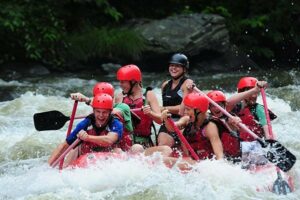
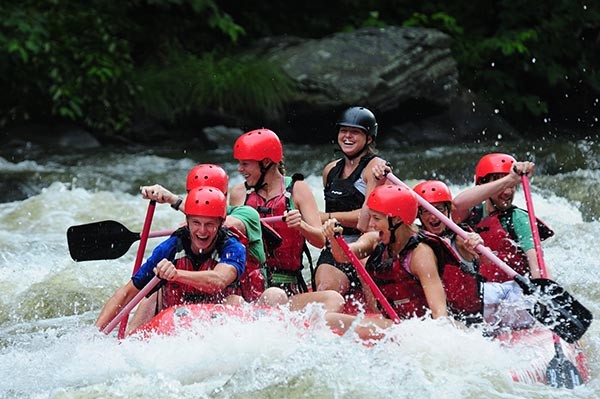
Smoky Mountain Outdoors is our rafting partner, and they’re the crew we send our own friends and family to. They run age-range tours, so families with younger kids can opt for a calmer float while groups looking for more adrenaline can tackle the Upper Pigeon’s Class III and IV rapids. It’s one of the most popular family things to do in Gatlinburg TN during summer, and for good reason. The combination of mountain scenery, rushing water, and the collective screaming of your family as you hit a rapid is hard to beat.

We offer ziplining and rafting combo packages that save you money and simplify the booking process. If you’re already planning to zipline in the morning, adding a rafting trip in the afternoon makes for a full day of outdoor adventures near Gatlinburg without any dead time. The combo packages are especially popular during holiday weekends because people want to maximize their trip without the headache of coordinating separate reservations.

CLIMB Works

A few practical notes: Book your rafting well ahead of time. The 4th of July week fills up fast, and walk-up availability is rare. Plan for the trip to take 2–3 hours total including check-in, shuttling to the put-in point, and the actual river time. Wear clothes you’re okay getting soaked in (you will get soaked), bring a change of clothes for the car, and apply sunscreen before you go. The river sun hits different when you’re wet and the light is reflecting off the water. Smoky Mountain Outdoors provides all the gear: life jackets, helmets, paddles. You just show up ready to get wet.

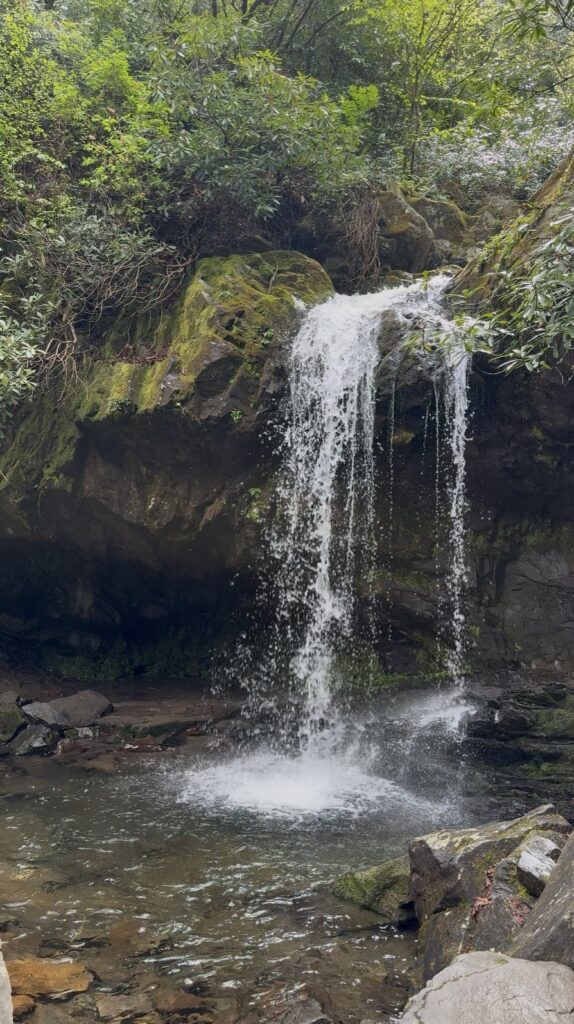
If rafting isn’t your thing, the afternoon is also a great window for a national park hike. Laurel Fallsf is a 2.6-mile round trip on a newly paved walkway with a gorgeous new viewing platform at the waterfall. It’s one of the most accessible hikes in the park, and the paved surface makes it manageable for families with strollers or older relatives. Just know that parking at Laurel Falls fills early on holiday weekends — arriving by 2:00 PM might already be pushing it, so have a backup plan (Cades Cove or a quieter trailhead) in your back pocket.

Evening: 4th of July Fireworks and Celebrations

This is what you’ve been waiting for. The evening of July 4th in the Smokies is pure Americana; it’s the kind of night where the air smells like kettle corn and gunpowder and the whole valley feels like it’s vibrating with energy.

Both Gatlinburg and Pigeon Forge host fireworks, so you’ve got options. Here’s how the evening typically unfolds in Gatlinburg, which is where we’d point you if you’re making one choice:

7:00–8:30 PM: Head to downtown Gatlinburg early. We cannot stress this enough — if you want a good viewing spot, you need to be there well before dark. The Parkway fills up fast, and by 9:00 PM, you’ll be fighting for standing room. Grab dinner at one of the downtown restaurants or pick up food from a street vendor and park yourself along the main drag or near the Convention Center. Airport Road is another solid spot with room to spread out.

Airport Road deserves special mention for families. In the later evening hours, there’s a DJ dance party starting at 9:00 PM — it’s free, it’s loud, and kids love it. There’s also family-friendly entertainment scattered along the road, making it a good alternative to the more packed Parkway viewing areas.

9:50 PM: A drone show launches over the Gatlinburg Convention Center. If you haven’t seen a synchronized drone show before, prepare yourself — hundreds of illuminated drones form shapes and patterns in the sky above the mountains. It’s a newer addition to the Gatlinburg Independence Day activities lineup, and it’s become a highlight in its own right.

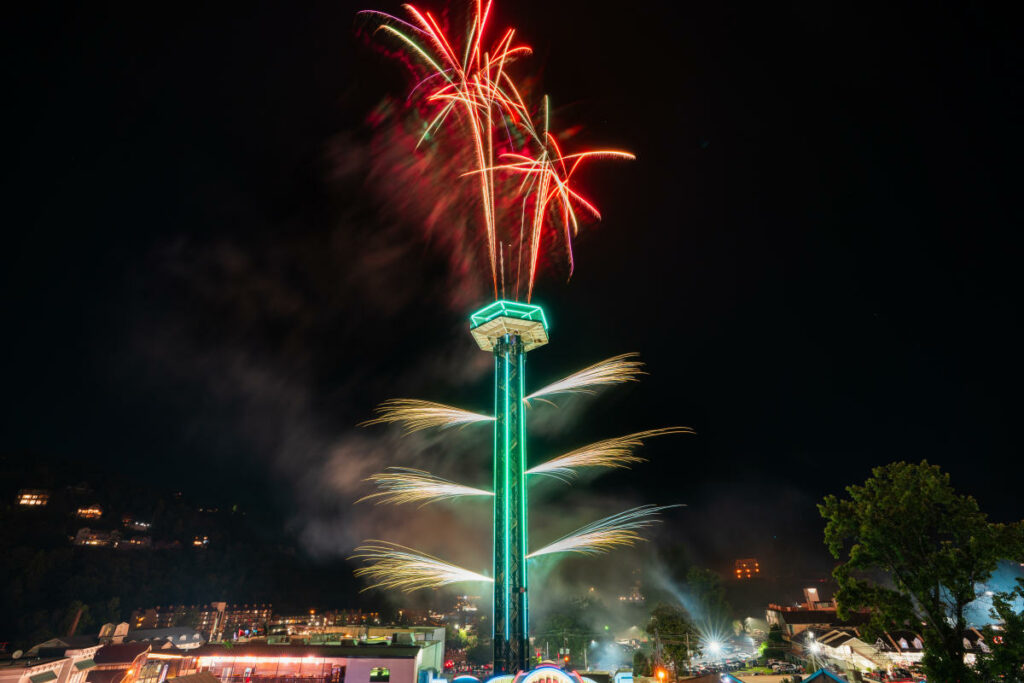
10:00 PM: The grand finale. Fireworks launch from the Gatlinburg Space Needle, filling the narrow valley with light and sound that reverberates off the surrounding peaks. The acoustics of Gatlinburg’s geography — mountains on all sides — make the fireworks feel more immersive than a typical flat-field display. You can hear them echoing for seconds after each burst. It’s a goosebumps moment, especially if it’s your first time.

Pigeon Forge runs its own Patriot Festival, which features live entertainment throughout the day and a separate fireworks show. If you’re staying in Pigeon Forge or want to avoid the Gatlinburg crowds, it’s a solid alternative. The Pigeon Forge show is typically visible from the main Parkway and several hotel parking lots along the strip. The vibe is a bit more spread out and a bit less intense than Gatlinburg’s concentrated valley setup — which, depending on your tolerance for crowds, might be exactly what you want.

Parking tip: If you’re driving into Gatlinburg for the fireworks, plan to park well before 7:00 PM. Trolley services run throughout the evening and can save you a lot of frustration. Alternatively, if you’re staying in a hotel within walking distance of the Parkway, leave the car and walk — you’ll avoid the post-fireworks traffic jam entirely.

Gatlinburg 4th of July Midnight Parade

Here’s something most visitors don’t realize until they’re already in town: Gatlinburg hosts the nation’s first Independence Day celebration, and it starts at 12:01 AM on July 4th. That’s not a typo. While the rest of the country is asleep, Gatlinburg kicks off the holiday with a full-scale patriotic parade down the Parkway in the middle of the night.

The Midnight Parade has been a Gatlinburg tradition for decades, and it draws marching bands and drumlines from across the country. You’ll see patriotic floats, color guards, local community groups, and enough flag-waving enthusiasm to fill a stadium. The energy is surprisingly electric for the small hours of the morning; families line the streets, kids sit on coolers and curbs, and the whole town takes on this unique festive-but-surreal vibe that you genuinely can’t experience anywhere else.

CLIMB Works

If you’re a night owl or traveling without young kids, the Midnight Parade is worth building your schedule around. Many visitors plan their July 3rd evening so they’re already downtown when midnight rolls around. You can grab a late dinner, walk the strip, and settle into a viewing spot by 11:30 PM. The parade runs along the main Parkway, so any position along the route gives you a solid view. Some folks bring camp chairs; others stand along the curb. Either way, it’s one of those “only in Gatlinburg” experiences that makes the trip feel special.

If you’ve got little ones who can’t stay up that late (understandably), don’t worry — the daytime and evening festivities on July 4th are more than enough to fill the holiday. But if you can swing it, there’s something magical about watching a parade march through a mountain town while the rest of the country sleeps. It sets the tone for the entire day.

One logistical note: the streets close for the parade, which means traffic in and out of downtown Gatlinburg gets complicated around midnight. Plan to arrive early and stay put until the parade wraps up and traffic begins flowing again. Most of the Parkway parking is free after a certain hour, so at least parking isn’t as much of a battle as it is during daylight hours.

Make It a 4th of July to Remember

The best 4th of July trips aren’t the ones where you show up and wing it — they’re the ones where you have a plan, leave room for spontaneity, and anchor the day around at least one experience that makes the whole trip feel worth it. For us, that anchor is the Mountaintop Zipline Tour on a cool July morning, flying side by side above the national park canopy while the rest of the valley is still waking up. By the time fireworks light up the Space Needle that night, you’ll have a full day of stories.

We’ll be here on the mountain, same as every 4th of July, watching the fireworks echo off the ridgelines from the best seat in the house. Come join us!

CLIMB Works

Wildlife You Might Spot in the Smoky Mountains This Summer

This image is by CLIMB Works.

The Great Smoky Mountains are the most biodiverse national park in the United States, and summer is when that biodiversity puts on a show. With over 65 mammal species, 200+ bird species, and more salamander diversity than anywhere else on the planet, the Smokies reward anyone willing to slow down and look. Smoky mountain wildlife doesn’t require a telephoto lens or a PhD in ecology to appreciate. You just need to know where to look, when to go, and what to watch for.

Here are the animals summer visitors are most likely to encounter:

  • Black bears — roughly 1,500 roam the park, most active at dawn and dusk
  • White-tailed deer — found in meadows and along roadsides, often with fawns in tow
  • Wild elk — reintroduced in 2001, best seen in Cataloochee Valley
  • Wild turkeys — commonly spotted strutting through fields and forest edges
  • Red-tailed hawks and barred owls — soaring above ridgelines or calling from deep woods
  • Eastern box turtles — crossing trails and roads, especially after rain
  • Synchronous fireflies — the park’s famous light show, peaking late May through mid-June
  • River otters — returned to park waterways and visible along stream banks

Black Bears: The Smokies’ Most Famous Residents

CLIMB Works

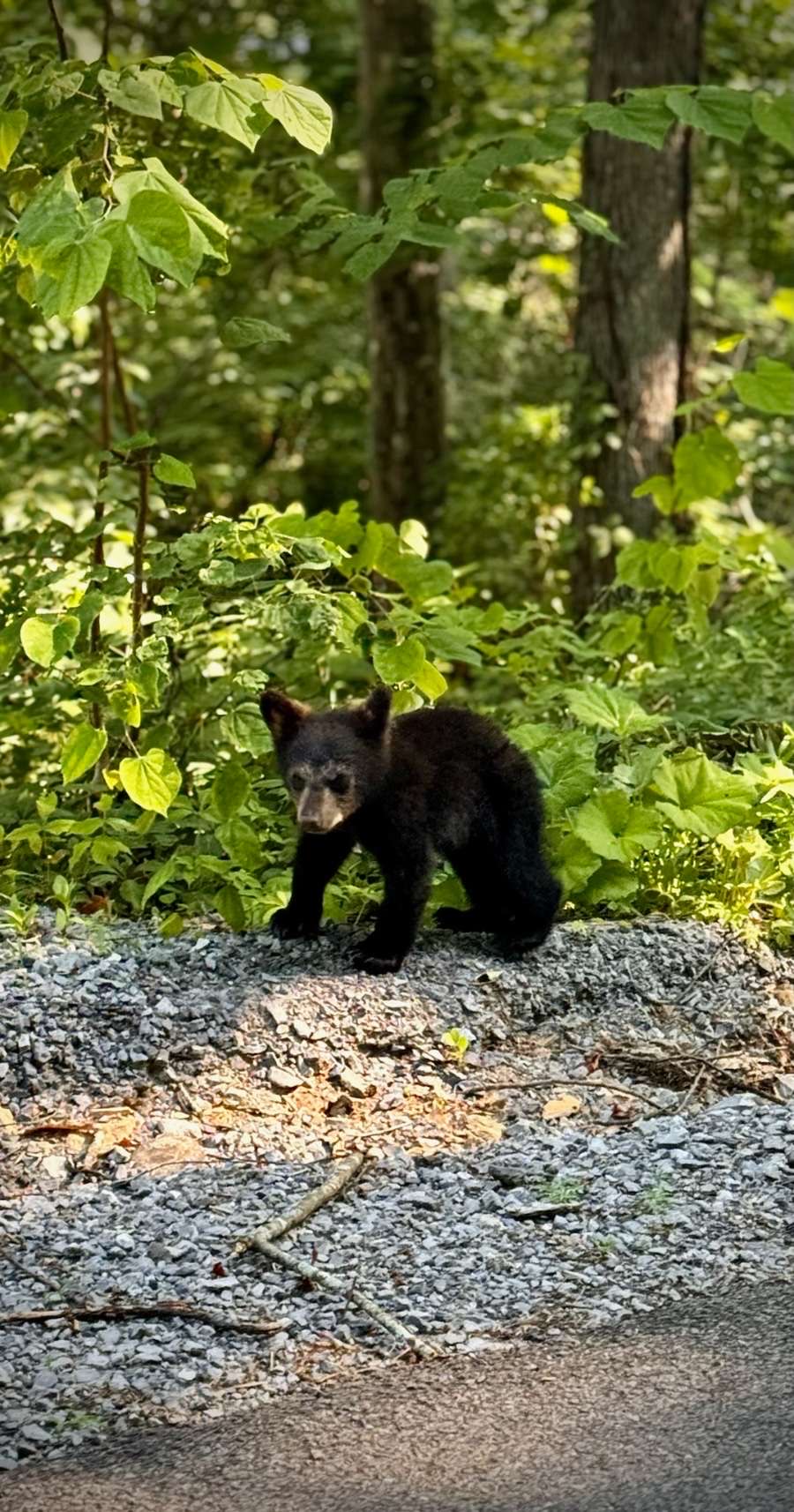
If there’s one animal that defines a Smoky Mountains vacation in people’s minds, it’s the black bear. Roughly 1,500 black bears live within the park’s boundaries, making this one of the highest-density bear populations in the eastern United States. That works out to approximately two bears per square mile — so yes, the odds of spotting one in summer are actually good.

Summer is peak activity season for black bears. They’ve emerged from winter dens and are in full foraging mode, eating up to 20,000 calories a day as they build reserves before fall’s hyperphagia (that frantic pre-hibernation eating frenzy). You’ll find them grazing on grasses, flipping logs for grubs, and stripping berries from bushes along trail edges and roadsides.

Where to Look

Cades Cove is the most reliable spot in the entire park for bear sightings. The 11-mile one-way loop road passes through open meadows bordered by dense forest, making it the perfect bear habitat. Early morning drives (before 9 a.m.) or late afternoon visits give you the best chance. Be prepared for “bear jams” — those sudden traffic stops when someone spots a bear and everyone hits the brakes. They’re part of the Cades Cove experience, for better or worse.

Meadow edges at dawn and dusk are your best bet anywhere in the park. Bears are crepuscular, or most active in the low-light hours, and they tend to feed where forest meets clearing. Our guides at CLIMB Works occasionally spot bears in the wooded areas surrounding the course, particularly early in the morning before the first tour heads out. The property sits right across from Great Smoky Mountains National Park, so the wildlife doesn’t always observe the property line.

What to Do If You Encounter One

The National Park Service requires visitors to stay at least 50 yards (roughly the length of half a football field) from any bear. If you encounter one on a trail, stop moving, make yourself look large, and speak in a calm, firm voice. Do not run; bears can hit 30 mph, and running can trigger a chase response. Instead, back away slowly while facing the bear. If a bear approaches you, stand your ground, make noise, and throw non-food objects in its direction. Never, under any circumstances, feed a bear. A fed bear is a dead bear — that’s not a slogan, it’s literally what happens when bears become habituated to human food and have to be euthanized.

White-Tailed Deer: Gentle and Surprisingly Common

White-tailed deer are probably the easiest large animal to spot in the Smokies, and summer is the most charming time to see them. Does are nursing fawns born in late May and June, and you’ll frequently see them grazing in open meadows at dawn and dusk.

A quick but important note for families: if you see a fawn lying alone in grass or underbrush, do not touch it or try to “rescue” it. Does leave their fawns hidden while they forage, returning every few hours to nurse. The fawn isn’t abandoned; it’s following instinct by staying still and quiet to avoid predators. Picking it up or moving it can actually separate it from its mother permanently. This is one of the most common mistakes well-meaning visitors make, and park rangers deal with it every summer.

CLIMB Works

Photo by Andrew Patrick

Best Spots for Deer Watching

Cades Cove is, once again, the premier location. The broad meadows here are essentially a buffet for deer, and you’ll often see groups of 10 or more grazing in the early morning light. It’s a misty meadow ringed by ancient mountains, and deer moving through the grass like they’ve been doing it for centuries (because they have).

The fields around Oconaluftee Visitor Center on the North Carolina side of the park are another excellent option, especially if you’re already heading that direction for the Mountain Farm Museum. Deer frequently graze right alongside the historic buildings there, seemingly unbothered by the visitors.

On our property, deer are practically neighbors. Guests heading up the UTV ride on the Mountaintop Zipline Tour regularly spot deer grazing along the tree line, especially on quieter weekday mornings. It’s one of those details that catches people off guard; they came for the ziplining, and they got a wildlife encounter as a bonus.

Wild Elk: A Conservation Success Story

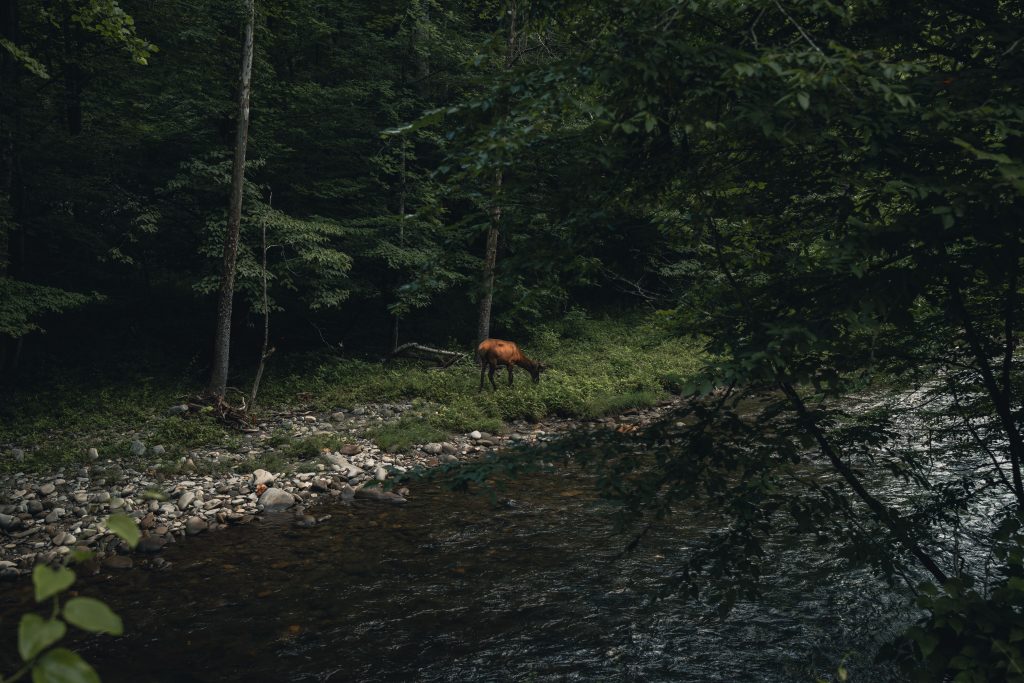
Elk once roamed the southern Appalachians in herds, but by the mid-1800s, they’d been hunted to regional extinction. In 2001, the National Park Service launched a reintroduction program, releasing 25 elk from Land Between the Lakes in Kentucky into the Cataloochee Valley on the park’s eastern edge. More followed in subsequent years. Today, about 200 elk live in and around the Smokies, and spotting them is one of the most memorable wildlife experiences the park offers.

CLIMB Works

Photo by Jack Borno

Where to Find Them

Cataloochee Valley is the go-to location, and it’s worth the drive even though the road in is narrow, winding, and unpaved for the last stretch. The valley is remote enough that it doesn’t draw the same crowds as Cades Cove, which means calmer conditions for both you and the elk. Summer evenings are ideal — the elk tend to emerge from the forest into the open fields as temperatures cool. Bring binoculars and a long lens if you have one.

Wild Turkeys, Woodpeckers, and Birds Worth Watching For

Wild turkeys are one of those animals you’ll spot without even trying. They strut along roadsides, peck through meadow edges, and occasionally hold up traffic with the same casual disregard for schedules as the bears. Toms are especially showy in early summer, still displaying for hens with their fans spread and chests puffed. Cades Cove, again, is prime territory, but you’ll also see them along Forge Creek Road, Little River Road, and sometimes just wandering through picnic areas like they own the place (which, arguably, they do).\

CLIMB Works

Photo by Mohan Mannapaneni

Summer Migrants and Year-Round Residents

The Smokies host over 200 bird species, and summer brings a fresh wave of neotropical migrants that make the park a birder’s paradise. Scarlet tanagers flash red and black through the canopy. Wood thrushes deliver their flute-like songs from deep shade. Hooded warblers, ovenbirds, and black-throated green warblers fill the understory with sound.

Red-tailed hawks and broad-winged hawks are frequently spotted soaring over ridgelines, riding thermals with barely a wingbeat. On our Mountaintop Zipline Tour, guests sometimes find themselves at roughly the same height as these raptors. Our guides point them out when they spot them.

Smaller Creatures You Might Overlook

The Smokies’ most famous residents get all the attention, but some of the park’s most remarkable wildlife fits in the palm of your hand (though you should never put it there).

Salamanders: The Smokies’ Hidden Stars

The Great Smoky Mountains are known as the Salamander Capital of the World, home to at least 30 species. That’s more salamander diversity than anywhere else on the planet. Most are small, secretive, and live under rocks, logs, and leaf litter near streams. The Jordan’s salamander (also called the red-cheeked salamander) is found only in the Smokies — nowhere else on Earth. If you’re hiking near streams after a rain, flip a log gently (and put it back exactly as you found it), and you may find a lungless salamander clinging to the damp underside. These creatures breathe entirely through their skin, which is one reason the park’s clean, unpolluted streams are so critical to their survival.

Synchronous Fireflies

CLIMB Works

Photo by Famitsay Tamayo

The Smokies are one of only a handful of places in the world where synchronous fireflies (Photinus carolinus) perform their coordinated light display. Males flash in unison — six quick flashes, then a pause of about eight seconds, then six more, creating an otherworldly visual rhythm in the forest darkness. The display typically peaks in late May through mid-June, and viewing access is controlled through a lottery system managed by the National Park Service. Demand is intense, with tens of thousands of people apply for a few hundred spots. If you don’t win the lottery, some private properties and campgrounds near the park occasionally offer viewing opportunities, but the in-park experience at Elkmont is the gold standard.

The timing shifts slightly year to year based on temperature and soil moisture, so check the NPS website for updated dates if you’re planning around it.

Eastern Box Turtles and River Otters

Eastern box turtles are a common trailside encounter, especially after summer rains. Their orange-and-black shells are distinctive, and they move slowly enough that kids get a great look without anyone needing to chase anything. Just observe from a respectful distance and never pick one up, as handling them stresses them and can cause them to drop eggs.

River otters are one of the park’s quieter conservation victories. They were reintroduced to the Smokies in the late 1980s and early 1990s after being wiped out by trapping and pollution. Today, they’ve re-established themselves in several park waterways, including Abrams Creek and Little River. Spotting one requires patience and a bit of luck; they’re fast, sleek, and tend to surface briefly before diving again. But if you’re sitting quietly by a stream and see a whiskered face pop up, you’ll know.

A general reminder: do not handle or disturb any wildlife in the park, including reptiles, amphibians, and insects. Federal law prohibits harassing, feeding, or collecting any animal within park boundaries. The fine isn’t trivial, either.

Tips for Spotting Wildlife Without Disturbing It

Seeing smoky mountain wildlife isn’t just about being in the right place — it’s about behaving in the right way once you’re there. Animals respond to noise, movement, and human presence, and the visitors who see the most are almost always the ones who are quietest and most patient.

Timing Is Everything

Early morning (6:00–9:00 a.m.) and the hour before dusk are your best windows. Most mammals are crepuscular, meaning they’re most active in low light. The midday heat of a Tennessee summer drives deer, bears, and turkeys into shade and cover. If you’re heading to Cades Cove, the loop road opens at sunrise. Being there when the gate lifts puts you ahead of 90% of visitors and dramatically increases your chances of sighting bears, deer, and turkeys in the meadows.

Move Slowly and Quietly

This sounds obvious, but it’s worth stating: turn off your phone sounds, speak softly, and resist the urge to crash through underbrush. The forest is full of animals that freeze or flee at the first sign of a heavy footfall. Walk steadily but slowly. Stop often. Scan the edges of clearings, not just the trail in front of you. Wildlife tends to move along transition zones (where forest meets meadow, where stream meets bank) not in the middle of open spaces.

Bring Binoculars

A decent pair of binoculars costs $30–$50 and transforms your wildlife viewing. They let you observe a bear foraging from 100 yards without needing to creep closer. They turn a dark blob in a distant meadow into a bull elk with velvet antlers. They also keep you safe; the 50-yard rule isn’t a suggestion, and binoculars are the tool that makes compliance effortless.

Stay on Designated Trails

Off-trail travel damages fragile habitat, disturbs nesting wildlife, and puts you at risk of encounters you’re not prepared for. The park’s 800+ miles of trails pass through every habitat type the Smokies offer. You don’t need to bushwhack to see wildlife, you need to pick the right trail and be on it at the right time.

One more thing: if you see a crowd gathered around a bear or elk, don’t add to it. Large groups stress animals and often push them into defensive behavior. Observe from the periphery if you can, or move on and let the animal have its space. There will be other sightings.

See the Smokies From a New Angle This Summer

CLIMB Works sits at 155 Branam Hollow Rd in Gatlinburg, directly across the street from Great Smoky Mountains National Park. Our Mountaintop Zipline Tour takes guests 400+ vertical feet up the mountain via UTV before sending them through six dual ziplines, four aerial bridges, and a controlled rappel. The whole experience runs about two hours and is perfect for zipliners of all ages and experience levels.

What surprises people is how much wildlife they encounter along the way. Deer graze near the UTV trail on most mornings. Wild turkeys scatter through the underbrush as the vehicle climbs. Hawks and vultures circle at zipline height, and our guides are quick to point them out between lines. It’s not a wildlife tour, but a zipline tour that happens to pass through prime wildlife habitat because of where we’re located and how high we go.

CLIMB Works

One thing we hear a lot from guests: the combination of height and relative quiet (you’re above the road noise, above the tourist traffic) makes the mountain feel alive in a way that’s hard to access otherwise. You’re not watching the forest from outside it, but moving through it, 100 feet up, with nothing between you and the canopy. Sometimes a red-tailed hawk drifts past at eye level, and for a few seconds the whole world gets very quiet and very real.

That’s the Smokies at their best — not a thing you observe, but a place you’re part of, even if it’s just for an afternoon. Book a zipline tour today to experience the Smoky Mountains like never before.


CLIMB Works

What Makes CLIMB Works Stand Out Compared to Other Ziplines in the Area?

This image is by CLIMB Works.

There are a lot of zipline tours in the Gatlinburg area. Honestly, you could throw a rock from the Parkway and probably hit a brochure for one. So when you’re comparing options, the natural question is: what actually makes one better than another? The cables are similar. The harnesses come from the same handful of manufacturers. The mountains aren’t going anywhere. The real difference comes down to the people clipped in alongside you. At CLIMB Works, our highly trained, personable guides are the reason guests come back, bring their families, and leave reviews that read more like thank-you notes. This isn’t vague praise. Let’s get specific about what that means and why it matters.

CLIMB Works

The Short Answer: It Comes Down to the People

What makes CLIMB Works guides different from other zipline companies? Every guide manages all guest equipment, operates an innovative braking system that eliminates the need for guests to brake themselves, and spends roughly two hours with each group, from the scenic UTV ride to the final controlled rappel. That combination of technical skill, time, and variety creates an experience no quick-run zipline course can match.

CLIMB Works

Most zipline operations in the Smokies follow a predictable formula: brief safety talk, clip in, zip across, unclip, repeat. They get you from Point A to Point B safely, and that’s about it. There’s nothing wrong with that. But it’s not what we do.

Our guides aren’t seasonal hires running off a laminated script. They’re professionals who’ve trained extensively on equipment management, guest communication, and the kind of situational awareness that lets them sense when someone’s nervous before that person says a word. They know when to crack a joke, when to offer a quiet reassurance, and when to just let the view do the talking. That skill set doesn’t show up on a brochure, but you feel it the second your tour starts.

If you’re weighing the best zipline in Gatlinburg, the honest answer is that it’s not about which cable is longest or which platform is highest. It’s about who’s guiding you across it.


What ‘Highly Trained’ Actually Means at CLIMB Works

A lot of outdoor operations throw around the word “trained” without giving you any idea what that actually involves. We think you deserve more detail than that.

Equipment Management Is Entirely in Our Hands

CLIMB Works

At CLIMB Works, guides hook up every piece of guest equipment and manage every single transfer between elements. You don’t clip yourself in. You don’t adjust your own harness mid-tour. You don’t fumble with carabiners while standing on a platform 200 feet up. Our staff handles all of it, every time, for every guest. This isn’t just a convenience, it’s a safety philosophy. When the technical work stays in trained hands, guests are free to actually enjoy the experience instead of worrying about whether they attached something correctly.

This approach also means our guides have to know the equipment inside and out. They’re not learning on the job during your tour. They’ve practiced these hookups and transfers many times before they ever lead a paying guest.


The Braking System That Changes Everything

CLIMB Works


Here’s the thing that surprises most first-timers: you never have to brake yourself on our Mountaintop Zipline Tour. Our innovative braking system handles deceleration automatically, managed by staff on both ends of the line. This single feature removes what is, for a lot of people, the biggest source of anxiety about ziplining. No leather gloves. No “squeeze here but not too hard.” No worrying about overshooting the platform.

We’ve watched guests visibly relax the moment they learn about this. When you’re not white-knuckling a brake cable, you actually look around. You notice the ridgeline. You hear the birds. You turn your head and see your kid on the line next to you, smiling.


More Time Together Means Better Experiences

One of the structural advantages of the Mountaintop Zipline Tour is something you might not think about until you’re on it: you spend a lot of time with your guides. About two hours, start to finish. That’s not two hours of standing in line, it’s two hours of guided adventure across 11 distinct elements.

Eleven Adventures, One Team

The tour includes six dual ziplines, four aerial bridges, and a controlled rappel. Each element has its own personality. The ziplines build in length and speed. The bridges test your balance (and your willingness to look down). The rappel at the end is a controlled descent that feels like a victory lap. Through all of it, your guide team is right there, not just watching from a booth or radioing instructions from a distance.

This matters because trust is cumulative. By the third zipline, you know your guide’s name, their sense of humor, and exactly how they sound when they say “you’re good to go.” By the fifth, you’re high-fiving at the landing platform. By the rappel, you might be asking them for restaurant recommendations. That arc of connection simply doesn’t happen on a course where you zip three times in 30 minutes and head back to the parking lot.

The UTV Ride: Where It Actually Starts

CLIMB Works

Most people think the tour begins at the first zipline. It doesn’t. It begins on the UTV ride.

The scenic UTV ride climbs more than 400 vertical feet up the mountain. It takes a few minutes, the views open up gradually, and your guide is right there driving and talking. This is where they learn your names, figure out who’s excited and who’s quietly terrified, and start setting the tone. We’ve seen guides crack one well-timed joke during this ride and completely transform a nervous guest’s trajectory for the entire tour.

It’s an underrated bonding moment, and it’s one our guides are trained to use intentionally. By the time you’re standing on the first platform, you already know each other. That head start changes everything.

Personable Isn’t a Buzzword Here

Every tourism company on earth claims their staff is “friendly and professional.” We know how that sounds. So let’s talk about what personable actually looks like when it’s a practice and not just a line on a website.

Names, Energy, and Nerves

Our guides learn your name. Not just because they’re required to, but because they want to, and because using it matters. When a guide says “You’ve got this, Sarah” before a first-timer steps off a platform, it lands differently than “You’re good, ma’am.” That specificity is intentional.

They also match energy. A group that’s loud and excited gets a guide who feeds that energy right back. A quieter couple gets a calmer pace, more space to take in the views, and commentary that doesn’t compete with the experience. This is a skill that we train for specifically. Then there’s the nervous guest. Everyone in outdoor recreation encounters them, but not everyone handles them well. No pressure, no countdown, just calm confidence. That moment didn’t happen by accident.

Built for Ages 5 and Up

CLIMB Works

The age range on our tour is five and up. Kids ages 5 to 17 need an adult on the tour. Children under 70 lbs can ride tandem with a guide or a sibling. That tandem ride is worth lingering on, because it requires a specific kind of trust.

When a guide rides tandem with a small child, they’re not just responsible for the technical operation. They’re holding someone’s kid. The parent is standing on the platform watching. The guide has to be steady, communicative, reassuring, and completely in control – all at once. That’s not a skill you hire off the street. It’s one you build through training, mentorship, and a genuine care for the families who trust you.

This is part of why CLIMB Works is consistently considered the best family zipline experience Gatlinburg has. Our guides don’t just tolerate kids on the tour, they light up when a family shows up. Multi-generational groups are some of our favorite tours to run, because watching a grandparent and a grandkid zip side by side is the kind of moment that keeps guides coming back season after season.

Practical Things to Know Before You Book

All the guide quality in the world doesn’t help if you show up unprepared. Here’s what you need to know:

Arrive 40 minutes early. This is not flexible. Late arrivals forfeit their tour with no refund. We know that sounds strict, but the check-in process includes gear fitting, safety orientation, and getting you to the UTV staging area on time. It matters.

Closed-toe shoes are required. Sandals, flip-flops, and open-toed anything won’t work on the tour. If you forget, we have rental shoes on-site, so it’s not a dealbreaker, just something to plan for.

Book ahead. Reservations are strongly recommended, especially if you’re visiting during peak season (summer and October). We suggest booking at least 5 days out during those windows. You can book your Gatlinburg zipline tour online anytime, 24/7, or call (865) 325-8116.

Know the requirements. Guests must be age 5 or older. Height range: 42 inches minimum, 6’8″ maximum. Weight limit: 270 lbs (250 lbs if under 5’10”). Kids ages 5–14 need an accompanying adult on the tour. Guests should be able to stand for two hours and lift their knees to waist height.

Leave the backpack behind. Free lockers are available for keys and small items. Cameras are allowed if secured with a strap. Bathrooms are at check-in only, there are none on the tour itself.

Cancellation policy: Cancel 48+ hours before your tour for a full refund or reschedule. Within 48 hours, bookings are final. Weather cancellations made by staff get you a reschedule or full refund.

CLIMB Works

Want to make a full day of it? Check out our combo packages with Smoky Mountain Outdoors rafting — they’re our rafting partner, and the combo works especially well for families looking to fill a day with outdoor adventures.

Book your tour here and come see what two hours with the right people on the right mountain actually feels like.

CLIMB Works

The Best Smoky Mountain Views (Without a Long Hike)

This image is by CLIMB Works.

Here’s the truth about the Smoky Mountains: some of the best views don’t require a single mile on a trail. You don’t need trekking poles, a hydration pack, or trail-hardened knees to see ridgelines stacked to the horizon. Whether you’re traveling with young kids, older family members, or you simply want stunning scenery without the sweat, the Smokies deliver. This list covers everything from drive-up overlooks inside Great Smoky Mountains National Park to adventure experiences and aerial attractions in Gatlinburg.

Newfound Gap Overlook

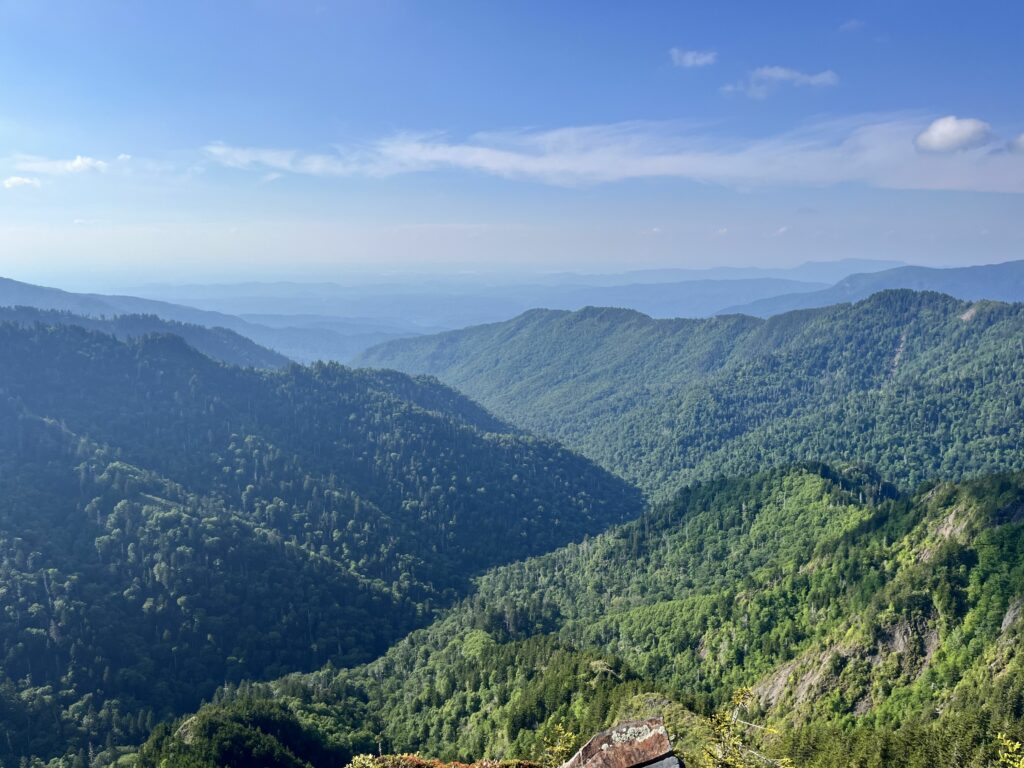
Newfound Gap might be the single most accessible “wow” moment in all of Great Smoky Mountains National Park. No trailhead, no permit, no gear. Pull into the parking lot at 5,046 feet on US-441, step out of the car, and you’re standing on the Tennessee-North Carolina state line looking at layer after layer of blue-green ridges.

This is one of the most photographed spots in the park for good reason. The Rockefeller Memorial marks the location where President Franklin Roosevelt dedicated the park in 1940, and the stone wall along the overlook gives you an unobstructed view in multiple directions. On clear mornings, you can see the characteristic smoky haze settling between the ridgelines. It looks exactly like the postcards, except it’s better because you’re standing in it.

A few logistics worth knowing: the drive from Gatlinburg to Newfound Gap takes about 25 minutes, but that’s 25 minutes of winding mountain road with its own set of views along the way. The elevation gain from Gatlinburg (around 1,300 feet) to the overlook is significant, so temperatures at the top can be 10-15 degrees cooler than in town. Bring a layer, even in summer.

CLIMB Works

Photo by Esteban Carriazo

The crowd situation is real. During peak season, the parking lot at Newfound Gap fills up fast. We’re talking full by 10 a.m. on weekends. If you want to actually enjoy the overlook without jockeying for a spot at the wall, get there before 9 a.m. or aim for a weekday visit. Early morning light is better for photos anyway, and the haze tends to be thinner before the afternoon humidity builds up.

One more thing: Newfound Gap is also the starting point for the Appalachian Trail in the Smokies. You’ll see thru-hikers with loaded packs heading off into the woods, which is a fun bit of people-watching even if you have zero intention of joining them.

Kuwohi Observation Tower

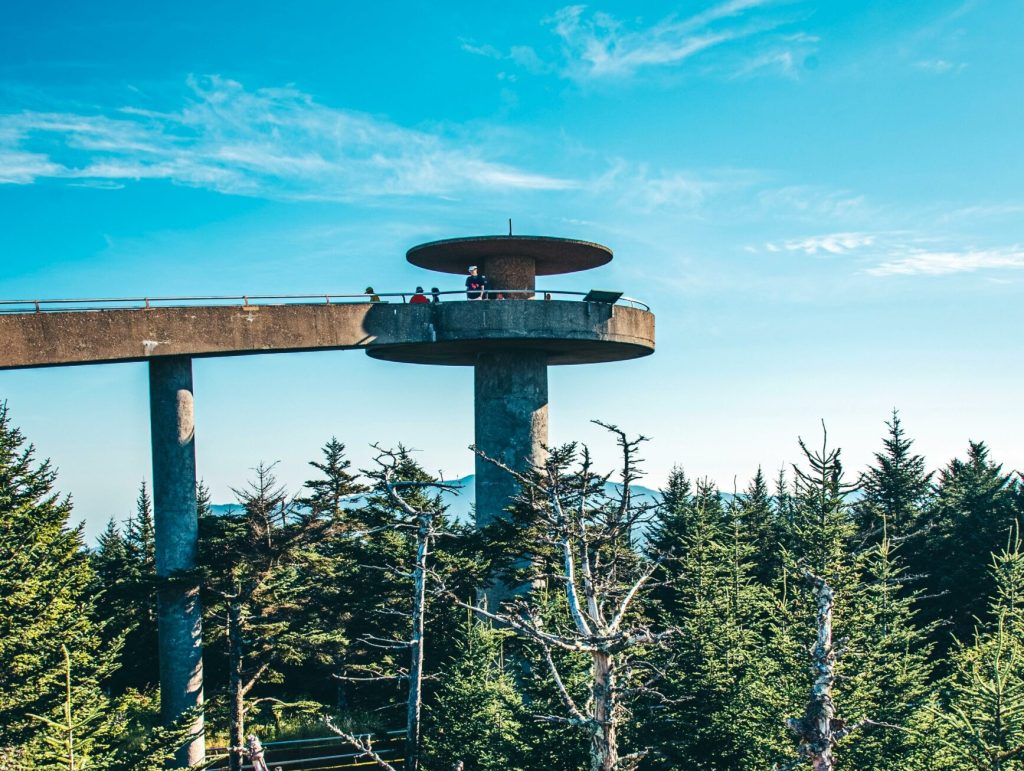
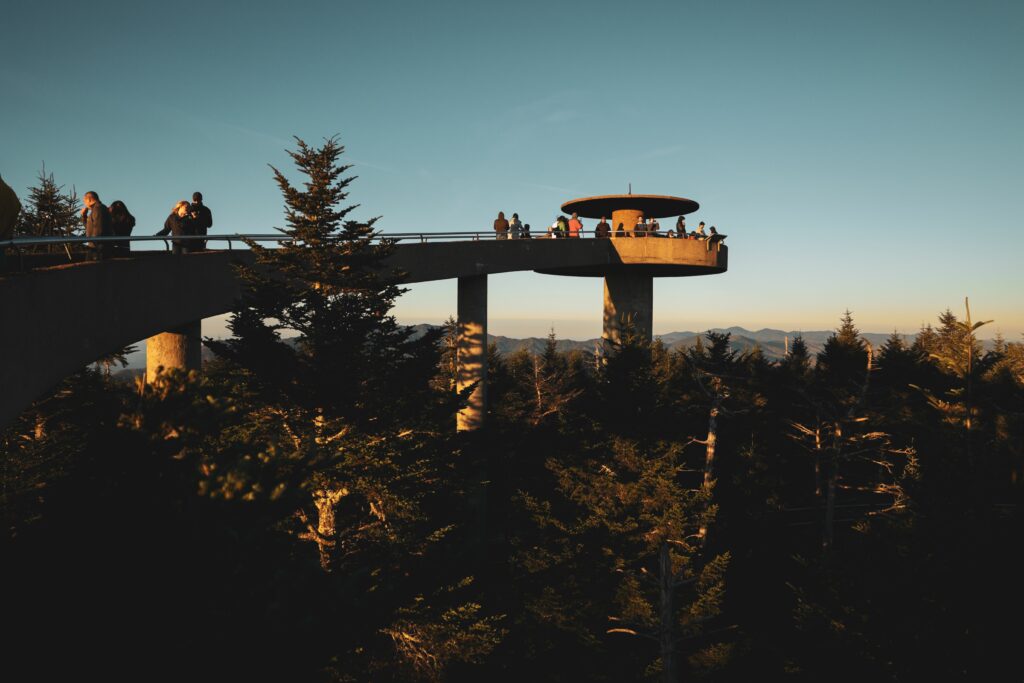
At 6,643 feet, Kuwohi (formerly known as Clingman’s Dome) is the highest point in the Great Smoky Mountains, and the highest point in Tennessee, period. The observation tower at the summit offers 360-degree views that, on the clearest days, stretch into six states. It’s the kind of view that makes you understand why 12 million people a year visit this park.

CLIMB Works

Photo by Connor Scott McManus


Now, calling this “no hiking” requires a small asterisk. There’s a half-mile paved walkway from the parking area to the observation tower, and it’s steep. We’re talking a 330-foot elevation gain over that half mile, which means it’s essentially a ramp. It’s paved and accessible, but it will get your heart rate up, especially at altitude. Families with strollers manage it regularly, and we’ve seen folks in their 80s at the top — just take it slow and bring water.

The observation tower itself is a distinctive concrete spiral ramp that feels almost space-age. You walk up the curved ramp to the top, and the views open up in every direction. To the south, the peaks roll into North Carolina. To the north, the Tennessee Valley spreads out below. If you’ve been to other Smoky Mountain overlooks and thought the views were good, Kuwohi is the “turn it up to eleven” version.


Seasonal note that catches visitors off guard: Clingmans Dome Road closes from December 1 through March 31 every year. The elevation makes it impassable in winter conditions. Even in early April and late November, conditions can be iffy, so check the park’s road status page before driving up. This also means that if you’re visiting for fall foliage in October, Kuwohi is one of the first places in the park to hit peak color. The spruce-fir forest up there starts turning before anywhere else, which makes it a phenomenal early-October destination.

Foothills Parkway Overlooks

If Newfound Gap and Kuwohi are the headliners, the Foothills Parkway is the local secret that frankly deserves top billing. Multiple pull-off overlooks line this scenic drive, and every single one offers wide-open mountain views with no hiking whatsoever. You park, you walk ten feet, you see mountains. That’s it.

CLIMB Works

Here’s why we love this one especially for families and mixed-ability groups: there’s no parking stress, no entrance fee (it’s a national park road), and no crowds to speak of. While Newfound Gap has people three-deep at the overlook wall on a Saturday in October, the Foothills Parkway pull-offs might have three or four other cars. It’s a completely different experience. You can take your time. Let the kids run around a bit. Set up a camp chair if you want (we’ve seen people do it, no judgment).

The drive itself is part of the experience. The road winds along a ridgeline with views on both sides, and there’s essentially no commercial development along the route. If you’re coming from Pigeon Forge or Sevierville, the drive to the western section takes about 35-40 minutes, and you can easily loop it into a Cades Cove day or a detour before heading into Gatlinburg.

Anakeesta in Gatlinburg

Anakeesta is what happens when someone decides that downtown Gatlinburg’s biggest limitation — being wedged into a narrow valley — is actually an opportunity. A gondola (they call it the Chondola, which is a chair lift/gondola hybrid) whisks you from the main strip up to a ridgeline village perched above the town. Within minutes, you go from pancake houses and taffy shops to elevated views of the surrounding mountains.

CLIMB Works

The mountain-top experience includes gardens, restaurants, a firepit village, and some genuinely beautiful vistas of Mt. LeConte and the surrounding Smoky Mountain peaks. The best part? You don’t hike a single step to get the views, the Chondola does all the work. Once you’re up top, the paths are gentle and well-maintained, making this one of the most accessible scenic viewpoints in the Gatlinburg area for families with young kids or anyone with mobility considerations.

We should mention something here because it comes up a lot: CLIMB Works built Anakeesta’s Treetop Skywalk and some of the treehouse playgrounds up there. We’re proud of that work. But Anakeesta operates independently from us; they run their own show, set their own prices, and we don’t offer any combo packages with them. We get asked about this all the time, so we want to be upfront. If you want to visit Anakeesta and do our Mountaintop Zipline Tour, you’d book each separately.

Anakeesta tickets run around $30-$40 for adults depending on the season and what package you choose (they have different tiers). It’s not cheap, but you can easily spend half a day up there, especially with kids. The Treetop Skywalk, which is a series of connected bridges through the forest canopy, is a unique way to experience the mountain’s ecosystem from above without any athletic ability required.

Crowd tip: Weekday mornings are your friend here. Weekend afternoons in summer and October see the longest gondola wait times. If you’re going on a Saturday, arrive right at opening.

The Gatlinburg SkyBridge

SkyLift Park’s claim to fame is the Gatlinburg SkyBridge, North America’s longest pedestrian suspension bridge, spanning 680 feet between two mountain peaks above downtown Gatlinburg. And you get there via a chair lift ride, so there’s no hiking involved or trails to navigate.

CLIMB Works

The views from the bridge itself are dramatic. You’re walking above the treetops with the Smoky Mountains framing the horizon in every direction and Gatlinburg spread out far below like a tiny model village. About halfway across, there’s a glass-bottom section, which is either the highlight of your day or the reason you grip the railing with white knuckles (or, honestly, both at the same time). Kids generally love it. Some adults need a minute.

The SkyBridge experience works well for almost every age and ability level. The chair lift accommodates most visitors, and the bridge itself is wide and has solid railings. It sways gently, but it’s nothing that should deter someone who’s even mildly comfortable with heights. At the far end of the bridge, there’s a viewing platform and a short loop trail through the woods if you want to stretch your legs. There’s also a café at the top with coffee and snacks, so you can sit with a drink and just soak in the view for a while.
Best times to visit: Weekday mornings, hands down. SkyLift Park gets heavy traffic on summer and fall weekends, especially between 11 a.m. and 3 p.m. Tickets are around $30 for adults, and you’ll want to budget about an hour for the full experience (chair lift up, bridge walk, viewing platform, chair lift down), though there’s no reason you can’t linger longer.

One thing to note: this is a different experience from Anakeesta, even though both involve going up a mountain in Gatlinburg. SkyLift Park is more focused, so you’re there for the bridge and the views. Anakeesta is more of a full-day destination with multiple activities. Both deliver on the “Smoky Mountain views without hiking” promise, just in different ways.

CLIMB Works Mountaintop Zipline Tour

We’re biased here, and we own it. But if you want Smoky Mountain views that go beyond “stand at a wall and look,” the Mountaintop Zipline Tour delivers something no overlook or gondola can replicate: you’re in the view, moving through it, 400+ feet above where you started, with Great Smoky Mountains National Park literally across the street.

Here’s how it works. Your experience begins with a scenic UTV ride that climbs 400+ vertical feet up the mountain. Your guide drives you up a rugged mountain road while the tree canopy opens up and the ridgelines of the national park start revealing themselves below. By the time you reach the first zipline platform, you’ve gained serious elevation without taking a single step on a trail. Guests tell us all the time that the UTV ride is one of their favorite parts, especially folks who came expecting the ziplines to be the whole show.

From there, it’s six dual side-by-side ziplines (so you can ride next to your partner, your kid, or your best friend), four aerial bridges, and a controlled rappel. The dual zipline setup is something we hear about a lot. You’re not just experiencing the view solo; you’re looking over at someone you love, both of you suspended above the Smokies, and there’s something about that shared moment that hits different than standing at a parking lot overlook.

No hand braking required. Our system handles the braking for you, which means you don’t have to worry about technique, you just enjoy the ride and the scenery. Expert staff handles all equipment hookups and transfers. This matters especially for families with kids (ages 5 and up can ride, and those under 70 lbs may ride tandem with a guide) and for anyone who’s nervous about the “adventure” part. We’ve designed this for the regular people who love the outdoors, not just adrenaline junkies.

CLIMB Works

Our location at 155 Branam Hollow Rd sits surrounded on three sides by Great Smoky Mountains National Park. When you’re on the ziplines, you’re not looking at the park from a distance, but rather looking into it from above. The perspective is something guests consistently say surprised them. They expected fun. They didn’t expect to feel like they were flying over one of the most storied landscapes in the eastern United States.

Practical details: We’re open year-round (closed Sundays) and operate rain or shine. The only closures are for lightning or sustained winds above 35 mph. Arrive 40 minutes early; late arrivals forfeit their tour with no refund. Closed-toe shoes are required (rentals are available if you forgot). Free lockers are provided for keys and small items.

Reserve at least 5 days ahead during peak season. You can book your Smokies zipline adventure online 24/7 or call us at (865) 325-8116. And if you want to pair ziplining with whitewater rafting, check out our combo packages with Smoky Mountain Outdoors — it makes for a full day of adventure without a single trail mile.


CLIMB Works

The BEST Rainy Day Activities Near Gatlinburg, Tennessee

This image is by CLIMB Works.

Best Rainy Day Activities in Gatlinburg for Families

When you’re looking for things to do in Gatlinburg with kids on a wet day, you actually have more options than most families realize. The Smokies get around 55 inches of rain annually, so the region has evolved a deep bench of activities that don’t require blue skies. Some of them are actually better in the rain. We’re not just saying that; we’ll explain why.

Here’s your quick-reference list, every one of these works in the rain, and we’ll break each down in detail below:

  • CLIMB Works Mountaintop Zipline Tour: operates rain or shine, only closes for lightning or extreme wind
  • Anakeesta: gondola ride, treehouse playgrounds, covered dining, and the Treetop Skywalk
  • Ripley’s Aquarium of the Smokies: fully indoor, walkable from downtown
  • Downtown Gatlinburg indoor attractions: candy shops, arcades, escape rooms, mirror mazes
  • Smoky Mountain Outdoors whitewater rafting: you’re getting wet anyway

Now let’s dig into each one so you know exactly what to expect, what it costs, and how to make it work with kids.

1. Ziplining at CLIMB Works — Yes, Even in the Rain

Here’s something that surprises most families: our Mountaintop Zipline Tour runs in rain. Not “we’ll grudgingly let you go if it’s drizzling.” We’re out there every day it rains, with full tours, full staff, and honestly? Some of our guides’ favorite days on the mountain.

We close for lightning and winds above 35 mph, not for rain. Our guides are on the mountain every single day regardless of weather conditions, and they’ll tell you that rainy tours are underrated. The air is cooler (a relief in July and August), the mist rolling through the canopy gives the views an almost cinematic quality.

Rainy days can actually work in your favor for booking, too. Other families cancel or skip outdoor activities, which means last-minute availability sometimes opens up. But don’t count on it during peak weeks, plan ahead.CLIMB WorksRequirements to know: Kids must be at least 5 years old and 42 inches tall. Maximum weight is 270 pounds (250 if under 5’10”). Children under 70 pounds can ride tandem with a guide or sibling, which is a great option for younger kids who meet the age requirement but are on the smaller side. Ages 5–14 need an accompanying adult on the tour; 15 and up can go independently.


Pro tips for rainy-day bookings:

Reserve in advance, during peak season (June through October). Arrive 40 minutes early, because late arrivals forfeit the tour with no refund, rain or shine. Wear closed-toe shoes (we have rentals if you forgot to pack them). Leave the backpacks and loose items behind, we have free lockers at check-in for keys and small items.

2. Anakeesta — Gondola Views and Rainy-Day Charm

Anakeesta sits at the top of a gondola ride that starts right in downtown Gatlinburg, and the ride itself is half the experience. Even through mist and low clouds, the enclosed gondola gives you sweeping views of the forested ridgeline that feel moody and dramatic rather than diminished. Kids love the ride up regardless of weather, and on a foggy day it feels like you’re ascending into a cloud forest.CLIMB Works

Once you’re at the top, Anakeesta has more covered and sheltered areas than most people expect. The treehouse playgrounds are built among the trees with overhead canopies, so light to moderate rain doesn’t shut them down. The Treetop Skywalk is a series of connected bridges through the tree canopy, and it’s engaging for kids and adults. It feels more like an adventure and less like a tourist attraction when the weather is a little raw.

Dining options up top include covered indoor seating, so you can take a lunch break without heading back down the mountain. If the rain is heavy, you might shorten your time on the outdoor elements, but between the gondola ride, the playgrounds, and lunch, you can easily fill two to three hours.

3. Ripley’s Aquarium of the Smokies

This is the most obvious call on a heavy-rain day, and for good reason. Ripley’s Aquarium of the Smokies is fully indoors, centrally located in downtown Gatlinburg, and consistently one of the best-rated aquariums in the country. It’s not a “we’re stuck inside, so I guess this will do” kind of place — it’s a genuine highlight of many Gatlinburg trips, rain or shine.

The walk-through shark lagoon tunnel is the anchor attraction. You stand on a moving walkway while sharks, sea turtles, and rays glide overhead and beside you in a 340-foot-long acrylic tunnel. It’s the kind of thing that makes five-year-olds go completely silent with wonder and makes teenagers put their phones away for a few minutes. The penguin playhouse is another perennial kid favorite, and the touch tanks where kids can handle horseshoe crabs and stingrays always draw a crowd.

CLIMB Works

Photo by Ripley’s Aquarium of the Smokies

Pro tips:

Every family with the same rain-day idea will be here. Rainy mornings at the aquarium get crowded fast, especially during summer and fall break weeks. Your best move is to buy tickets in advance online and arrive as close to opening as possible. If you’re going in the afternoon, expect lines and plan accordingly — maybe pair it with a late lunch at one of the restaurants on the Parkway and time your visit for mid-afternoon when the early crowd has thinned.

The aquarium is walkable from most downtown Gatlinburg accommodations, which means you don’t even need to deal with parking if you’re staying nearby. If you’re coming from a cabin up in the hills, allow extra drive time — rainy days plus Gatlinburg traffic equals slow going on the main strip. Budget 90 minutes to two hours for the full aquarium experience, more if your kids are the type to watch every exhibit twice.

4. Explore Downtown Gatlinburg’s Indoor AttractionsCLIMB Works

Ole Smoky Candy Kitchen: Start here, especially if you have younger kids. It’s free to walk in and watch them make taffy on the old-fashioned pulling machines — the stretching and folding is oddly mesmerizing, and the shop smells like butter and sugar, which is its own form of entertainment. You’ll probably walk out with a bag of something, but the watching costs nothing and buys you 15–20 minutes of engaged kid time.

Ripley’s Believe It or Not and the Mirror Maze: For older kids (roughly 8 and up), the Ripley’s Believe It or Not museum and the Ripley’s Mirror Maze are solid rainy-day time fillers. The Odditorium is a walk-through collection of the weird and unusual, and it holds the attention of curious kids better than you’d expect. The Mirror Maze is a separate ticket and takes about 20–30 minutes, but it’s the kind of thing kids want to do twice. Expect to pay around $18–$22 per attraction per person, with some multi-attraction packages available.

Arcades, Mini Bowling, and Escape Rooms: There are multiple arcades within walking distance of each other downtown, ranging from retro-style to modern gaming setups. Fannie Farkle’s is a local favorite with skee-ball, racing games, and prizes. For something more structured, several escape room venues have opened in the last few years with family-friendly difficulty levels — a good option for kids 10 and older who need a mental challenge. Mini bowling alleys have also popped up and work well as a filler between other activities

5. Smoky Mountain Outdoors — Whitewater Rafting in the Rain

If your kids are going to get wet on a raft anyway, does rain actually change anything? Smoky Mountain Outdoors is our rafting partner, and they run trips in conditions that would cancel most other outdoor activities. Light rain on the river is fun; the water tends to run a bit higher and faster, the scenery is lush and green, and there’s something liberating about being out on the water when everyone else is huddled indoors.

They offer age-range-specific tours, which matters for families. If you have younger kids (ages 3 and up on certain trips), you can book a calmer lower-river float that’s more scenic than thrilling. Older kids and teens can handle the upper-river sections with legitimate Class III–IV rapids. CLIMB WorksCombo potential:

This is where rainy days get interesting from a planning standpoint. Consider booking a morning raft trip through Smoky Mountain Outdoors and an afternoon zipline tour with us. We offer combo packages with Smoky Mountain Outdoors that bundle both at a better price than booking separately. A raft-and-zip day is a full-day adventure that happens to be almost entirely rain-proof.

Check their website or call to confirm conditions on heavy-rain days, since extreme water levels from prolonged storms can occasionally affect river operations. But standard rain? That’s just atmosphere.

Rainy Day Tips for Families in Gatlinburg

CLIMB WorksA few practical notes that’ll save you frustration when the weather turns:

Make your backup plan the night before. This is the single most useful piece of advice in this entire post. Popular indoor spots like Ripley’s Aquarium fill up fast on rainy mornings. Check hours, buy tickets online where possible, and decide on a Plan B before you go to sleep. Even if the forecast says 30% chance, have the plan ready.

Check cancellation policies before booking anything last-minute. Different operators have different policies, and you don’t want to eat a non-refundable ticket if the weather escalates from rain to full-on thunderstorms. At CLIMB Works, if we cancel your tour due to weather (thunderstorms, sustained high winds), you get a full refund or rescheduling. If you cancel within 48 hours for non-weather reasons, though, it’s final. Know the policies before you book and you won’t have any surprises.

Don’t write off the whole day because of a morning forecast. Smokies weather is notoriously localized and fast-changing. Rain at 9 a.m. can give way to partly cloudy skies by noon, especially in spring and early fall. Stay flexible, keep checking conditions, and don’t commit your entire day to one plan too early.

CLIMB Works

The BEST Hidden Gem Activities Near Pigeon Forge

This image is by CLIMB Works.

Pigeon Forge has its charms; Dollywood is great, the pancake houses are a tradition, and there’s something oddly endearing about all that neon. But if your entire trip stays on the Parkway, you’re missing the reason most people fall in love with this part of Tennessee in the first place: the mountains themselves.

The real hidden gems near Pigeon Forge sit just minutes off the main drag, tucked into the national park, perched on ridgelines, or flowing down rivers most visitors never even hear about. Here’s what’s worth your time:

  1. Mountaintop ziplining at CLIMB Works Smoky Mountains: a full adventure tour surrounded by national park land
  2. Laurel Falls Trail: freshly renovated and more accessible than ever after its Spring 2026 reopening
  3. Anakeesta’s Treetop Skywalk: a canopy-level walking experience above downtown Gatlinburg
  4. Whitewater rafting with Smoky Mountain Outdoors: age-range tours on a river you probably haven’t heard of yet
  5. Roaring Fork Motor Nature Trail: a one-way scenic drive most tourists skip entirely
  6. Clingmans Dome at sunrise or sunset: the highest point in the Smokies, minus the midday crowds

These aren’t ranked in order; they’re all worth it, and several pair together beautifully for a single day. Let’s dig in.

Mountaintop Ziplining at CLIMB Works Smoky Mountains

CLIMB Works

Most people picture the Pigeon Forge strip when they think “activities near the Smokies.” But our home base at 155 Branam Hollow Rd in Gatlinburg sits surrounded on three sides by Great Smoky Mountains National Park. When you’re on our lines, the national park is what you’re looking at, what you’re flying over, and what’s filling the air with that distinctive Smoky Mountain haze.

Our Mountaintop Zipline Tour packs 11 adventures into a single guided experience that runs about two hours. That includes dual side-by-side ziplines (so you can fly next to your partner, your kid, or a stranger you’ve decided to race), three aerial bridges, a controlled rappel, and a scenic UTV ride that gains over 400 vertical feet to get you up to the launch point. It’s not just clipping into one zipline and walking back, it’s a full mountaintop journey with changing perspectives the whole way.

Here’s the part that makes it an accessible hidden gem: our innovative braking system means no hand braking is required. You don’t have to squeeze anything, time anything, or worry about anything. Expert guides handle all equipment hookups and transfers between elements. We see families with kids as young as five, grandparents, and people who swore they’d never do anything like this — and they all finish with the same grin.

The tour operates rain or shine. We only close for lightning or sustained winds above 35 mph, which means a drizzly morning doesn’t wreck your plans (and honestly, fog rolling through the mountains while you’re on a zipline is a pretty unforgettable visual). A few logistics worth knowing: arrive 40 minutes before your tour time. Closed-toe shoes are required, though we have rentals available if you forget. Free lockers at check-in hold your keys and small items. Bathrooms are at check-in only, so plan accordingly.

You can book online 24/7 or call (865) 325-8116. Reservations are strongly recommended, especially if you’re visiting during peak season — we suggest booking five or more days ahead in summer and October. Speaking of October, the best time to visit the Smoky Mountains for fall color is hard to beat from our vantage point, since leaves turn first at the higher elevations where our tour operates.

Laurel Falls Trail

CLIMB Works

Photo by Beth Fitzpatrick

Laurel Falls has always been one of the most popular waterfalls in Great Smoky Mountains National Park, which is both its greatest asset and its biggest drawback. The 80-foot falls are stunning, the trail is relatively short, and the trailhead is easy to find — all of which meant it attracted massive crowds on a path that wasn’t really built to handle them.

That changed in Spring 2026 when the trail reopened after a full two-year renovation. The National Park Service installed a new paved walkway that’s wider, more durable, and significantly more accessible than the old eroded asphalt path. There’s also a new viewing platform at the falls themselves, which means you’re no longer jockeying for position on wet rocks with fifty other people trying to get a photo. It’s a meaningfully better experience than what existed before, and it’s one of those rare cases where a renovation actually improved a natural attraction without taking away what made it special.

The hike is 2.6 miles round trip with moderate elevation gain, making it manageable for most fitness levels, including older kids and reasonably fit grandparents. The paved surface makes it stroller-possible (though we’d recommend a jogging stroller over an umbrella stroller for the incline sections). Allow about 90 minutes for the full out-and-back if you want to linger at the falls, which you should.

One pro tip that separates the visitors from the locals: go early. By 10 a.m. on a summer weekend, the parking area fills up and you’ll circle for a spot. A 7:30 a.m. start means you’ll have the trail largely to yourself, and the morning light hitting the falls is worth the early alarm. Weekday mornings are even better. And remember, Great Smoky Mountains National Park is free to enter, always. No entrance fee, no parking pass for this trailhead. That makes Laurel Falls one of the best free hidden gems near Pigeon Forge, period.

Anakeesta’s Treetop Skywalk in Gatlinburg

CLIMB WorksCLIMB Works

Anakeesta sits at the top of Gatlinburg and offers something that’s hard to find elsewhere in the Smokies: a canopy-level walking experience that threads through the treetops above town. The Treetop Skywalk is a series of connected bridges suspended high in the forest canopy, and it delivers that immersive tree-level perspective that most people associate with much more remote destinations.

Here’s a bit of local trivia we’re proud of: CLIMB Works actually built the Treetop Skywalk, along with some of the treehouse playgrounds you’ll find at Anakeesta. We designed and constructed those elements, though Anakeesta operates them independently as their own attraction (they’re a separate company with separate ticketing and scheduling).

For families with kids, Anakeesta is a particularly good pick. The treehouse playgrounds give younger children something active to do while the adults enjoy the views and the walkways. The overall vibe skews more toward gentle adventure and scenic appreciation than adrenaline, which makes it a nice counterbalance if you’re also doing something like ziplining the same day. Both Anakeesta and CLIMB Works are located in Gatlinburg, so pairing them in a single day is logistically easy.

A few things to know: Anakeesta requires a ticket purchase (check their website for current pricing, as it varies by season and whether you bundle activities). There’s a chondola ride to the top, which is part of the fun. Weekdays are less crowded than weekends, especially during summer. And while we don’t currently offer any package deals with Anakeesta, both experiences are within a short drive of each other, so planning-wise it’s a natural pairing.

Whitewater Rafting With Smoky Mountain Outdoors

If your idea of a Pigeon Forge vacation doesn’t include getting soaked on a river, you might want to reconsider. Whitewater rafting is one of the most underrated activities in the Smoky Mountains corridor, and most visitors don’t even realize it’s an option until they’re already in town.

Smoky Mountain Outdoors is our rafting partner, and they run trips on the Pigeon River. The Upper Pigeon offers Class III-IV rapids that’ll get your heart rate up and probably fill your raft with river water at least twice. The Lower Pigeon is a gentler, family-friendly float with Class I-II rapids that works well for younger kids and anyone who wants to enjoy the scenery more than the splash factor. They run age-range specific tours, so you’re not stuck in a raft with a bunch of college kids on spring break if that’s not your speed (and vice versa).

Here’s the part most people don’t know: we offer ziplining and rafting combo packages with Smoky Mountain Outdoors. You can book both and save some money while getting two completely different types of adventure in a single day. It’s one of the best off-the-beaten-path combos you’ll find near Pigeon Forge.

Rafting season typically runs late March through October, with water levels varying based on rainfall. Summer is the most popular (and warmest) time, but late spring can offer better rapids due to higher water from snowmelt and spring rains. Weekday trips are less crowded. You’ll want to wear clothes and shoes you’re comfortable getting wet. They provide life jackets and gear. Plan for about three hours total including shuttle time and briefing.

The Pigeon River itself is a hidden gem of a waterway. It flows through a gorge lined with rhododendron and hardwoods, and you’ll likely see herons, kingfishers, and maybe even an otter if you’re quiet. It’s a completely different angle on the Smokies than what you get from a trail or a scenic overlook, and it’s one of those activities people consistently say was the surprise highlight of their trip.
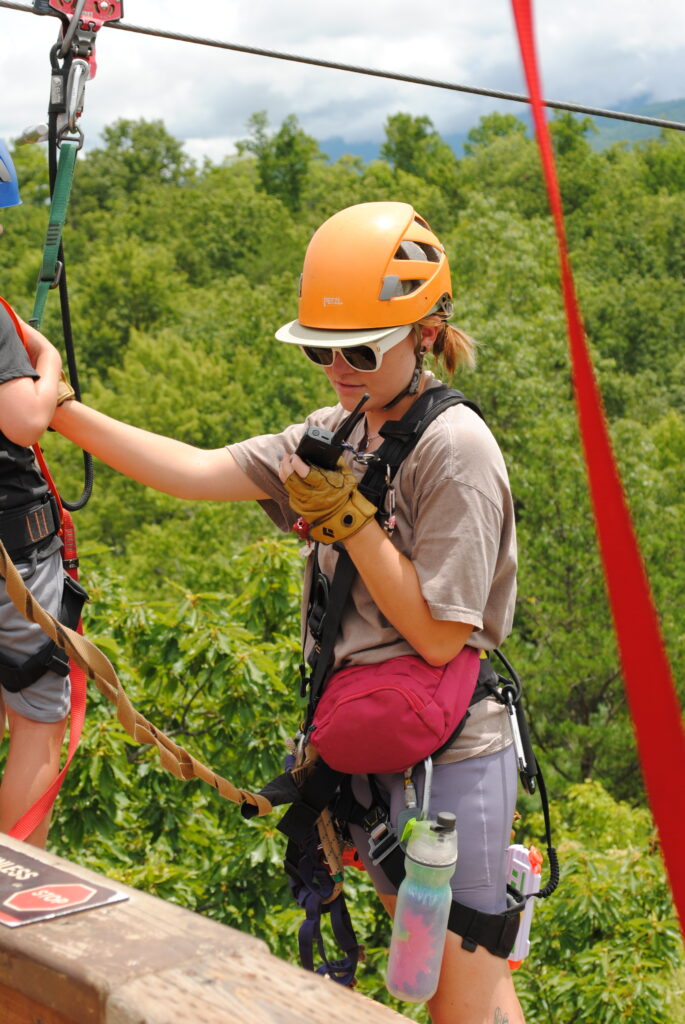
Roaring Fork Motor Nature Trail

CLIMB Works

Ben Carr

If there’s a single drive in the Smokies that qualifies as a true hidden gem, it’s Roaring Fork Motor Nature Trail. It’s a 5.5-mile one-way loop through old-growth forest that starts near the edge of Gatlinburg, and the sheer number of visitors who don’t know it exists is almost hard to believe.

The drive threads through dense forest along a tumbling mountain stream. You’ll pass historic log cabins — real ones, not reconstructions — including the Noah “Bud” Ogle cabin and the Alfred Reagan place, both of which are worth stopping to explore on foot. There are small trailheads along the route (including the path to Grotto Falls, one of the few waterfalls in the park you can actually walk behind), pulloffs for creek access, and wildlife sighting opportunities that rival anything on the more famous Cades Cove loop without the bumper-to-bumper traffic.
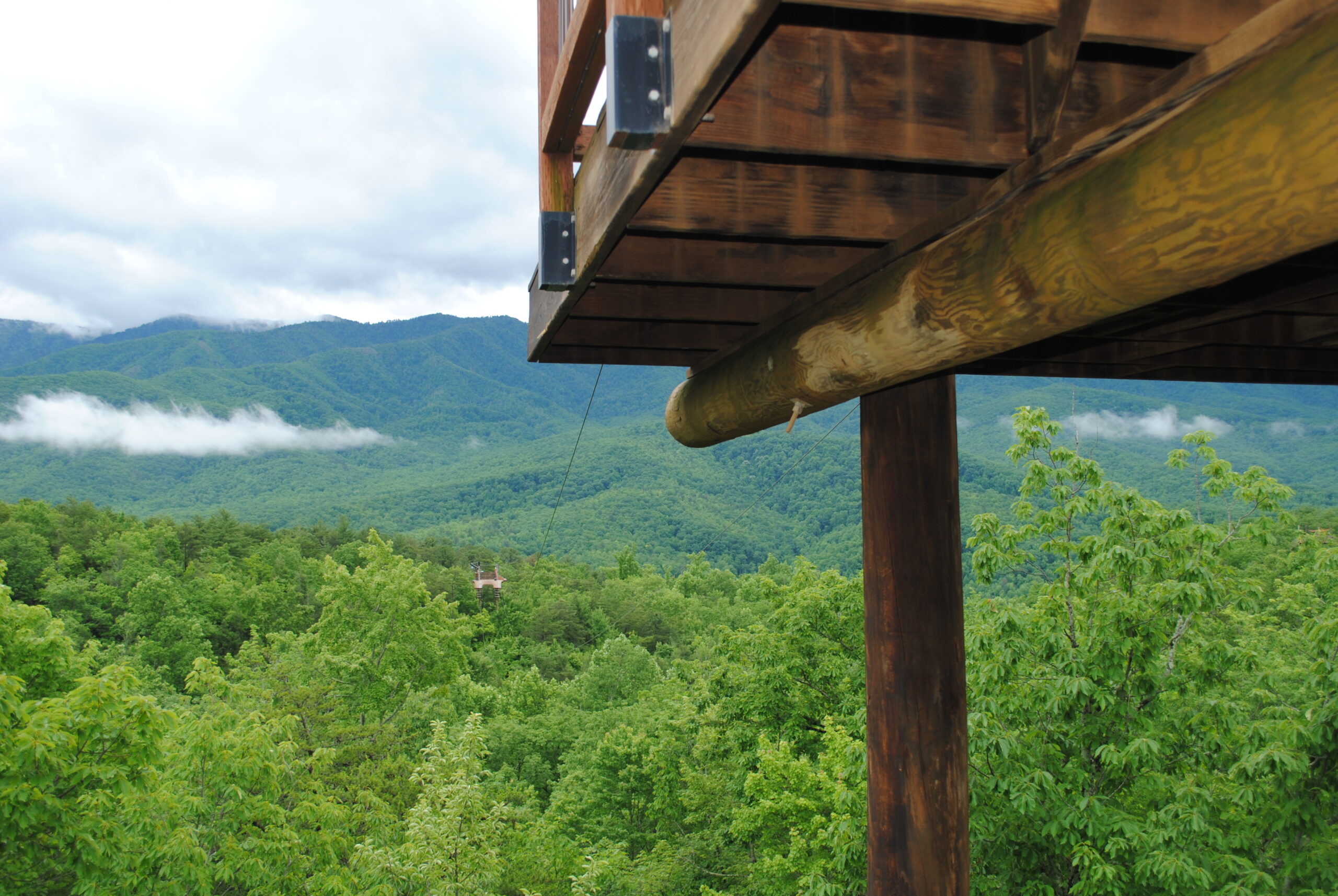
Speaking of Cades Cove: that’s the drive everyone knows about, and on a summer Saturday you might average 3 mph for 11 miles. Roaring Fork gets a fraction of the traffic. You can usually drive it without stopping behind another car, which means you actually enjoy the forest instead of staring at brake lights.
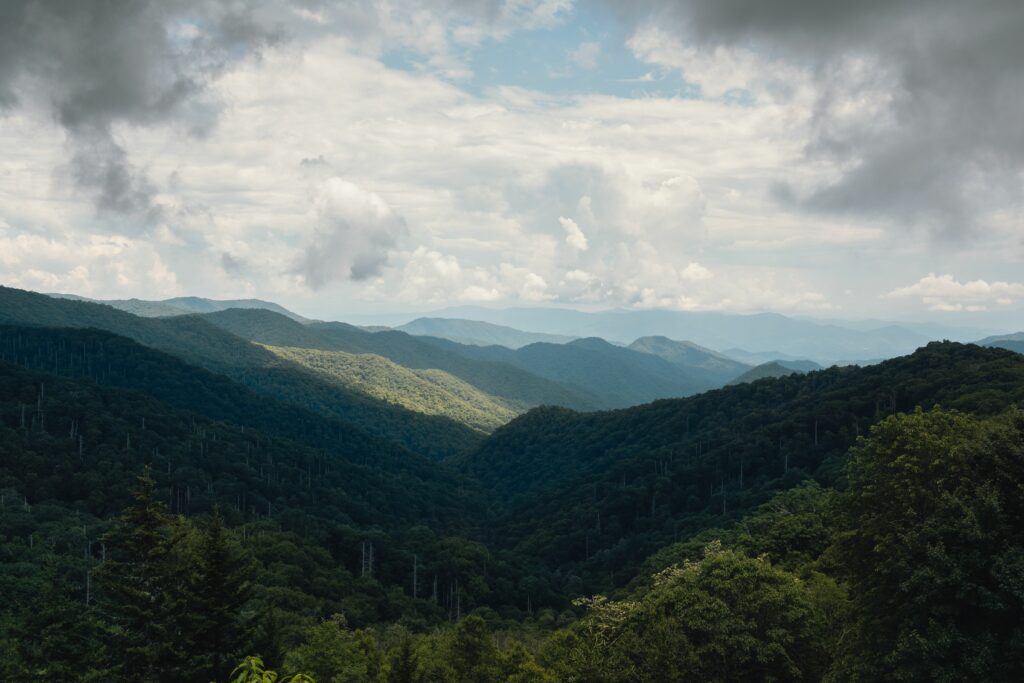
The drive is free, it’s inside Great Smoky Mountains National Park, which charges no admission. The one caveat: Roaring Fork closes in winter (typically December through mid-March) when the road isn’t maintained. Spring through early fall is ideal, and October brings fall color to the mid-elevation canopy along the route.
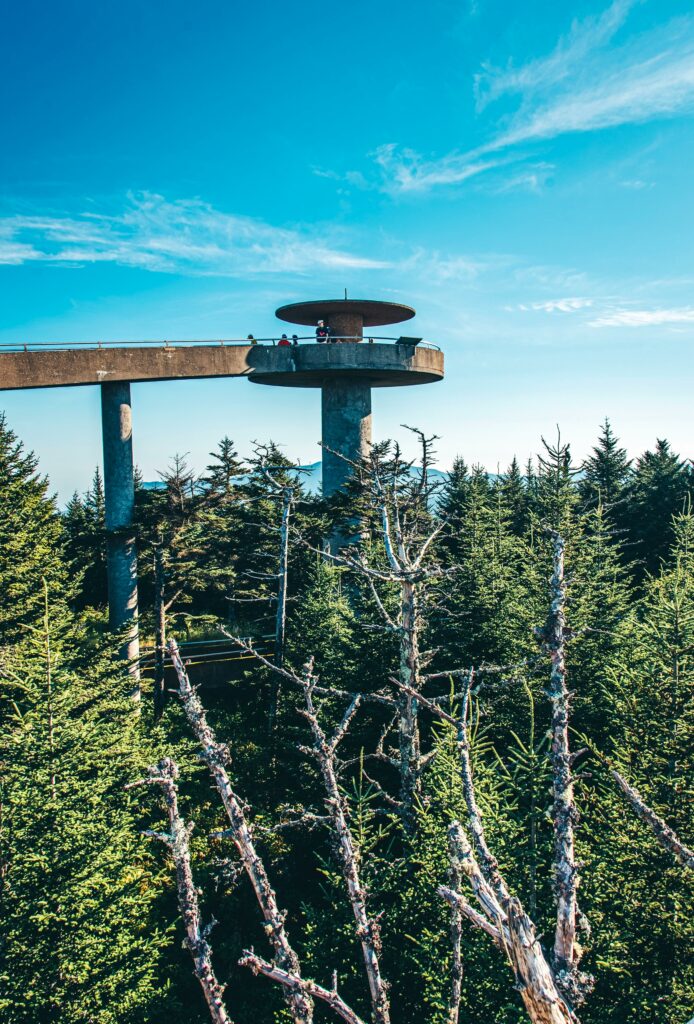
To get there, follow Historic Nature Trail Road from downtown Gatlinburg. You’ll pass the trailhead for the Rainbow Falls trail on the way in. The whole loop takes about 45 minutes without stops, but budget at least 90 minutes to two hours if you want to actually explore. Which you should.

Clingmans Dome at Sunrise or Sunset

CLIMB Works

Photo by Connor Scott McManus

At 6,643 feet, Clingmans Dome is the highest point in the Great Smoky Mountains and the highest point in Tennessee. On a clear day, the observation tower at the summit offers views stretching into six states. On a hazy day (which is common, they’re called the Smokies for a reason), you’ll see ridgeline after ridgeline fading into blue mist, which is honestly just as beautiful in a different way.
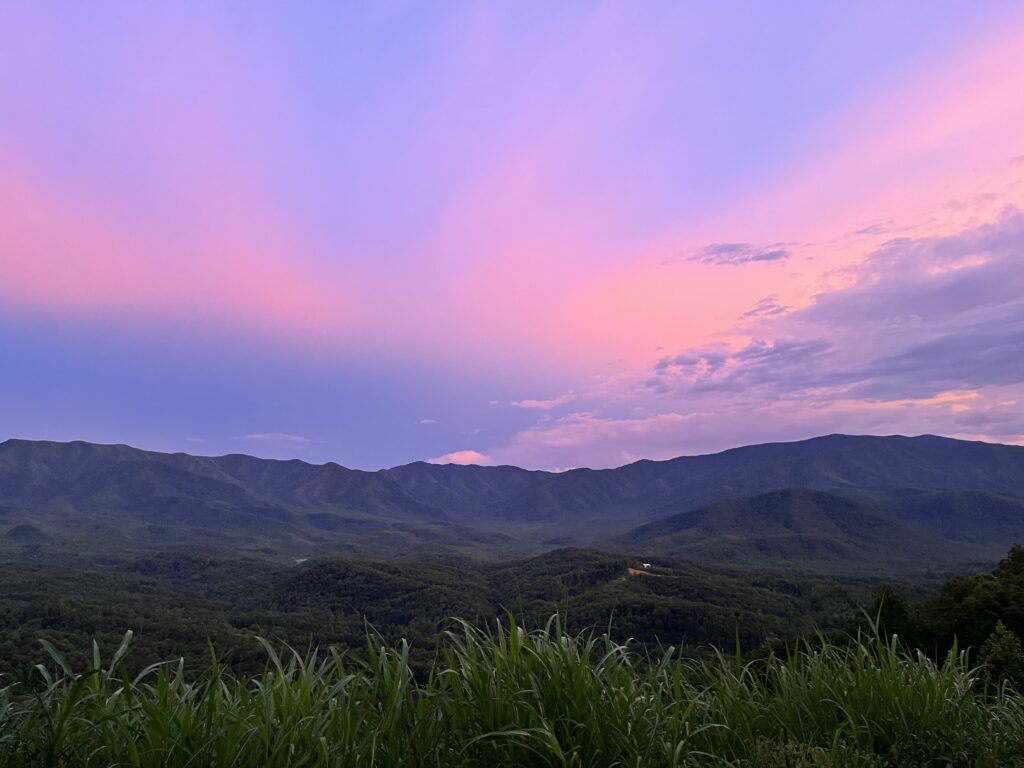
Here’s the thing most visitors get wrong about Clingmans Dome: they go at noon. And at noon in July, the parking lot is full, the paved ramp to the tower is a parade of flip-flops and strollers, and the observation deck feels like a subway platform. The hidden gem version of this experience is arriving at sunrise or during golden hour before sunset. The temperature drops noticeably at this elevation (it can be 15-20 degrees cooler than Gatlinburg), the light is extraordinary, and you might share the tower with a dozen people instead of two hundred.
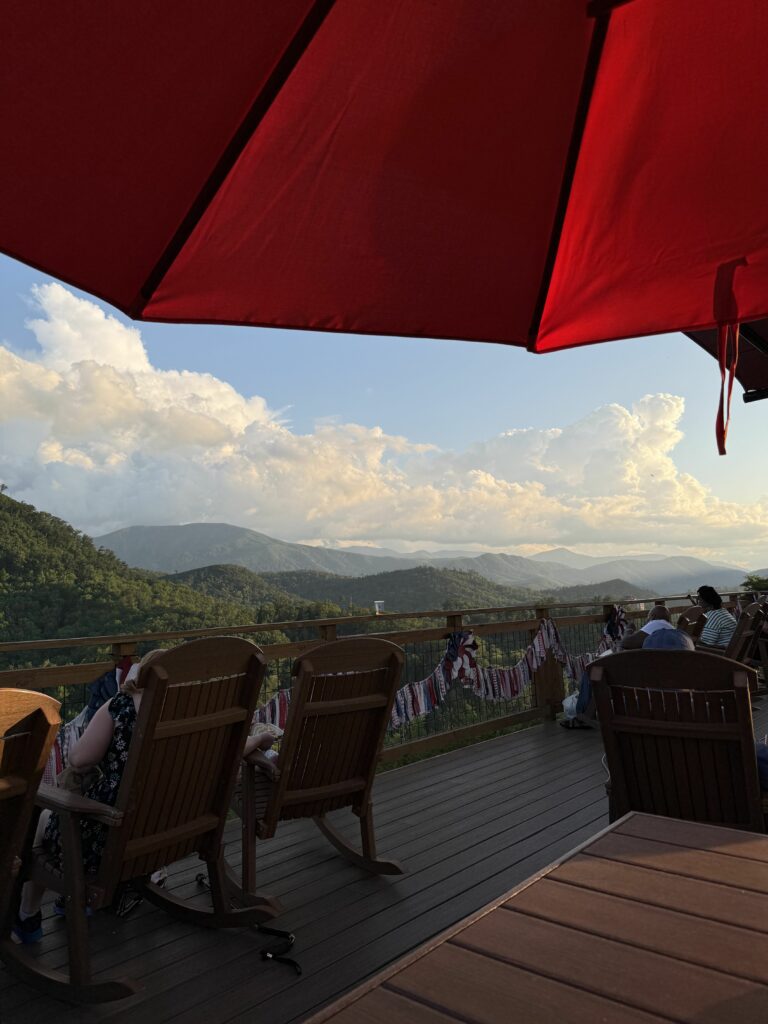
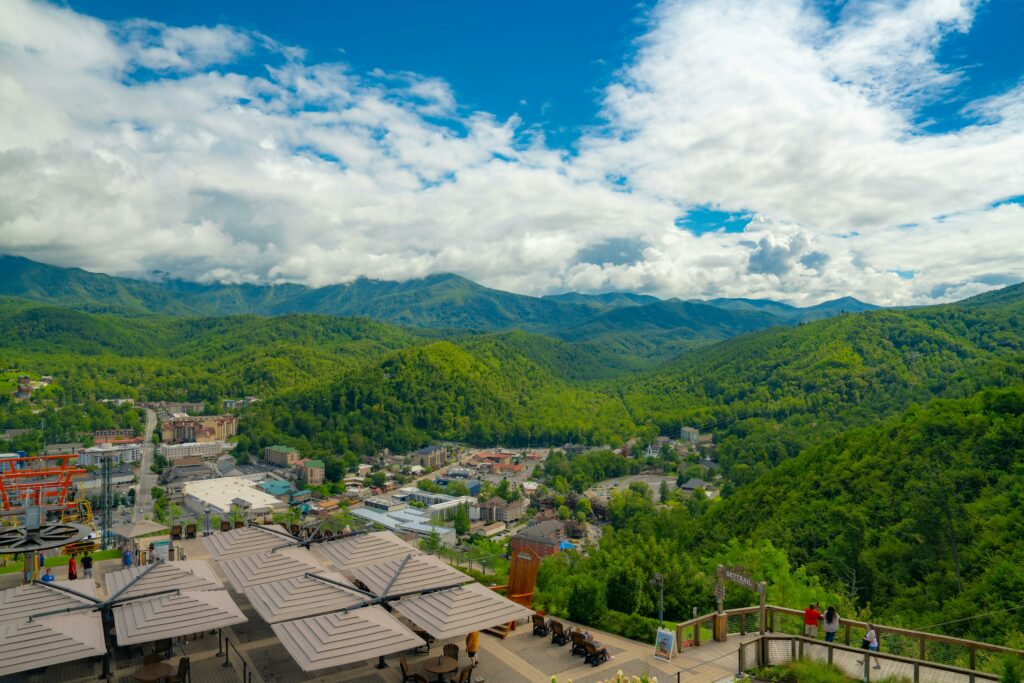
The ramp to the observation tower is a half-mile from the parking lot, and it’s steep. Don’t let the word “paved” fool you, this is a legitimate cardiovascular effort, especially at elevation. People with knee issues or respiratory concerns should take it slow. But it’s short, and the reward at the top is immediate.

October is the single best month for Clingmans Dome. Fall foliage peaks at higher elevations first, meaning the color show starts here a good two to three weeks before it hits the valleys and towns below. If you’re planning a trip specifically for fall color, timing your visit to catch Clingmans Dome in early-to-mid October is a move that will pay off in ways the Pigeon Forge strip simply can’t match. Check the best time to visit the Smoky Mountains for more seasonal timing tips.

Note that the road to Clingmans Dome closes December through March. During open season, the drive from Newfound Gap takes about 25 minutes, and Newfound Gap itself is roughly 45 minutes from Gatlinburg. Start early, bring layers, and carry water.

Tips for Making the Most of These Hidden Gems

Knowing about these spots is half the battle. The other half is timing, preparation, and a willingness to wake up a little earlier than your vacation brain wants to.

Go early or go late. This is the single most impactful piece of advice for any Smoky Mountains visit. Trailhead parking lots fill by 9-10 a.m. during peak season. Scenic overlooks get congested by midday. But show up at 7:30 a.m. or head out at 4 p.m., and you’ll find a fundamentally different experience, with fewer people, better light, cooler temperatures, and more wildlife activity.

October is the sweet spot. If you have any flexibility on when you visit, early-to-mid October delivers the best overall experience in the Smokies. Fall foliage peaks at higher elevations first (Clingmans Dome and the mountaintop zipline tour turn color before Gatlinburg does), the summer crowds have thinned, temperatures are comfortable for hiking, and the morning mist in the valleys is at its most photogenic. The trade-off is that weekends in October can still be busy, so aim for a Tuesday through Thursday window if possible.

Book adventure activities ahead. The Mountaintop Zipline Tour and rafting trips with Smoky Mountain Outdoors both fill up during peak season. We recommend booking at least five days in advance for summer and October dates. Weekday availability is generally better than weekends, and morning tours tend to book first.

Download the NPS app. The National Park Service app gives you real-time trail conditions, parking status at popular lots, road closures, and ranger-led program schedules. It works offline once you’ve downloaded the Great Smoky Mountains park data, which matters because cell service is spotty to nonexistent on many park roads and trails. Spend two minutes downloading it before you leave your rental, and you’ll thank yourself at the trailhead.

Layer up. Elevation changes in the Smokies mean temperature swings of 15-20 degrees between town and ridgeline. Gatlinburg might be 80°F while Clingmans Dome is 60°F and breezy. A light jacket stuffed in a daypack saves a lot of shivering.

CLIMB Works

The Pigeon Forge strip will always be there — the go-karts, the dinner shows, the fudge shops with samples on toothpicks. And there’s nothing wrong with any of it. But the Smoky Mountains didn’t become the most visited national park in America because of go-karts. The real magic is in the quiet spots, the high places, the trails where the only sound is moving water, and yes, the moments where you’re flying above the canopy on a zipline with the entire Smoky Mountain range stretching out in front of you.

We’re biased, obviously (we live and work up on this mountain), but every single thing on this list is worth your time. Pick two or three, give them the morning hours when they’re at their best, and save the Parkway for after dinner. Your trip will be better for it.


CLIMB Works

Best Hikes in Gatlinburg Without the Crowds

This image is by CLIMB Works.

If you’ve ever pulled into the Sugarlands Visitor Center parking lot on a Saturday in June and thought, “Well, this was a mistake,” you’re not alone. The Great Smoky Mountains National Park draws over 12 million visitors a year, making it the most visited national park in the country by a wide margin.

Here’s the thing: finding the best hikes in the Smoky Mountains isn’t really about finding secret trails nobody knows about. (Those don’t really exist anymore, thanks to Instagram.) It’s about knowing which trails thin out quickly, which trailheads to hit at the right time, and which overlooked routes deliver the same jaw-dropping views without the conga line.

We’ve spent years on this mountain, and we have opinions. Some of them might surprise you.

Why Are the Popular Trails So Crowded?

Before we send you off the beaten path, it’s worth understanding what makes a trail crowded in the first place. The usual suspects, like Laurel Falls, Alum Cave, Clingmans Dome, are popular for good reasons. They’re well-maintained, relatively accessible, and they deliver dramatic payoffs.

But the Smokies contain over 800 miles of maintained trails. Eight hundred. Most visitors stick to the same 10 or 15 of them, which means the vast majority of the park is significantly quieter than what you see on the main arteries.

The trick is being willing to drive a little farther, start a little earlier, or accept a trail that’s “just” beautiful instead of bucket-list famous.


Practical Tips for Avoiding Crowds on Any Trail

Even the popular trails have windows of relative quiet. A few strategies that consistently work:

Start Early

Most visitors don’t hit the trailhead before 10AM. If you’re parked and walking by 7:30, you’ll have one to two hours of relative peace on even the busiest trails. Yes, this means setting an alarm on vacation. We know. It’s worth it.

Go on a Tuesday or Wednesday

Weekend traffic in the Smokies is roughly double weekday traffic. If your schedule allows any flexibility at all, save the hiking for midweek and do your Gatlinburg downtown exploring on the weekend.

Embrace the “Bad” Weather Days

A forecast of light rain keeps a remarkable number of people indoors. If you’ve packed a decent rain jacket and don’t mind getting a little damp, an overcast drizzly day in the Smokies is actually gorgeous. You’ll see the fog settles into the valleys, the creeks are more full, and the forest smelling just like it’s supposed to.

(Just keep an eye on conditions. Heavy rain means slippery rocks and potentially dangerous creek crossings.)

Use the Park’s Traffic Maps

The National Park Service has real-time traffic data on their website and app. Check it before you leave your cabin. If Sugarlands looks packed, reroute to Greenbrier or Cosby. Flexibility is your best friend.

Our Favorite (Low-Traffic) Hikes:

1. Porters Creek Trail

One of our favorites trails in the park, Porter’s Creek Trail, will take you on a journey through some of the parks’ oldest infrastructure. The first mile passes old stone walls, a historic cantilever barn, and the Smoky Mountains History Association cabin.

In spring (late March through April), the wildflower display along this trail is legitimately one of the best in the entire park, with trillium, phacelia, violets, and dozens of others carpeting the forest floor.

Keep going and you’ll reach Fern Branch Falls at about 2 miles in, a delicate 40-foot cascade that most people have entirely to themselves on weekday mornings.

CLIMB Works

Distance: 7.6 miles round trip (or just 2 miles to the old homestead)

Difficulty: Easy to moderate

Trailhead: Greenbrier area, about 20 minutes east of Gatlinburg on US-321

Parking note: The Greenbrier road is narrow and gravel. It’s not rough, but it’s not a highway either. Get there before 10 AM on weekends, or go on a weekday and you’ll practically have it to yourself.


2. Hen Wallow Falls Trail

Hen Wallow Falls is a 90-foot waterfall at the end of a 2.2-mile trail that climbs about 900 feet through a gorgeous hardwood forest. The trail is well-maintained and straightforward; just a solid walk in the woods with a real reward at the end.

It’s located in Cosby, which is the “quiet side” of the Smokies. The 45-minute drive from Gatlinburg keeps the day-tripper crowd away, but if you’re looking for one of the best hikes in the Smoky Mountains that actually feels like wilderness, the drive is absolutely worth it.

CLIMB Works

Distance: 4.4 miles round trip

Difficulty: Moderate (steady uphill on the way in, which means easy on the way back)

Trailhead: Gabes Mountain Trail, starting from the Cosby Campground area, about 45 minutes from Gatlinburg

3. Brushy Mountain Trail

Okay, this one earns its solitude the honest way — it’s long, it climbs over 2,800 feet, and the summit isn’t a bald with panoramic views. It’s a heath bald with limited but unique vistas and the kind of deep-woods quiet that makes you realize you haven’t heard a human voice in two hours.

You’ll pass through Porters Creek first (see above), so you get the wildflowers and the waterfall as a bonus on the way in.

CLIMB Works

Distance: 11.2 miles round trip (via Porters Creek Trail and the Brushy Mountain spur)

Difficulty: Strenuous

Trailhead: Same Greenbrier entrance as Porters Creek

The Laurel Falls Question

We should address this because you’re probably wondering. Laurel Falls is the most popular trail in the entire park, and after a two-year renovation, it reopened in spring 2026 with a fully paved walkway and a new viewing platform. At 2.6 miles round trip, it’s a genuinely beautiful and now more accessible hike.

Is it crowded? Yes, especially midday from May through October. Is it still worth doing? Also yes — particularly if you go early (before 8:30 AM) or late (after 4 PM). The new improvements have made the experience better, even with the crowds.

But if you’re specifically looking for solitude, the trails above will serve you better.

A Note on Trail Etiquette

The reason these quieter trails stay nice is because the people who seek them out tend to be the ones who pack out their trash, stay on the trail, and let other hikers pass with a nod and a “morning.” Be that person. The Smokies are loved almost to death in some spots, the quiet corners stay quiet partly because the people who find them treat them well.

The Best Way to See the Forest From Above

CLIMB Works

After spending a day on the trails, there’s something to be said for seeing the Smokies from a completely different perspective. Our Mountaintop Zipline tour at CLIMB Works Smoky Mountains takes you across six ziplines, three sky bridges, and finishes with a rappel — all while looking down at the same forest canopy you just hiked through. It’s a different kind of connection with these mountains, and at 150 feet up, you’ll notice how the ridgelines stack up in a way you can’t appreciate from the trail.

We run rain or shine (we only pause for lightning or high winds), so it pairs well with just about any hiking itinerary. Plus, after a long day on the trail, there’s something deeply satisfying about letting gravity do the work for a change.

CLIMB Works

A Look at CLIMB Works’ Sustainable Practices

This image is by CLIMB Works.

The Great Smoky Mountains see more visitors than any other national park in the country, with over 13 million a year. That means every business operating near the park has a choice: treat the landscape as a backdrop for ticket sales, or treat it as something worth protecting because it’s literally in your backyard. At CLIMB Works, we don’t have to think about eco tourism in abstract terms. Our address is 155 Branam Hollow Rd, Gatlinburg, TN 37738, and we’re surrounded on three sides by national park land. The forest isn’t a marketing asset for us, it’s across the street. It’s the air our guests breathe on the Mountaintop Zipline Tour, the view from every platform, and the reason any of this works in the first place.

This guide breaks down what eco tourism actually means, why the Smokies demand it, how our operations are designed around it, and what you can do as a visitor to make your trip a little lighter on the land.

What Is Eco Tourism And Why Does It Matter in the Smokies?

Eco tourism is responsible travel to natural areas that conserves the environment, supports local communities, and prioritizes low-impact experiences over high-volume consumption. It’s not a trendy label, it’s a framework for making sure the places people love to visit still exist for the next generation.

Now, why does this matter here specifically? Great Smoky Mountains National Park is the most visited national park in the United States. That’s not a casual distinction. Yellowstone gets roughly 4.5 million visitors a year. The Smokies triple that. And unlike parks out west with vast, spread-out acreage, much of the Smokies’ visitor traffic funnels through a relatively compact set of roads, trailheads, and gateway towns, Gatlinburg being the primary one.

CLIMB Works

Photo by Denil Dominic

That concentrated traffic creates real tension. Adventure tourism and conservation aren’t natural enemies, but they’re not automatic allies either. Every ATV trail, every souvenir shop parking lot, every tour operation that doesn’t think about runoff, noise, waste, or habitat disruption makes the problem a little worse. Multiply that across hundreds of businesses in a single corridor, and you’ve got a situation where the thing that draws people here, the wildness, the old-growth forest, the elk, the salamanders, the quiet, gets eroded by the very act of showing up to enjoy it.

But here’s the thing: they can coexist. Sustainable tourism in the Smoky Mountains isn’t about telling people to stay home. It’s about designing experiences that bring people into nature without chewing up the landscape in the process. It means small groups instead of mass tourism. Shared transportation instead of individual vehicles crawling up mountain roads. Guided formats where trained staff manage the visitor footprint. And it means businesses choosing to build with the land rather than on top of it.

That’s the lens we operate through at CLIMB Works. Not because it sounds good on a website, but because we can literally see the national park boundary from our property. If we mess up, we don’t just lose a marketing angle. We lose the thing that makes this place worth being in.

CLIMB Works’ Location: A Neighbor to the National Park

CLIMB Works

The proximity we have to the National Park shapes every operational decision we make, from how we manage stormwater to how we route our UTV trails. When your neighbor is one of the most biodiverse temperate forests on Earth — home to over 19,000 documented species, including more tree varieties than all of northern Europe combined — you don’t get to be careless. The black bears, wild turkeys, and red-tailed hawks that guests spot from our zipline platforms don’t know where our property line ends and the park begins. The watersheds certainly don’t.

Being open year-round means our team doesn’t just experience the mountain during peak tourist season. Our guides are out there in January ice, April wildflower blooms, August humidity, and October leaf-turn. They watch the same ridgeline change across twelve months. They know which platforms get the first morning frost. They know when the tulip poplars go gold before the oaks even start to think about turning. That kind of daily, seasonal familiarity builds something you can’t get from a sustainability consultant’s report. When a staff member notices unusual erosion on a trail section or a shift in where water pools after a heavy rain, they flag it because they’ve been watching that spot for years.

This isn’t theoretical environmental stewardship. It’s the kind of ground-level awareness that comes from working on a mountain, in a forest, next to a national park, 365 days a year. The geography doesn’t let us be anything other than careful.

How the Mountaintop Zipline Tour Is Designed With the Land in Mind

Our Mountaintop Zipline Tour includes 11 adventures in a single guided experience: dual side-by-side ziplines, three aerial bridges, a controlled rappel, and a scenic UTV ride that gains over 400 vertical feet. It runs about two hours, and almost every design choice behind it connects back to minimizing our footprint while maximizing what guests get to see and feel.

Shared Transportation That Reduces Individual Impact

The UTV ride to the upper platforms isn’t just fun, it’s a deliberate logistical choice. Instead of guests driving personal vehicles up a narrow mountain road (more exhaust, more road wear, more parking infrastructure needed at the top), a single shared vehicle carries the group along a maintained route. One trip up, one trip down, controlled speed, controlled path. Compare that to a scenario where every family drives their own car to a mountaintop overlook: the difference in fuel consumption, road erosion, and habitat disturbance adds up fast, especially across thousands of tours a year.

The route itself was designed to follow existing terrain contours rather than cutting new switchbacks into the mountainside. That matters for soil stability and for the root systems of the hardwoods that hold the slope together. You might not notice it as a guest, but the path you’re riding was planned with the mountain’s drainage patterns and tree canopy in mind.

CLIMB Works

An Innovative Braking System That Reduces Wear and Waste

Here’s a detail most people don’t think about: traditional zipline setups often require hand braking, which means more physical intervention, more friction on cables, more frequent cable replacement, and more wear on gloves and gear that eventually end up as waste. Our system doesn’t require hand braking for guests at all. The innovative braking technology handles deceleration automatically, which extends the life of our cables, reduces the volume of consumable gear, and (as a bonus), makes the experience accessible to people who might not have the grip strength or confidence for manual braking.

Less equipment turnover means less material heading to a landfill. It’s a small thing that scales up when you’re running tours six days a week, year-round.

Small Groups and Guided Format

We run small-group guided tours rather than high-volume, self-directed experiences. That means a trained guide is with your group the entire time, managing transitions, hooking up all safety equipment, and keeping the group on designated paths and platforms. This concentrated, supervised format means we’re not spreading visitor impact across a wide area. Guests don’t wander off-trail. They don’t leave gear behind on platforms. They don’t accidentally trample sensitive vegetation because they missed a sign.

Our expert staff handles every equipment hookup and transfer, which means there’s no fumbling with gear, no dropped hardware on the forest floor, and no need for the kind of sprawling instructional infrastructure (massive signage, paved walkways between every station) that a self-guided operation would require.

Rain-or-Shine Operations Cut Waste From Cancellations

CLIMB Works operates rain or shine. We only pause for lightning or sustained winds over 35 mph — conditions our staff monitors in real time from the mountain, not from a weather app. This isn’t just a convenience for guests; it’s an environmental consideration. When tours cancel frequently due to light rain, you get a cascade of waste: rescheduled trips mean extra driving, idling vehicles, duplicated logistics, and the frustration-driven tendency to fill the gap with some other, potentially less sustainable activity. By running through normal weather, we keep the schedule tight and the waste low.

If a weather closure does happen, guests get a reschedule or full refund — no arguments, no fine print. You can read the full booking and cancellation policy for details.

Visiting Responsibly: What Guests Can Do

Eco tourism isn’t just about what operators do, it’s also about the choices visitors make. Here’s how you can keep your Smokies trip as low-impact as possible, starting with your CLIMB Works tour.

Pack Light and Use the Free Lockers

No backpacks are allowed on the tour (except for essential medications), and we provide free lockers for keys and small items. This isn’t just a safety rule, it’s a leave-no-trace practice. Fewer personal items on the course means nothing gets dropped off a platform or blown into the canopy. It means guides aren’t searching for water bottles among the brush after a tour, keeping our activity as low-waste, low-litter as possible.

Book Ahead to Reduce Operational Waste

This one’s practical and environmental: booking at least five days ahead during peak season (especially October) isn’t just smart for availability, it helps us manage our tour capacity efficiently. Last-minute no-shows and cancellations create waste in the form of unused capacity, staff and vehicle time that can’t be recovered, and the downstream effect of guests scrambling to rebook at less-than-ideal times. When our tours run at planned capacity, everything operates more efficiently, meaning less idling, less redundancy, less waste across the board.

You can book online 24/7 or call (865) 325-8116. Our cancellation policy is straightforward: 48+ hours out gets you a full refund or reschedule. Within 48 hours, it’s final.

How to Plan Your Eco-Friendly Smokies Trip with CLIMB Works

Putting together a low-impact Smokies itinerary doesn’t require a spreadsheet. A few practical decisions go a long way.

Arrive 40 minutes early for your tour. This is required — late arrivals forfeit the tour with no refund — but it’s also good eco practice. When guests arrive on time, we avoid idling vehicles, rushed logistics, and the cascade of small inefficiencies that come from running behind. You’ll check in, get your gear, use the restrooms (there are none on the tour itself), and stash your stuff in a free locker. It’s a smooth, low-stress start.

Bring the whole family. The Mountaintop Zipline Tour welcomes ages 5 and up, and kids under 70 lbs can ride tandem with a guide or sibling. That means one experience, one group, one trip — rather than splitting up and doubling your logistics. Kids ages 5–14 need an adult on the tour; ages 15+ can go independently. There are height requirements (42 inches minimum, 6’8″ max) and weight limits (270 lbs, or 250 lbs if under 5’10”), so check those when you book.

Combine with rafting for a full day. Our Smoky Mountain Outdoors combo packages pair ziplining with whitewater rafting — two eco-friendly activities, one day, minimal driving. It’s genuinely the best way to fill a full adventure day without adding to Gatlinburg’s traffic congestion or expanding your environmental footprint across multiple locations.

Stay in the corridor. If you’re lodging in Gatlinburg or the surrounding area, try to cluster your activities geographically. CLIMB Works, the park, Laurel Falls, downtown Gatlinburg — all within a short drive of each other. You don’t need to crisscross three counties to have a great trip. And every mile you don’t drive is a little less exhaust drifting into the hollows.

CLIMB Works

Making Eco Tourism Real, Not Just Aspirational

The phrase “eco tourism” gets thrown around a lot, sometimes by businesses that slap a green label on the same old operation. We’d rather let the details speak: a location bordered on three sides by the national park, a tour designed to move with the mountain instead of reshaping it, a braking system that extends equipment life, a partnership network that keeps visitors exploring deeply instead of driving endlessly, and a team that’s been watching this particular stretch of the Smokies through every season for years.

If you’re planning a Smokies trip and want it to feel good in more ways than one, our Mountaintop Zipline Tour is a solid place to start – not because we’re telling you it is, but because you’ll be 400 feet up a mountain, looking out at one of the most biodiverse forests in the world, and knowing the experience was built with conservation and protection in mind.


CLIMB Works

Gatlinburg Vacation Ideas: Top Things to Do in 2026

This image is by CLIMB Works.

Gatlinburg sits in a narrow valley at the base of the Great Smoky Mountains, and it punches way above its weight for a town of about 4,000 year-round residents. If you’re gathering Gatlinburg vacation ideas for 2026, you’re in the right place — we’ve spent years showing people these mountains from 150 feet up, and we’ve picked up a few opinions about what’s worth your time on the ground, too. This guide covers the outdoor adventures, family attractions, scenic drives, restaurants, and practical planning details you actually need to build a trip that doesn’t feel like a checklist.

Why Gatlinburg Is the Ultimate Smoky Mountain Vacation Destination

Here’s what makes Gatlinburg different from other mountain tourist towns: you can walk out of a candy shop, drive eight minutes, and be standing in genuine wilderness inside the most visited national park in America. That combination of small-town walkability and direct national park access is hard to find anywhere else in the eastern U.S.

CLIMB Works

Photo by Denil Dominic

The town works for basically everyone. Families with young kids can fill a week without running out of things to do. Couples looking for a slower pace can build a trip around scenic drives, craft distilleries, and long dinners. And if your group wants to spend every waking hour outside — hiking, ziplining, rafting — Gatlinburg is happy to oblige. The Smoky Mountains don’t care whether you’re a hardcore hiker or someone who just wants to sit on a cabin porch and watch fog roll through the valley. There’s room for all of it.

One thing worth knowing up front: Gatlinburg is a gateway town, not just a destination. The best things to do here involve the mountains around it as much as the town itself. Plan accordingly.

Outdoor Adventures That Define a Gatlinburg Vacation

Let’s be honest, if you come to Gatlinburg and don’t spend time outside, you’re missing the point. The town is charming, sure, but the Smoky Mountain outdoor activities are what make this place special. And here’s a tip that surprises a lot of first-time visitors: most outdoor adventures here operate in conditions that would cancel activities in other destinations. Rain? Overcast? A little chilly? That’s just Tuesday in the Smokies. Don’t let a imperfect forecast keep you indoors.

Ziplining Through the Smoky Mountain Canopy

We run a Mountaintop tour at CLIMB Works Smoky Mountains that we’re (understandably) biased about, but here are the facts and you can decide for yourself: 6 ziplines, 3 sky bridges, and a rappel finish, with the highest line reaching 200 feet above the forest floor. The whole experience takes about 2 hours, which makes it a natural half-day anchor for your itinerary. Do it in the morning and you’ve still got a full afternoon ahead.

CLIMB Works

A few practical details for planning purposes:

Requirements: Maximum 270lbs if you’re over 5’10, 250lbs if you’re 5’9 or below. You must be at least 5 years old and 42 inches tall to participate. If you weigh under 70 lbs, you may be required to ride tandem with a guide or a lightweight sibling.
Weather policy: We operate rain or shine. The only things that shut us down are lightning and sustained winds above 35 mph, which is rare. A misty morning ziplining through cloud-wrapped forest canopy? That’s honestly one of the best versions of the experience.
Plan Ahead: Book early in your trip. If you schedule it for day one or two, you’ve got flexibility to shift if you happen to hit one of those rare lightning days. Plus, it sets the tone. There’s something about starting a vacation 150 feet above the trees that recalibrates your whole week. Everything afterward feels a little more vivid.

Hiking the Great Smoky Mountains National Park

The park has over 800 miles of trails, which can feel paralyzing when you’re trying to pick one. Here’s how we’d break it down:

For families and casual hikers: The Laurel Falls trail just reopened in Spring 2026 after a two-year renovation, and it’s better than ever. The 2.6-mile round trip now features a fully paved walkway and a new viewing platform at the falls. It’s the most accessible waterfall hike in the park, and the upgrade means strollers and folks with mobility concerns can enjoy it too. Get there before 9 AM if you’re visiting June through October – it’s popular for good reason.

For moderate hikers: Alum Cave Trail (4.4 miles round trip to the bluffs) offers dramatic rock formations and arch bridges without requiring a full-day commitment. Grotto Falls (2.6 miles round trip) lets you walk behind the waterfall, which kids absolutely lose their minds over.

For the ambitious: Charlies Bunion via the Appalachian Trail is a 8-mile round trip with elevation gain that’ll remind you what your legs are for, but the payoff is worth every step.

CLIMB Works

Photo by: Beth Fitzpatrick

Pro tips that actually matter:

– Arrive at trailheads before 8 AM during summer and fall. Parking fills up and doesn’t turn over quickly.
– Pack layers regardless of the forecast. Elevation changes of 2,000+ feet mean the temperature at a summit can be 10–15°F cooler than the trailhead.
– Check the NPS website or call the Sugarlands Visitor Center for current trail conditions. Closures happen, especially after heavy rain.

Whitewater Rafting, Horseback Riding, and More

The Smokies’ outdoor adventure menu goes well beyond hiking and ziplining:

Whitewater rafting on the Pigeon River is a half-day commitment (plan 3–4 hours including transport). Our rafting partner, Smoky Mountain Outdoors (SMO), runs trips on both the Upper and Lower Pigeon. The Upper section has Class III and IV rapids for thrill-seekers, while the Lower section is a gentler float suitable for families with younger kids. We actually offer package deals with SMO, which is worth looking into if you want to stack a ziplining morning with a rafting afternoon.

CLIMB Works

Horseback riding through Cades Cove gives you the pastoral, wide-valley version of the Smokies. Think open meadows, historic cabins, and the chance to spot deer and wild turkeys. Several outfitters run guided rides lasting 45 minutes to a couple hours.

River tubing on the Little Pigeon River runs right through the edge of town and works best in summer when water levels cooperate. It’s low-key, low-cost, and takes about 1–2 hours.

Fishing in the park’s streams is excellent for smallmouth bass and rainbow trout. You don’t need a Tennessee state fishing license inside park boundaries, just a valid park fishing permit, which is free. (Yes, really.)

Family-Friendly Gatlinburg Attractions

When you need a break from the trails, or the weather turns ugly, Gatlinburg’s indoor attractions are better than they have any right to be for a town this size.

Ripley’s Aquarium of the Smokies consistently ranks among the top aquariums in the country, and it’s not just hype. The shark tunnel and penguin exhibit will hold kids’ attention for 2–3 hours easily. It’s right on the Parkway, so you can walk to lunch afterward.

Anakeesta is a mountaintop theme park accessible by gondola, with treetop walks, a mountain coaster, and genuinely good views. Budget 3–4 hours. It’s pricey (check their site for current rates), but the kids-to-entertainment ratio is strong.

Gatlinburg SkyLift Park takes you 1,800 feet up via chairlift to SkyBridge, one of the longest pedestrian suspension bridges in North America. The glass floor panels in the middle section are a fun litmus test for who in your family handles heights well. (It’s always the person you least expect.)

For rainy-day backup plans, the Gatlinburg Space Needle observation deck and the mirror maze attractions along the Parkway are solid 1–2 hour fills. The key is not over-scheduling these. Group two or three walkable downtown attractions into a single afternoon and save your main days for the mountains.

Scenic Drives and Sightseeing

Not every great Gatlinburg experience requires hiking boots or an adventure booking. Some of the best moments happen through a car window (or standing at an overlook catching your breath).

CLIMB Works

Kuwohi in the fog

Roaring Fork Motor Nature Trail is a one-way, 5.5-mile loop that starts right at the edge of Gatlinburg. It winds past old-growth forest, hist

oric homesteads, and several trailheads. No RVs or buses allowed, which keeps it feeling intimate. Budget 45 minutes if you’re just driving; longer if you stop to explore.

Newfound Gap Road (US-441) crosses the park from Gatlinburg to Cherokee, NC, climbing to 5,046 feet at Newfound Gap. The overlooks along the way are stunning, and on clear days you can see for 100 miles. The drive takes about an hour one-way without stops, but you’ll want to stop.

Kuwohi (formerly Clingmans Dome) is the highest point in the Smokies at 6,643 feet. The half-mile walk from the parking area to the observation tower is steep but paved, and the 360-degree views from the top are the kind you remember. Keep in mind, the road to Kuwohi closes December through March, so plan accordingly if you’re visiting in winter.


Traffic tips: During peak season (June–August and October), avoid driving Newfound Gap Road between 10 AM and 3 PM. Early morning departures, we’re talking 7:30 AM, reward you with lighter traffic, better light for photos, and a higher chance of wildlife sightings.

Where to Eat and Shop in Gatlinburg

Gatlinburg’s food scene isn’t going to win any James Beard awards, but it has genuine personality. And the shopping, particularly once you get off the main drag, is better than you’d expect.

Eating: Pancake houses are a Gatlinburg institution. The Pancake Pantry on the Parkway has been open since 1960 and there’s usually a line, but it moves fast and the buckwheat pancakes are the real deal. For dinner, The Peddler Steakhouse sits right on the river and lets you pick your own cut from a salad-bar-style meat display (trust us, it works). If you want something more casual, Smoky Mountain Brewery has solid pub food and locally brewed beer.

Drinking: Don’t sleep on the craft distilleries. Sugarlands Distilling Company and Ole Smoky Moonshine both offer cheap tastings on the Parkway. Even if moonshine isn’t your thing, it’s worth ducking in for the experience.

Shopping: Skip the generic souvenir shops (or don’t — no judgment) and head to The Village Shops, a European-style shopping area tucked off the Parkway with about 27 boutiques. For something truly unique, drive the Great Smoky Arts & Crafts Community, an 8-mile loop east of town where over 100 artisans sell handmade pottery, leather goods, brooms, candles, and woodwork from their own studios. It’s the largest independent artisan community in North America, and it feels nothing like a tourist trap.

CLIMB Works

Photo by Denil Dominic

The natural move: pair dinner and a downtown stroll after a full day outdoors. The Parkway at dusk has a different energy than it does at noon. It’s mellower, more atmospheric, and slightly less crowded.

How to Plan Your Gatlinburg Vacation Itinerary

Most visitors stay 3–5 days, and three full days hits the sweet spot for a first trip. Here’s a sample itinerary that balances adventure, sightseeing, and downtime:

Day 1: Adventure Day

– Morning: CLIMB Works canopy tour (book the earliest time slot; you’ll beat the heat and have the rest of the day open). Plan for about2.5 hours start to finish.
– Afternoon: Laurel Falls hike (2.6 miles round trip, 1.5–2 hours with photo stops). Drive time from CLIMB Works to the trailhead is about 20 minutes.
– Evening: Dinner at The Peddler, then walk the Parkway for ice cream or a moonshine tasting.

Day 2: Park Exploration Day

– Morning: Drive Newfound Gap Road to Kuwohi. Leave by 7:30 AM. Plan 3–4 hours round trip including the summit walk.
– Afternoon: Roaring Fork Motor Nature Trail on the way back into town (~45 min), then a late lunch downtown.
– Evening: Explore the Arts & Crafts Community loop (shops close around 5–6 PM, so time it right) or relax at your cabin.

Day 3: Family Fun Day

– Morning: Ripley’s Aquarium (2–3 hours) or Anakeesta (3–4 hours).
– Afternoon: River tubing if it’s summer, or Gatlinburg SkyLift Park for the bridge walk.
– Evening: The Village Shops, dinner at Smoky Mountain Brewery, and whatever strikes your fancy on the Parkway.

Planning tips that save headaches:

– Book adventure activities and popular restaurants as early as possible, especially during peak fall foliage (mid-October) and summer weekends. Things sell out.
– Schedule your must-do outdoor activities early in the trip. Since things like ziplining run in almost all weather, you’re likely fine, but having a buffer day means nothing gets missed if plans shift.
– Save indoor attractions as backup options, not scheduled activities. You probably won’t need them, but knowing they’re there takes the stress out of a rainy morning.

Best Time to Visit Gatlinburg

There’s really no bad time to visit, but each season delivers a different trip:

Spring (April–May): Wildflowers, waterfalls at peak flow, mild temps (50s–70s). Moderate Synchronous fireflies event in late May/early June requires a lottery; make sure to plan way ahead

Summer (June–August): Full activity menu, long days, swimming holes. Make sure to arrive at trailheads before 8 AM or expect parking headaches.

Fall (September–November): Foliage peaks mid-October, crisp air, harvest festivals. Book accommodations months in advance for October; it’s one of Gatlinburg’s busiest months.

Winter (December–February): Holiday lights, smaller crowds, lower prices, occasional snow. Some seasonal attractions close, but winter hiking is peaceful.

The insider move: Late September and late April are the shoulder-season sweet spots. Comfortable temperatures, manageable crowds, and full access to outdoor activities. Most adventure experiences, including ziplining, operate year-round, so you’re not giving up much by avoiding peak dates.

CLIMB Works


However you build your Gatlinburg trip, the thing we’d encourage most is leaving room in your schedule for the unplanned stuff — the overlook you didn’t know about, the trail that catches your eye, the extra hour on the cabin porch because the sunset is doing something ridiculous over the ridgeline. The mountains have been here for 300 million years. They’re not in a hurry, and your vacation shouldn’t be either.

And if you want to see all of it from 200 feet up, we know a place.

CALL US BOOK NOW