The Great Smoky Mountains are the most biodiverse national park in the United States, and summer is when that biodiversity puts on a show. With over 65 mammal species, 200+ bird species, and more salamander diversity than anywhere else on the planet, the Smokies reward anyone willing to slow down and look. Smoky mountain wildlife doesn’t require a telephoto lens or a PhD in ecology to appreciate. You just need to know where to look, when to go, and what to watch for.
Here are the animals summer visitors are most likely to encounter:
- Black bears — roughly 1,500 roam the park, most active at dawn and dusk
- White-tailed deer — found in meadows and along roadsides, often with fawns in tow
- Wild elk — reintroduced in 2001, best seen in Cataloochee Valley
- Wild turkeys — commonly spotted strutting through fields and forest edges
- Red-tailed hawks and barred owls — soaring above ridgelines or calling from deep woods
- Eastern box turtles — crossing trails and roads, especially after rain
- Synchronous fireflies — the park’s famous light show, peaking late May through mid-June
- River otters — returned to park waterways and visible along stream banks
Black Bears: The Smokies’ Most Famous Residents
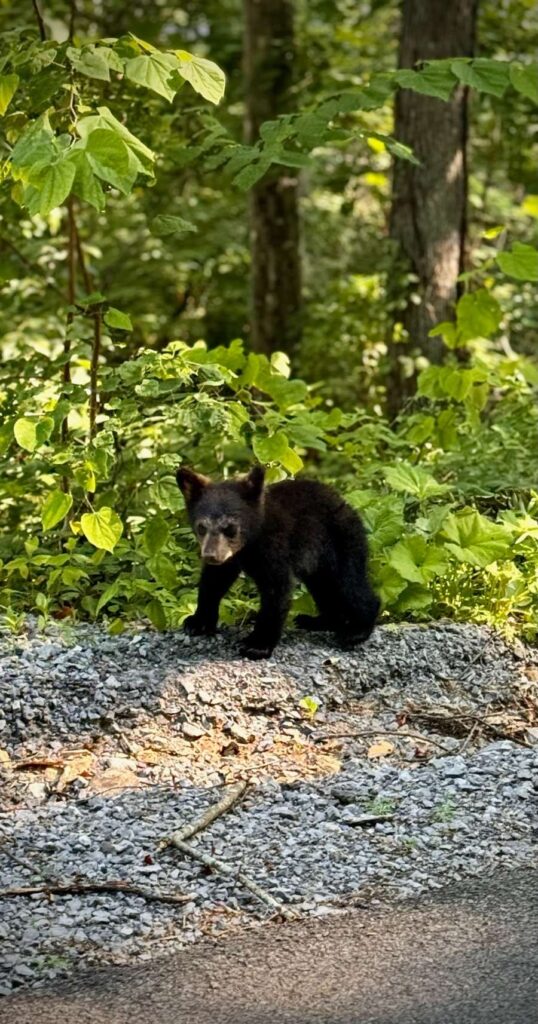
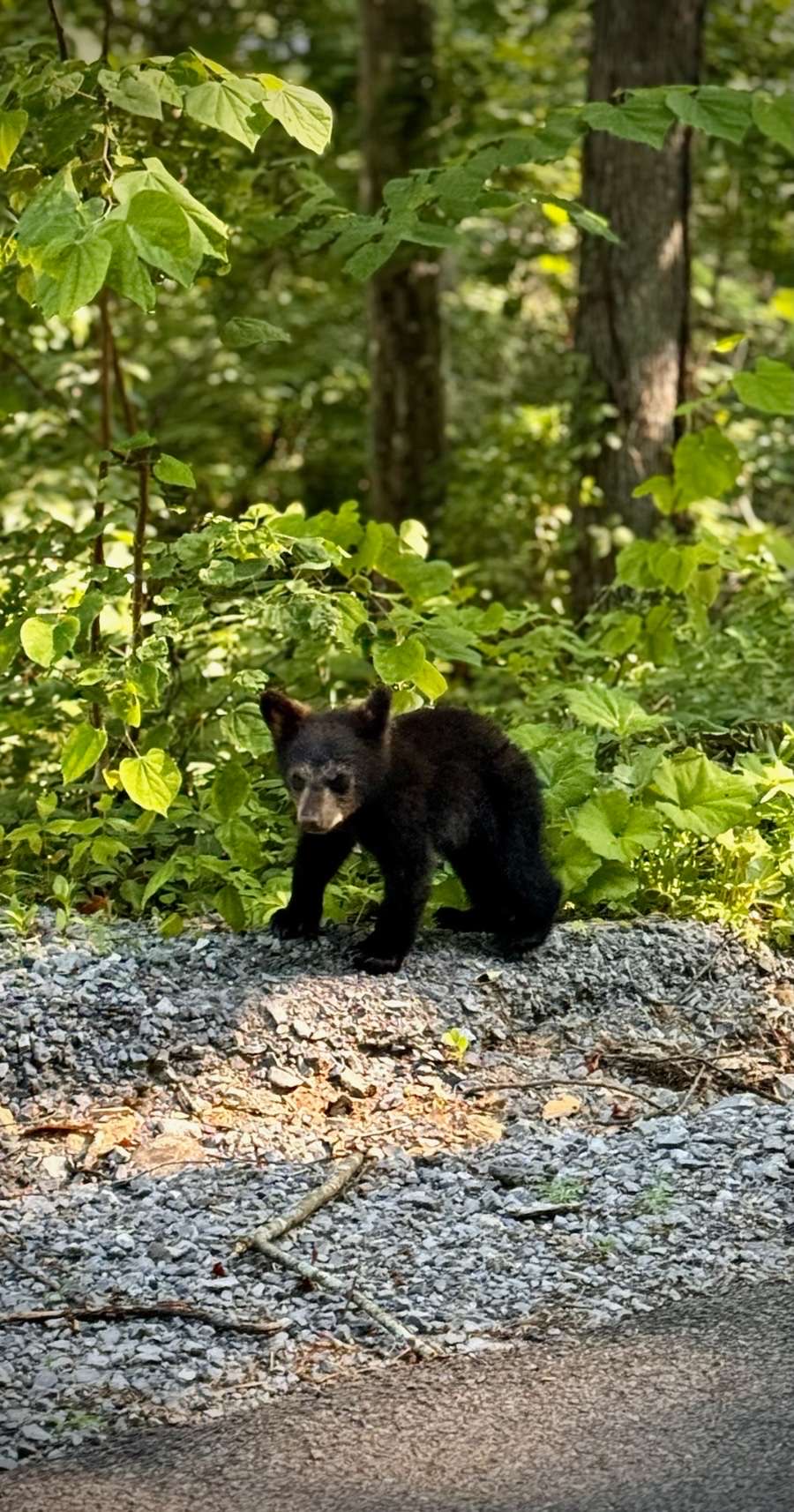
If there’s one animal that defines a Smoky Mountains vacation in people’s minds, it’s the black bear. Roughly 1,500 black bears live within the park’s boundaries, making this one of the highest-density bear populations in the eastern United States. That works out to approximately two bears per square mile — so yes, the odds of spotting one in summer are actually good.
Summer is peak activity season for black bears. They’ve emerged from winter dens and are in full foraging mode, eating up to 20,000 calories a day as they build reserves before fall’s hyperphagia (that frantic pre-hibernation eating frenzy). You’ll find them grazing on grasses, flipping logs for grubs, and stripping berries from bushes along trail edges and roadsides.
Where to Look
Cades Cove is the most reliable spot in the entire park for bear sightings. The 11-mile one-way loop road passes through open meadows bordered by dense forest, making it the perfect bear habitat. Early morning drives (before 9 a.m.) or late afternoon visits give you the best chance. Be prepared for “bear jams” — those sudden traffic stops when someone spots a bear and everyone hits the brakes. They’re part of the Cades Cove experience, for better or worse.
Meadow edges at dawn and dusk are your best bet anywhere in the park. Bears are crepuscular, or most active in the low-light hours, and they tend to feed where forest meets clearing. Our guides at CLIMB Works occasionally spot bears in the wooded areas surrounding the course, particularly early in the morning before the first tour heads out. The property sits right across from Great Smoky Mountains National Park, so the wildlife doesn’t always observe the property line.
What to Do If You Encounter One
The National Park Service requires visitors to stay at least 50 yards (roughly the length of half a football field) from any bear. If you encounter one on a trail, stop moving, make yourself look large, and speak in a calm, firm voice. Do not run; bears can hit 30 mph, and running can trigger a chase response. Instead, back away slowly while facing the bear. If a bear approaches you, stand your ground, make noise, and throw non-food objects in its direction. Never, under any circumstances, feed a bear. A fed bear is a dead bear — that’s not a slogan, it’s literally what happens when bears become habituated to human food and have to be euthanized.
White-Tailed Deer: Gentle and Surprisingly Common
White-tailed deer are probably the easiest large animal to spot in the Smokies, and summer is the most charming time to see them. Does are nursing fawns born in late May and June, and you’ll frequently see them grazing in open meadows at dawn and dusk.
A quick but important note for families: if you see a fawn lying alone in grass or underbrush, do not touch it or try to “rescue” it. Does leave their fawns hidden while they forage, returning every few hours to nurse. The fawn isn’t abandoned; it’s following instinct by staying still and quiet to avoid predators. Picking it up or moving it can actually separate it from its mother permanently. This is one of the most common mistakes well-meaning visitors make, and park rangers deal with it every summer.
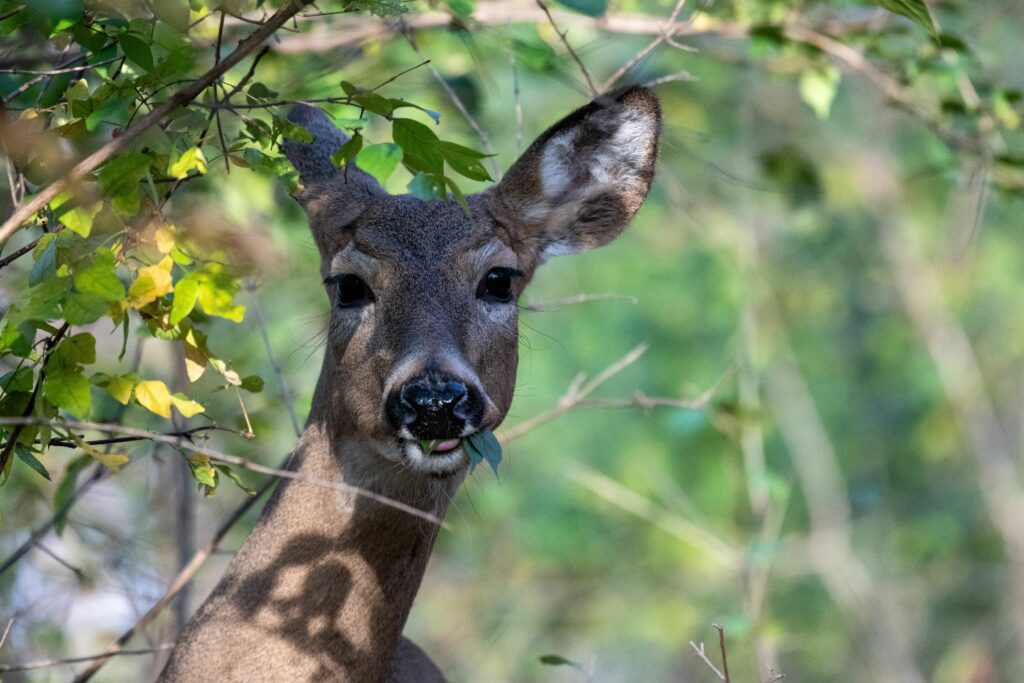
Photo by Andrew Patrick
Best Spots for Deer Watching
Cades Cove is, once again, the premier location. The broad meadows here are essentially a buffet for deer, and you’ll often see groups of 10 or more grazing in the early morning light. It’s a misty meadow ringed by ancient mountains, and deer moving through the grass like they’ve been doing it for centuries (because they have).
The fields around Oconaluftee Visitor Center on the North Carolina side of the park are another excellent option, especially if you’re already heading that direction for the Mountain Farm Museum. Deer frequently graze right alongside the historic buildings there, seemingly unbothered by the visitors.
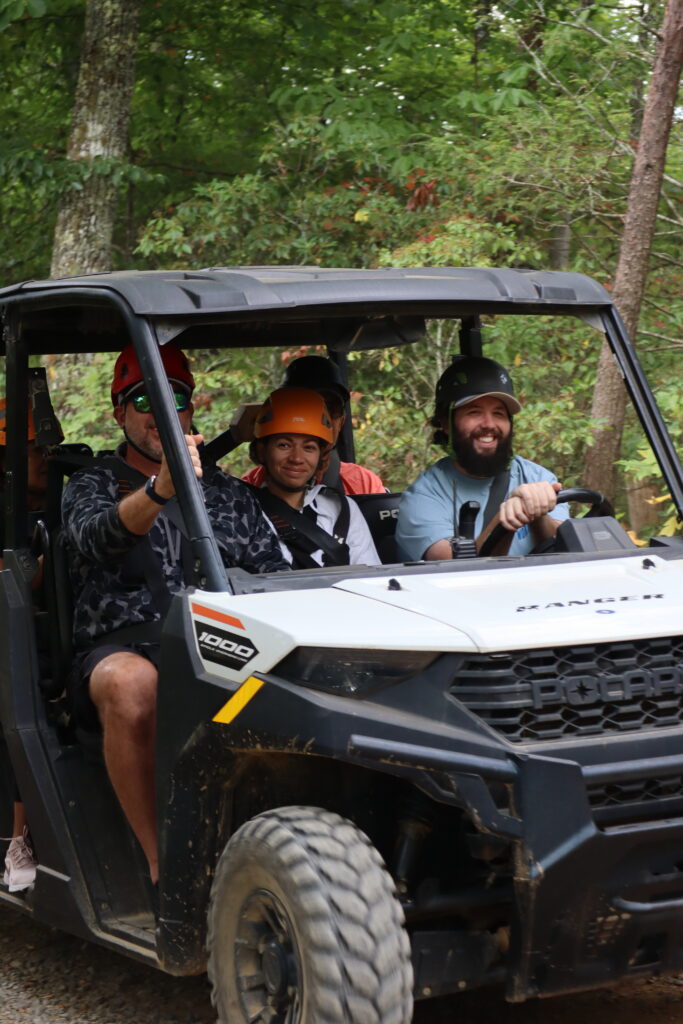
On our property, deer are practically neighbors. Guests heading up the UTV ride on the Mountaintop Zipline Tour regularly spot deer grazing along the tree line, especially on quieter weekday mornings. It’s one of those details that catches people off guard; they came for the ziplining, and they got a wildlife encounter as a bonus.
Wild Elk: A Conservation Success Story
Elk once roamed the southern Appalachians in herds, but by the mid-1800s, they’d been hunted to regional extinction. In 2001, the National Park Service launched a reintroduction program, releasing 25 elk from Land Between the Lakes in Kentucky into the Cataloochee Valley on the park’s eastern edge. More followed in subsequent years. Today, about 200 elk live in and around the Smokies, and spotting them is one of the most memorable wildlife experiences the park offers.
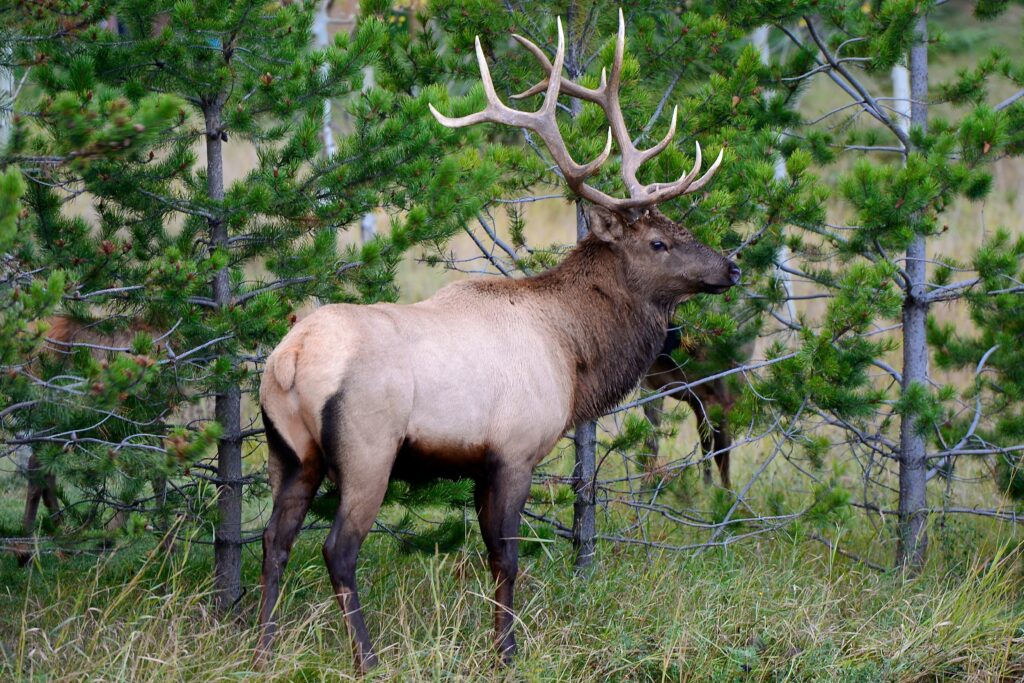
Photo by Jack Borno
Where to Find Them
Cataloochee Valley is the go-to location, and it’s worth the drive even though the road in is narrow, winding, and unpaved for the last stretch. The valley is remote enough that it doesn’t draw the same crowds as Cades Cove, which means calmer conditions for both you and the elk. Summer evenings are ideal — the elk tend to emerge from the forest into the open fields as temperatures cool. Bring binoculars and a long lens if you have one.
Wild Turkeys, Woodpeckers, and Birds Worth Watching For
Wild turkeys are one of those animals you’ll spot without even trying. They strut along roadsides, peck through meadow edges, and occasionally hold up traffic with the same casual disregard for schedules as the bears. Toms are especially showy in early summer, still displaying for hens with their fans spread and chests puffed. Cades Cove, again, is prime territory, but you’ll also see them along Forge Creek Road, Little River Road, and sometimes just wandering through picnic areas like they own the place (which, arguably, they do).\
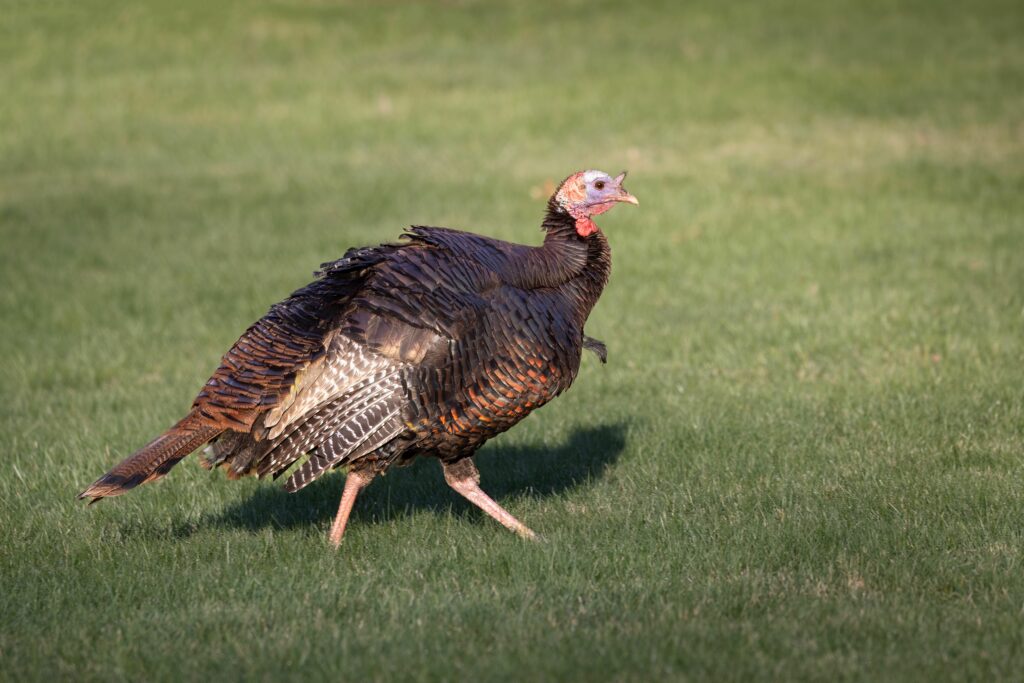
Photo by Mohan Mannapaneni
Summer Migrants and Year-Round Residents
The Smokies host over 200 bird species, and summer brings a fresh wave of neotropical migrants that make the park a birder’s paradise. Scarlet tanagers flash red and black through the canopy. Wood thrushes deliver their flute-like songs from deep shade. Hooded warblers, ovenbirds, and black-throated green warblers fill the understory with sound.
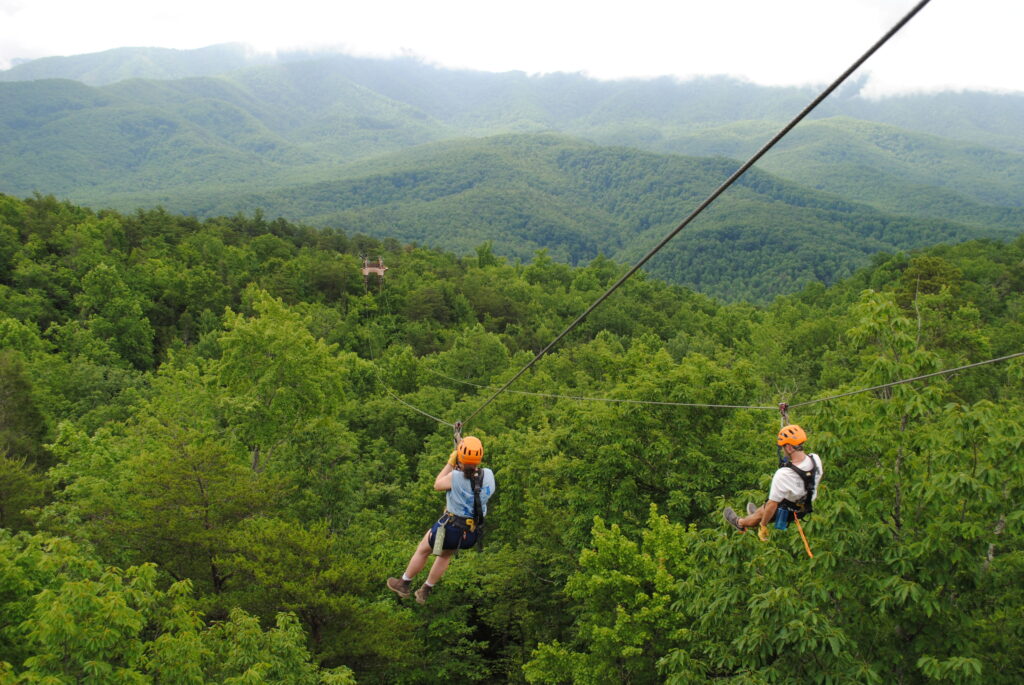
Red-tailed hawks and broad-winged hawks are frequently spotted soaring over ridgelines, riding thermals with barely a wingbeat. On our Mountaintop Zipline Tour, guests sometimes find themselves at roughly the same height as these raptors. Our guides point them out when they spot them.
Smaller Creatures You Might Overlook
The Smokies’ most famous residents get all the attention, but some of the park’s most remarkable wildlife fits in the palm of your hand (though you should never put it there).
Salamanders: The Smokies’ Hidden Stars
The Great Smoky Mountains are known as the Salamander Capital of the World, home to at least 30 species. That’s more salamander diversity than anywhere else on the planet. Most are small, secretive, and live under rocks, logs, and leaf litter near streams. The Jordan’s salamander (also called the red-cheeked salamander) is found only in the Smokies — nowhere else on Earth. If you’re hiking near streams after a rain, flip a log gently (and put it back exactly as you found it), and you may find a lungless salamander clinging to the damp underside. These creatures breathe entirely through their skin, which is one reason the park’s clean, unpolluted streams are so critical to their survival.
Synchronous Fireflies
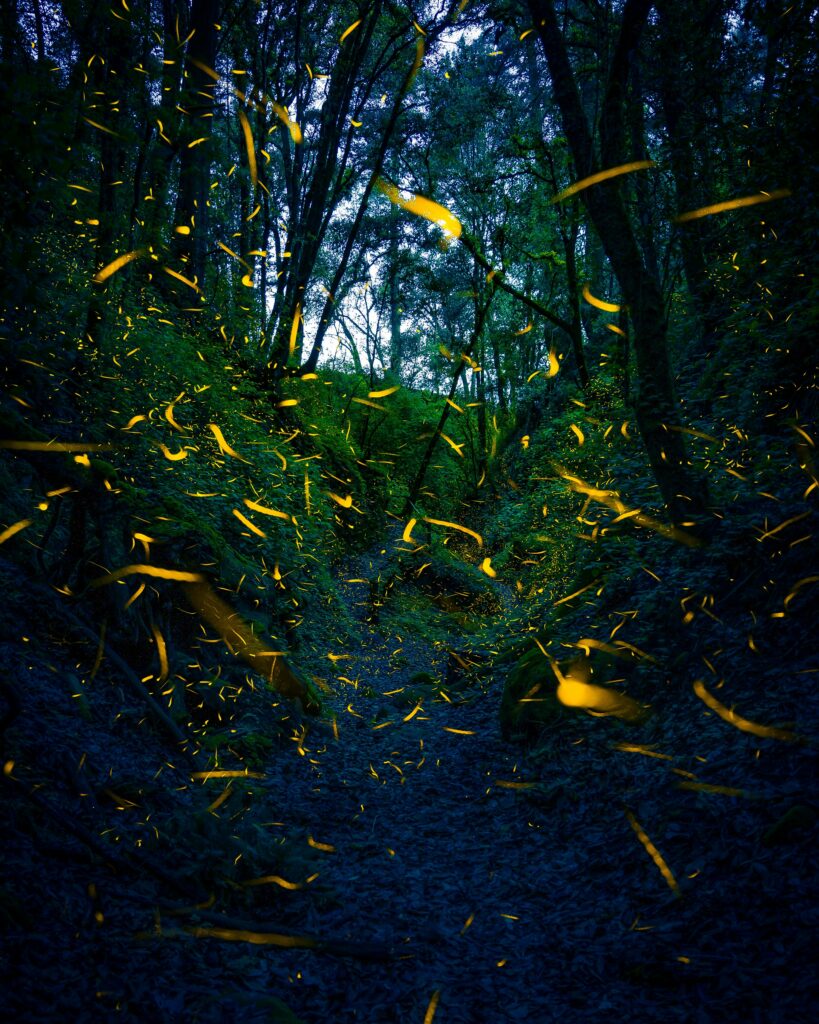
Photo by Famitsay Tamayo
The Smokies are one of only a handful of places in the world where synchronous fireflies (Photinus carolinus) perform their coordinated light display. Males flash in unison — six quick flashes, then a pause of about eight seconds, then six more, creating an otherworldly visual rhythm in the forest darkness. The display typically peaks in late May through mid-June, and viewing access is controlled through a lottery system managed by the National Park Service. Demand is intense, with tens of thousands of people apply for a few hundred spots. If you don’t win the lottery, some private properties and campgrounds near the park occasionally offer viewing opportunities, but the in-park experience at Elkmont is the gold standard.
The timing shifts slightly year to year based on temperature and soil moisture, so check the NPS website for updated dates if you’re planning around it.
Eastern Box Turtles and River Otters
Eastern box turtles are a common trailside encounter, especially after summer rains. Their orange-and-black shells are distinctive, and they move slowly enough that kids get a great look without anyone needing to chase anything. Just observe from a respectful distance and never pick one up, as handling them stresses them and can cause them to drop eggs.
River otters are one of the park’s quieter conservation victories. They were reintroduced to the Smokies in the late 1980s and early 1990s after being wiped out by trapping and pollution. Today, they’ve re-established themselves in several park waterways, including Abrams Creek and Little River. Spotting one requires patience and a bit of luck; they’re fast, sleek, and tend to surface briefly before diving again. But if you’re sitting quietly by a stream and see a whiskered face pop up, you’ll know.
A general reminder: do not handle or disturb any wildlife in the park, including reptiles, amphibians, and insects. Federal law prohibits harassing, feeding, or collecting any animal within park boundaries. The fine isn’t trivial, either.
Tips for Spotting Wildlife Without Disturbing It
Seeing smoky mountain wildlife isn’t just about being in the right place — it’s about behaving in the right way once you’re there. Animals respond to noise, movement, and human presence, and the visitors who see the most are almost always the ones who are quietest and most patient.
Timing Is Everything
Early morning (6:00–9:00 a.m.) and the hour before dusk are your best windows. Most mammals are crepuscular, meaning they’re most active in low light. The midday heat of a Tennessee summer drives deer, bears, and turkeys into shade and cover. If you’re heading to Cades Cove, the loop road opens at sunrise. Being there when the gate lifts puts you ahead of 90% of visitors and dramatically increases your chances of sighting bears, deer, and turkeys in the meadows.
Move Slowly and Quietly
This sounds obvious, but it’s worth stating: turn off your phone sounds, speak softly, and resist the urge to crash through underbrush. The forest is full of animals that freeze or flee at the first sign of a heavy footfall. Walk steadily but slowly. Stop often. Scan the edges of clearings, not just the trail in front of you. Wildlife tends to move along transition zones (where forest meets meadow, where stream meets bank) not in the middle of open spaces.
Bring Binoculars
A decent pair of binoculars costs $30–$50 and transforms your wildlife viewing. They let you observe a bear foraging from 100 yards without needing to creep closer. They turn a dark blob in a distant meadow into a bull elk with velvet antlers. They also keep you safe; the 50-yard rule isn’t a suggestion, and binoculars are the tool that makes compliance effortless.
Stay on Designated Trails
Off-trail travel damages fragile habitat, disturbs nesting wildlife, and puts you at risk of encounters you’re not prepared for. The park’s 800+ miles of trails pass through every habitat type the Smokies offer. You don’t need to bushwhack to see wildlife, you need to pick the right trail and be on it at the right time.
One more thing: if you see a crowd gathered around a bear or elk, don’t add to it. Large groups stress animals and often push them into defensive behavior. Observe from the periphery if you can, or move on and let the animal have its space. There will be other sightings.
See the Smokies From a New Angle This Summer
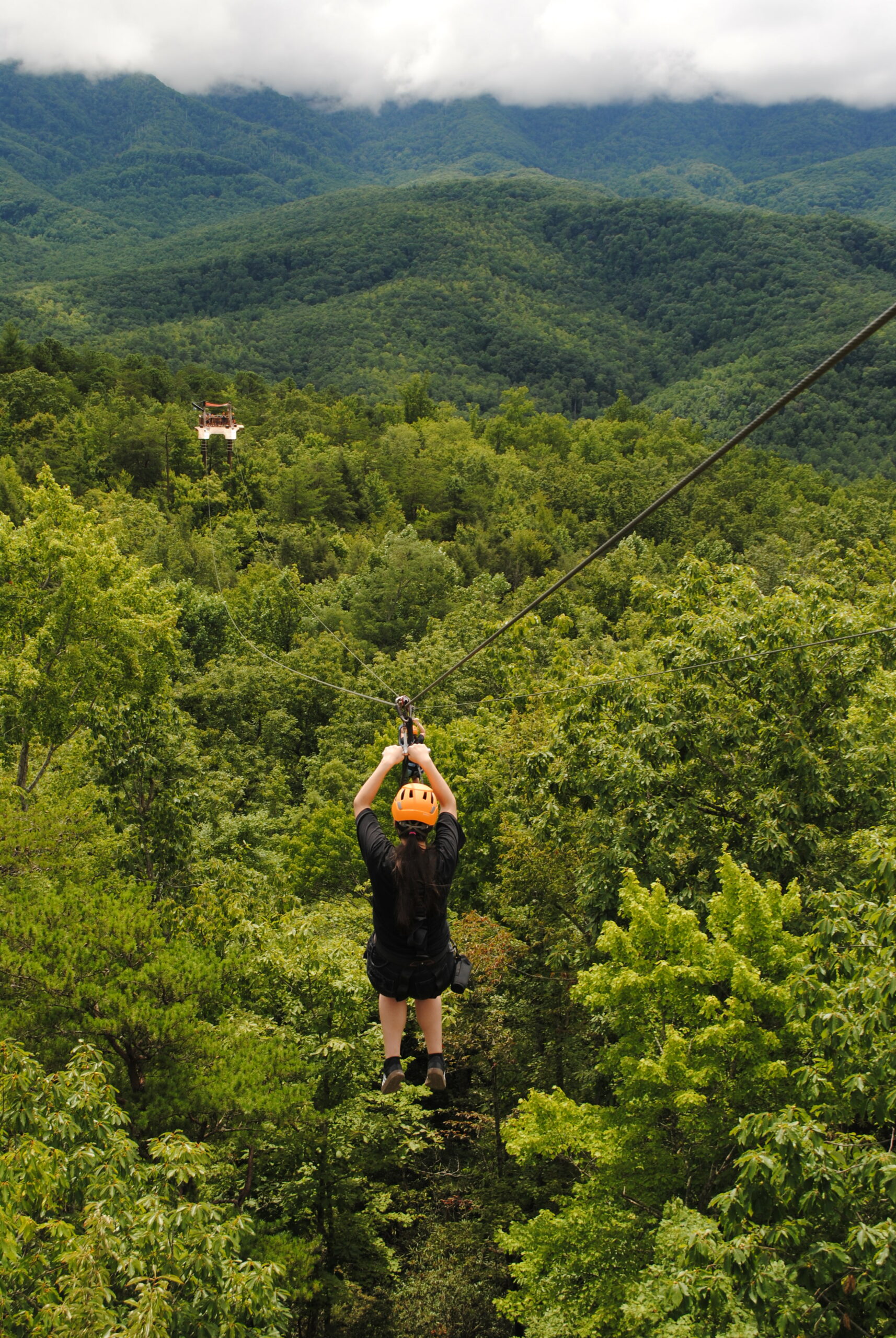
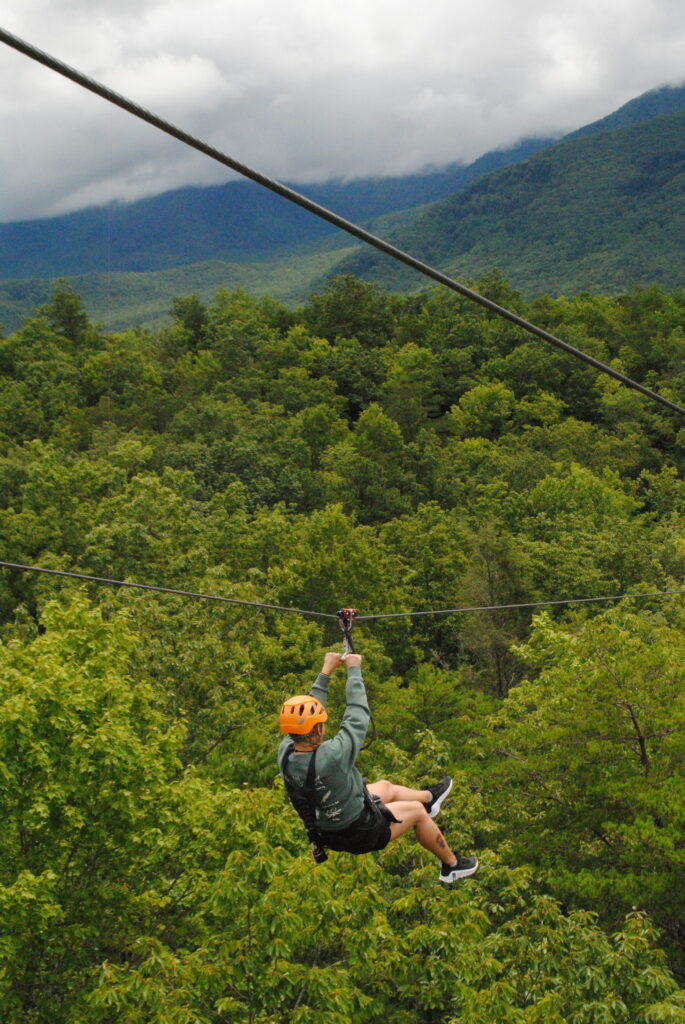
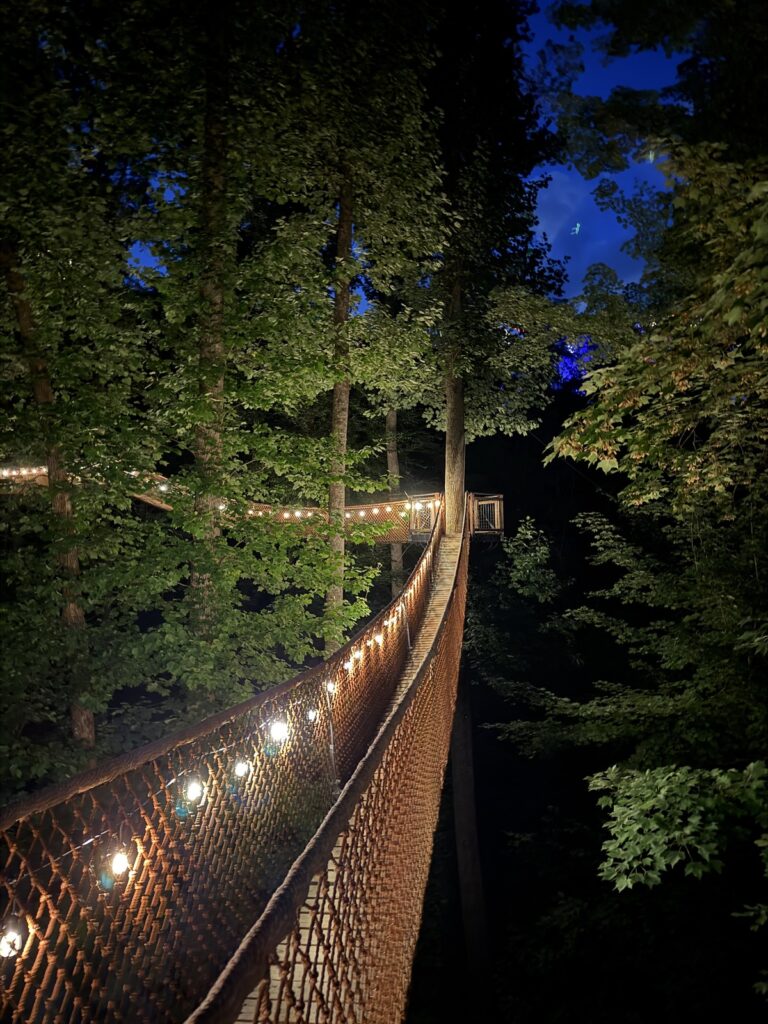
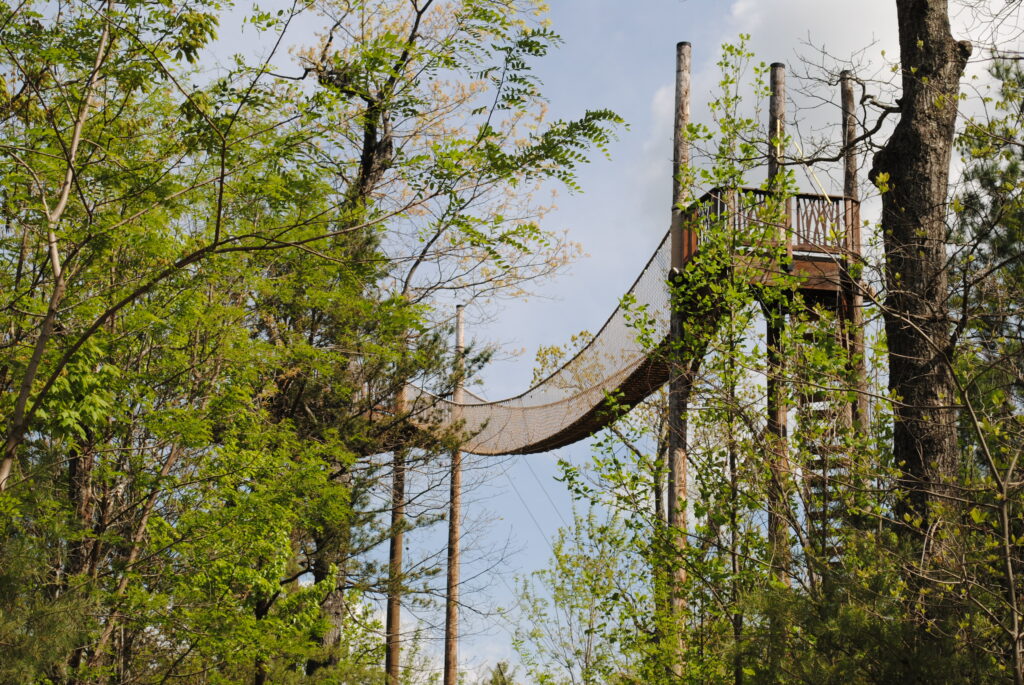
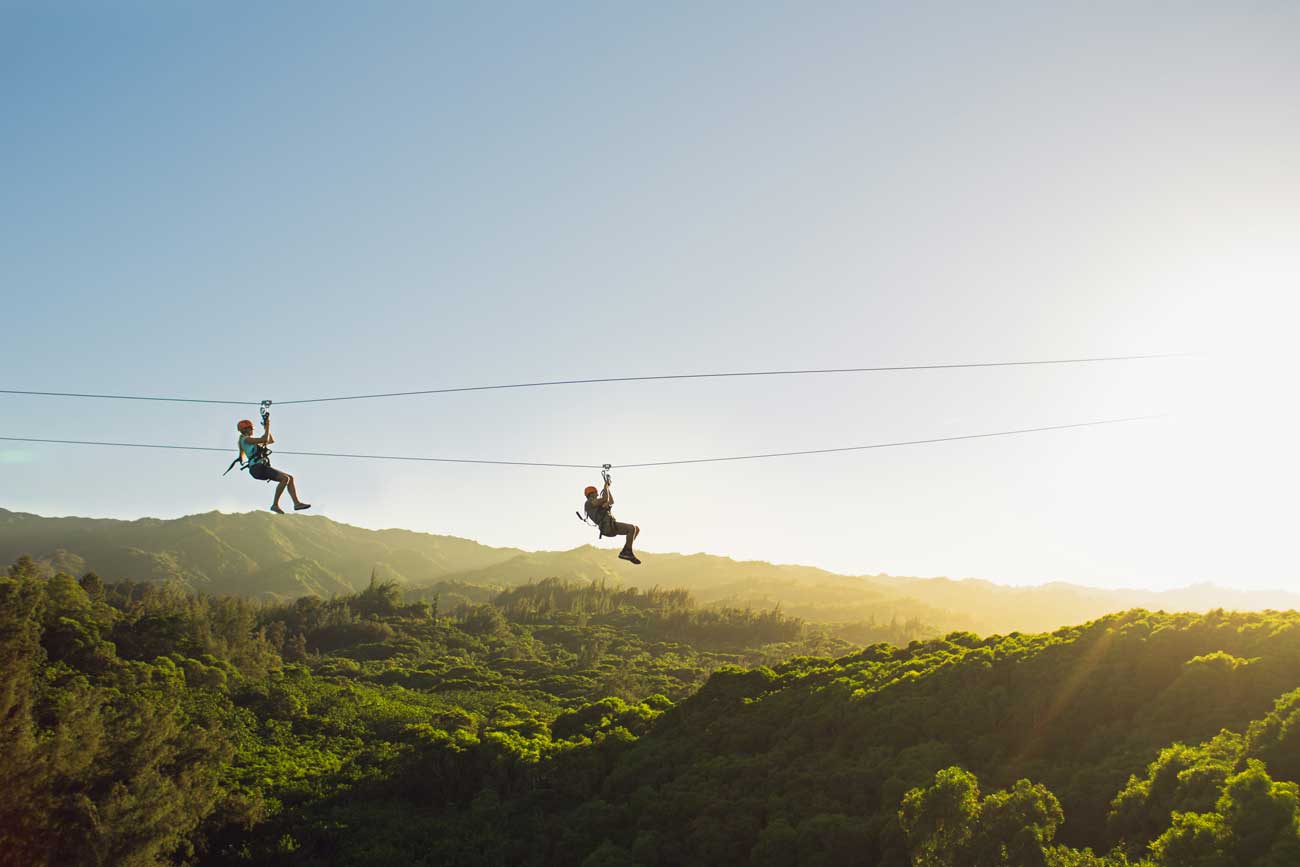
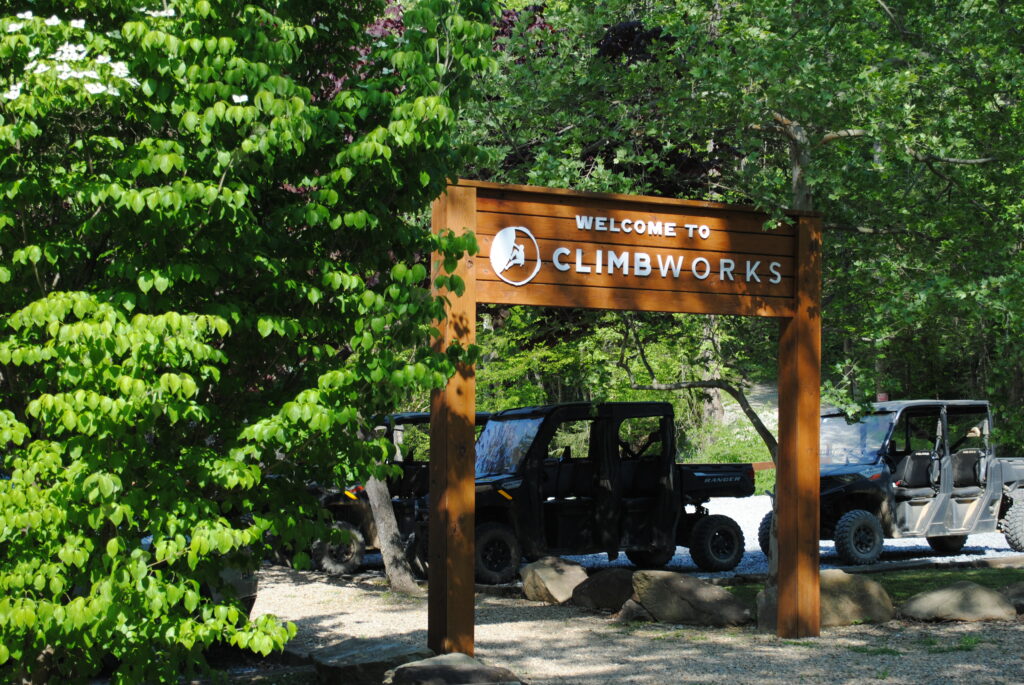
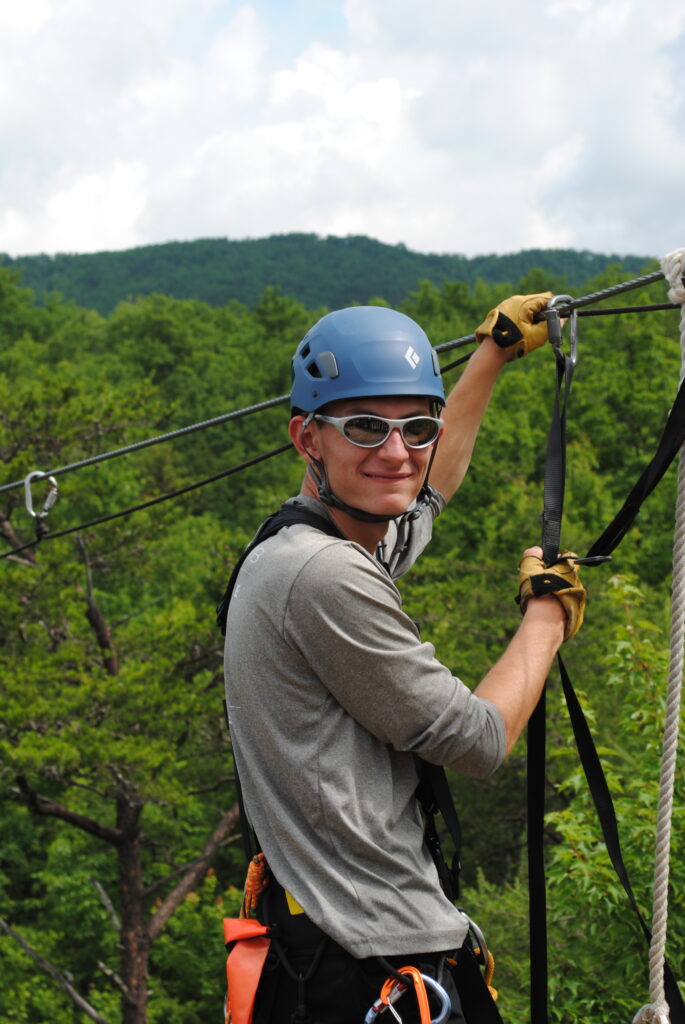
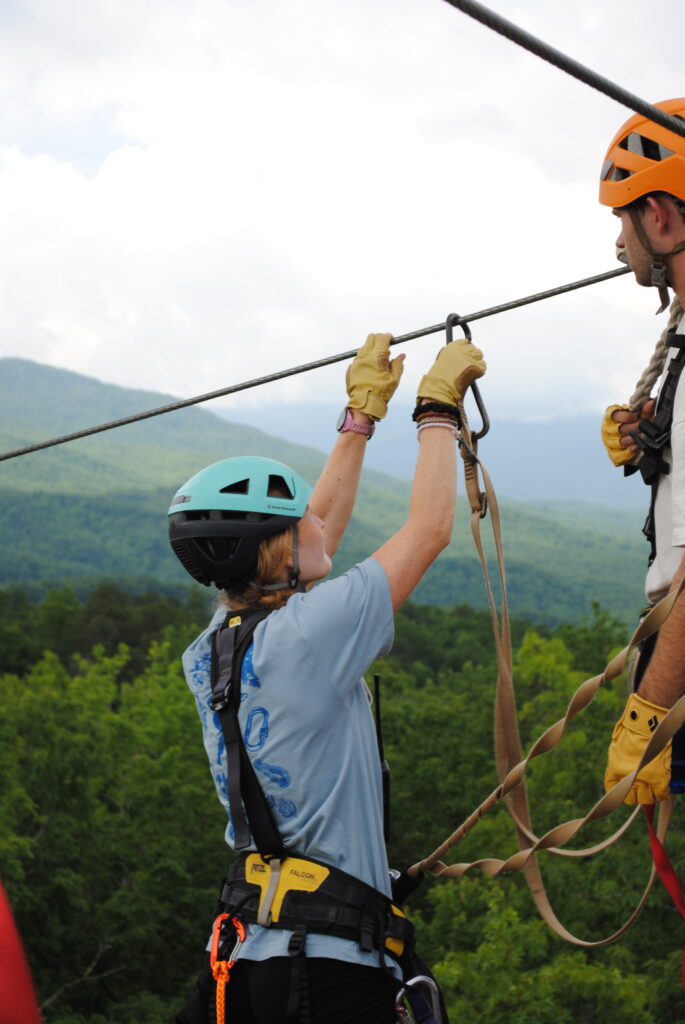
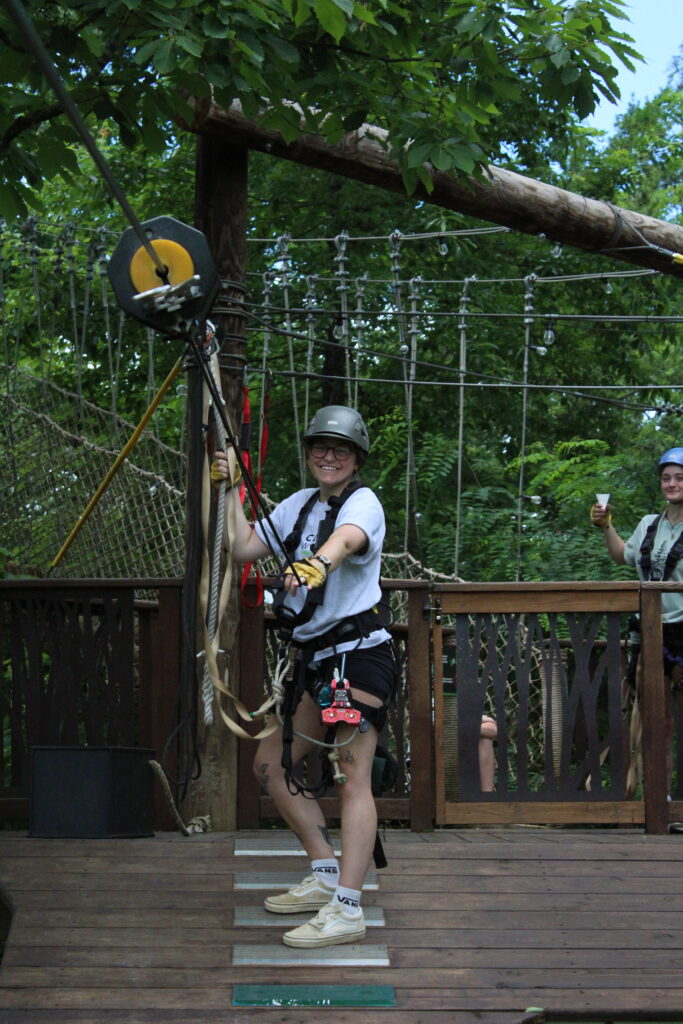
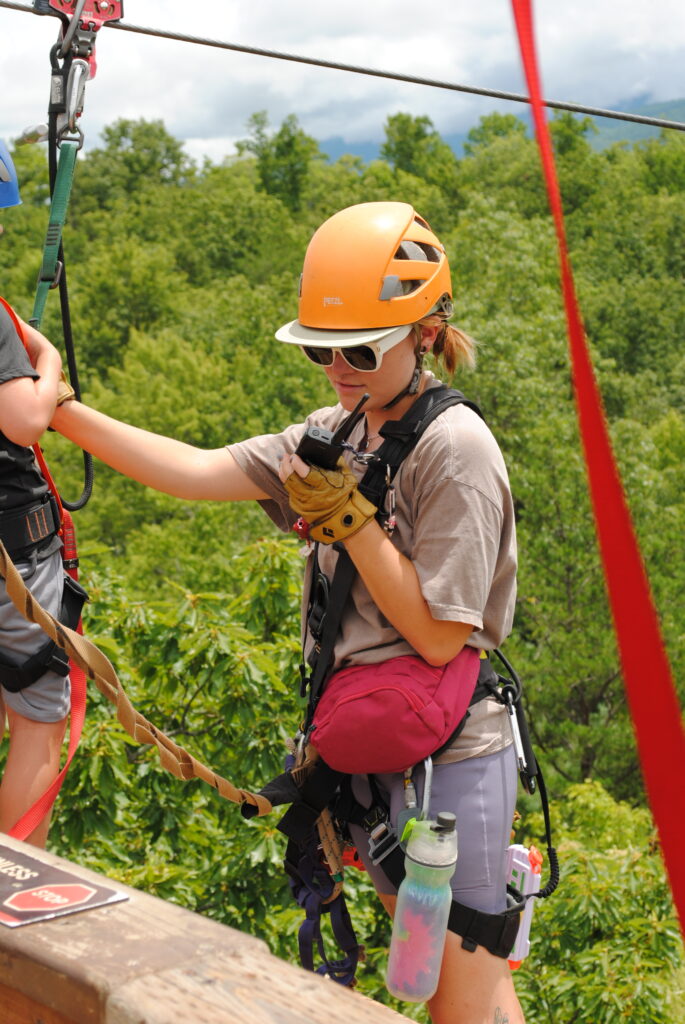
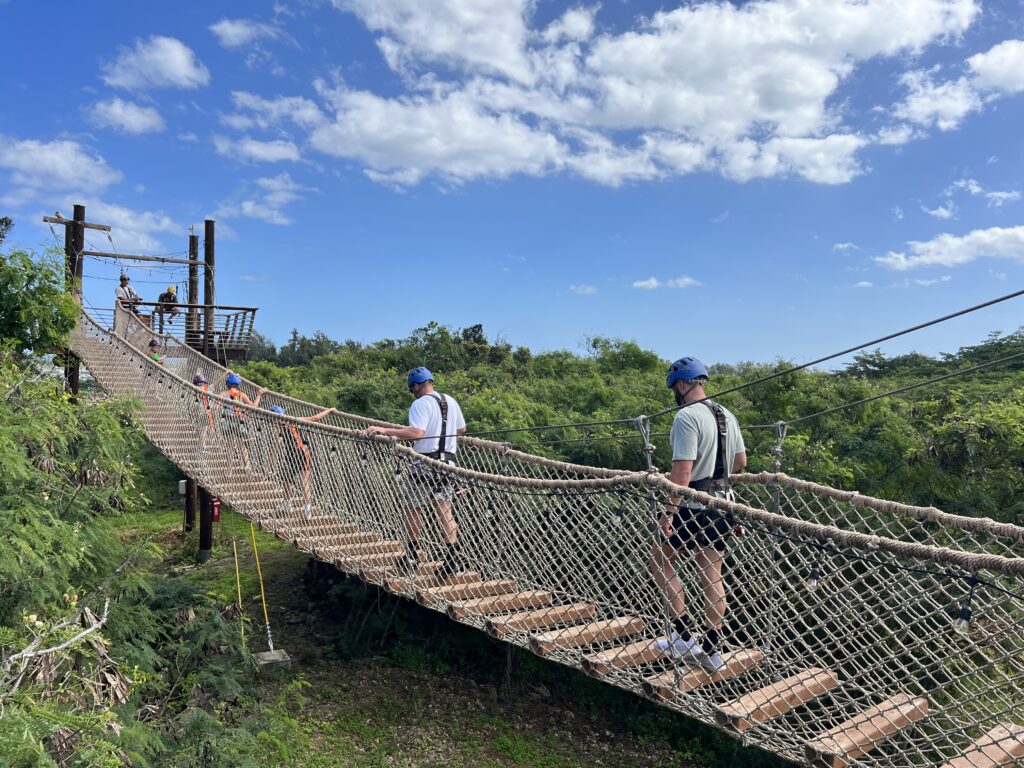
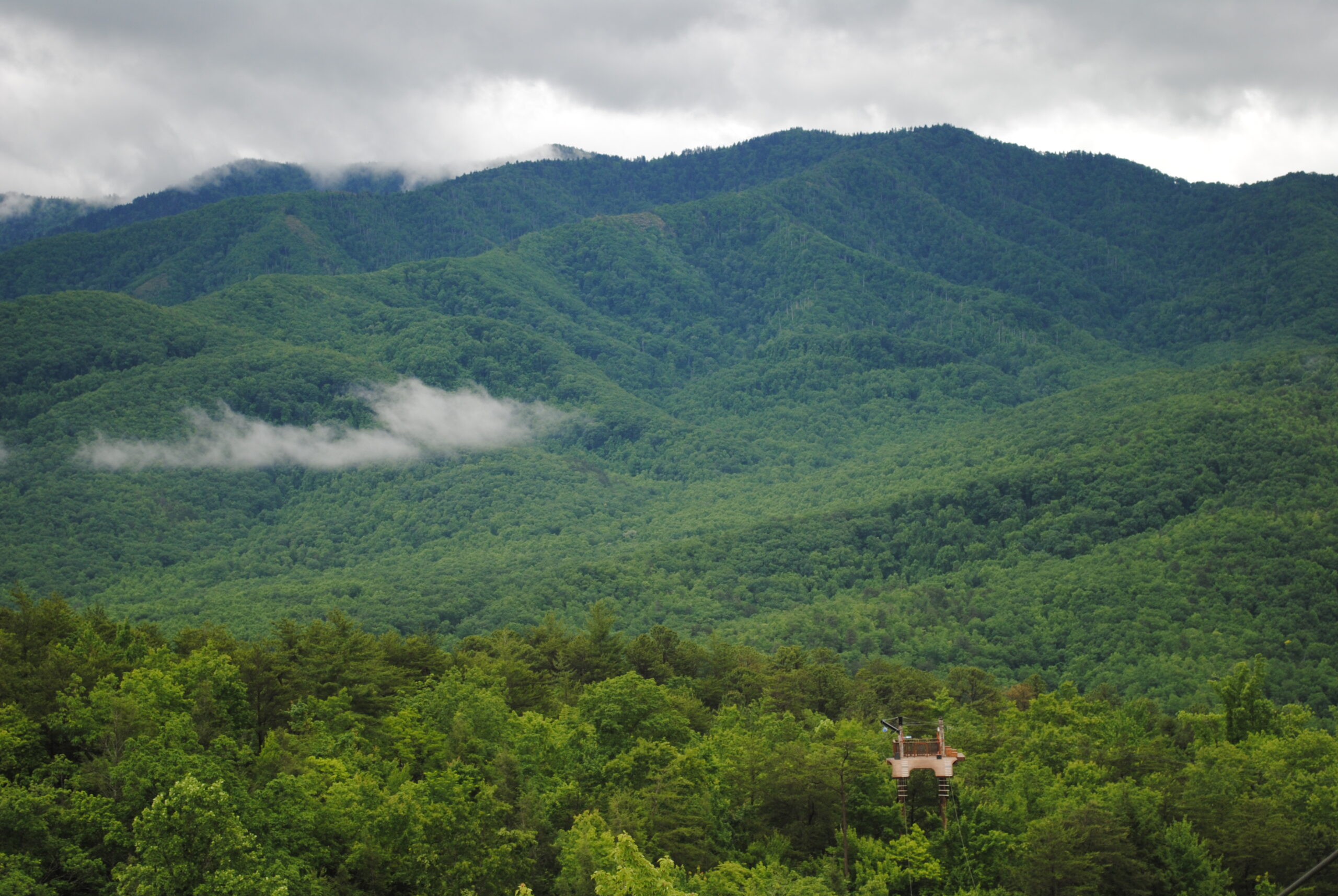
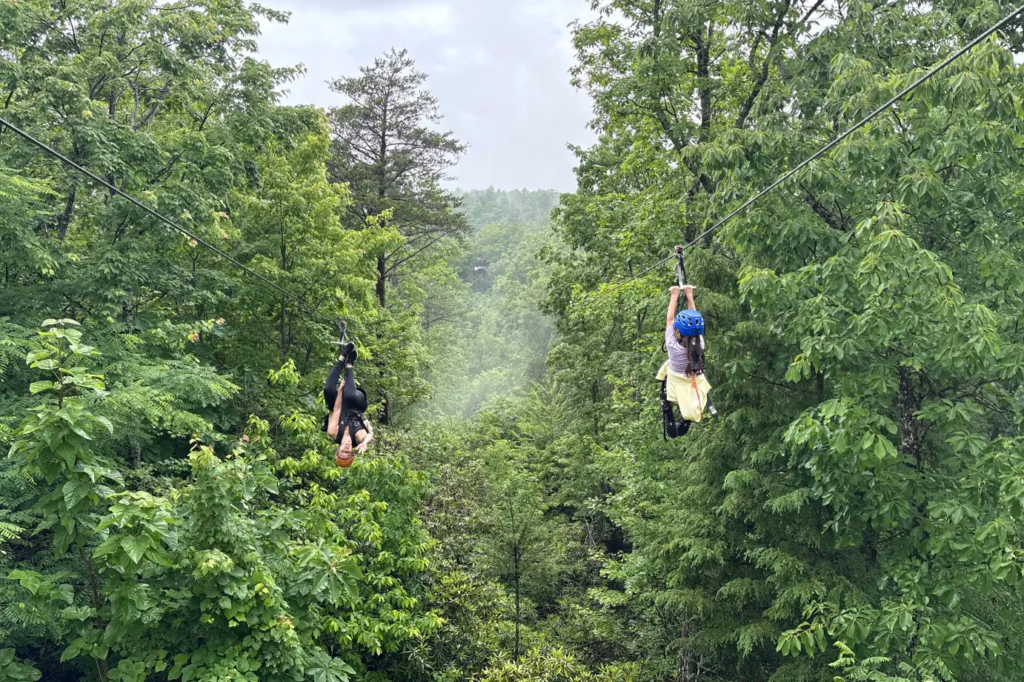
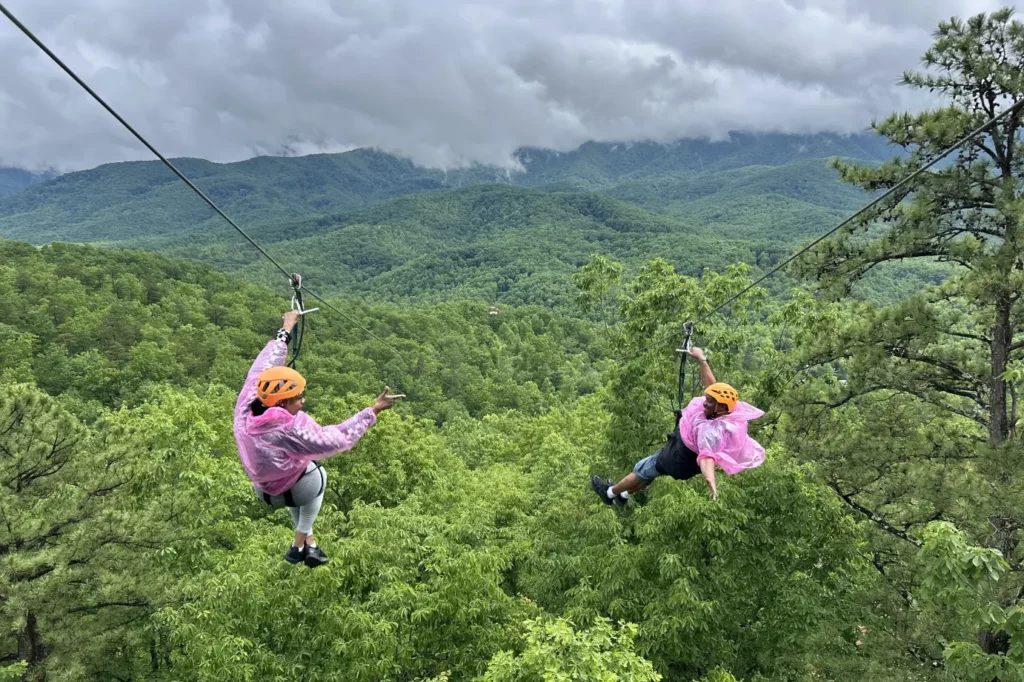
CLIMB Works sits at 155 Branam Hollow Rd in Gatlinburg, directly across the street from Great Smoky Mountains National Park. Our Mountaintop Zipline Tour takes guests 400+ vertical feet up the mountain via UTV before sending them through six dual ziplines, four aerial bridges, and a controlled rappel. The whole experience runs about two hours and is perfect for zipliners of all ages and experience levels.
What surprises people is how much wildlife they encounter along the way. Deer graze near the UTV trail on most mornings. Wild turkeys scatter through the underbrush as the vehicle climbs. Hawks and vultures circle at zipline height, and our guides are quick to point them out between lines. It’s not a wildlife tour, but a zipline tour that happens to pass through prime wildlife habitat because of where we’re located and how high we go.
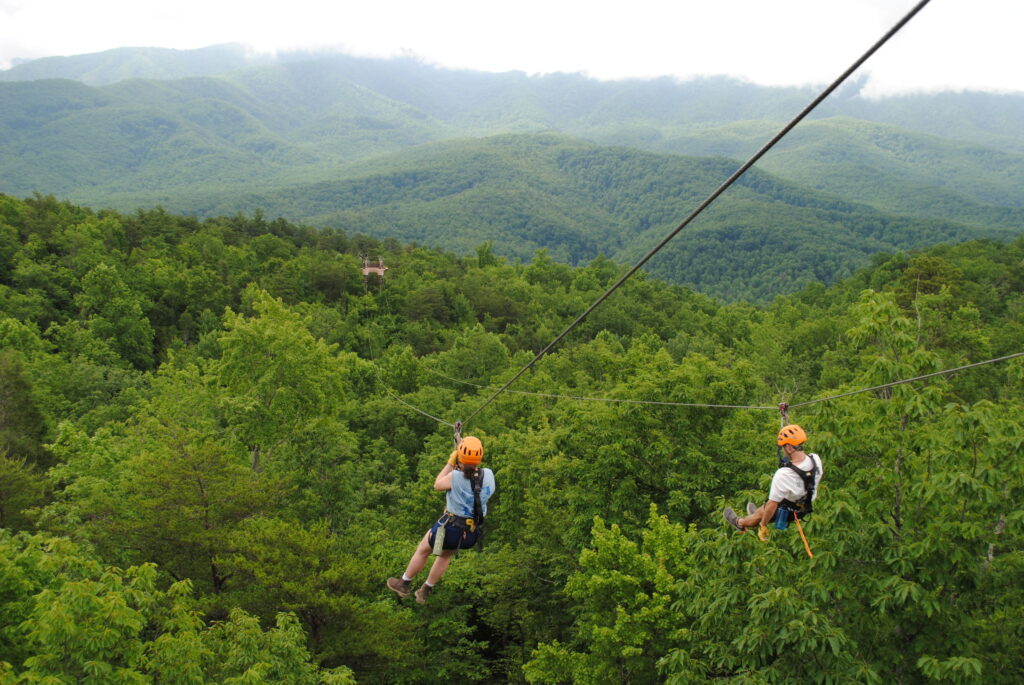
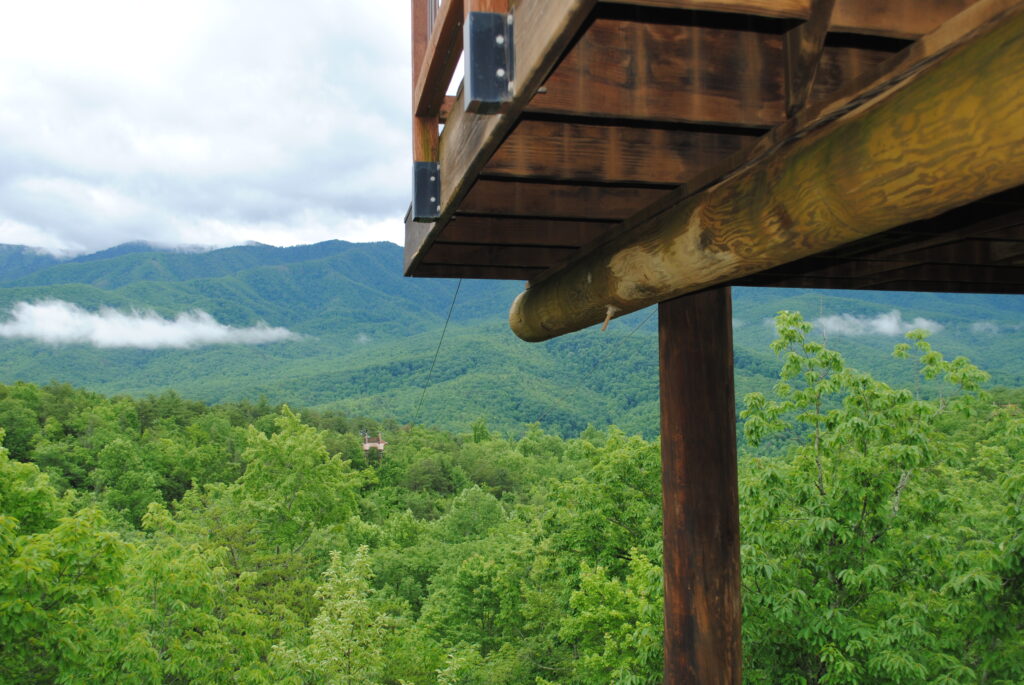
One thing we hear a lot from guests: the combination of height and relative quiet (you’re above the road noise, above the tourist traffic) makes the mountain feel alive in a way that’s hard to access otherwise. You’re not watching the forest from outside it, but moving through it, 100 feet up, with nothing between you and the canopy. Sometimes a red-tailed hawk drifts past at eye level, and for a few seconds the whole world gets very quiet and very real.
That’s the Smokies at their best — not a thing you observe, but a place you’re part of, even if it’s just for an afternoon. Book a zipline tour today to experience the Smoky Mountains like never before.
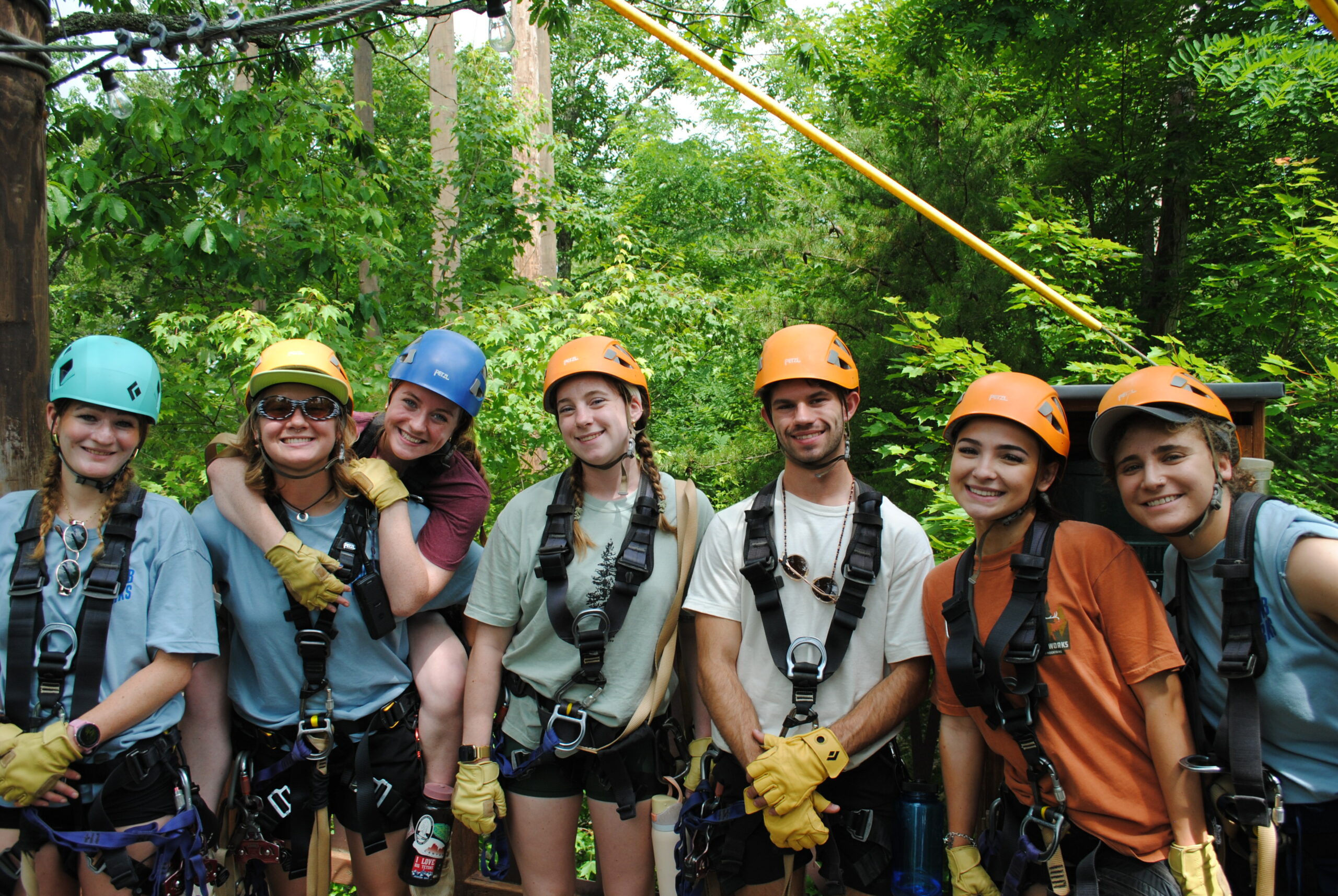




 Requirements to know: Kids must be at least 5 years old and 42 inches tall. Maximum weight is 270 pounds (250 if under 5’10”). Children under 70 pounds can ride tandem with a guide or sibling, which is a great option for younger kids who meet the age requirement but are on the smaller side. Ages 5–14 need an accompanying adult on the tour; 15 and up can go independently.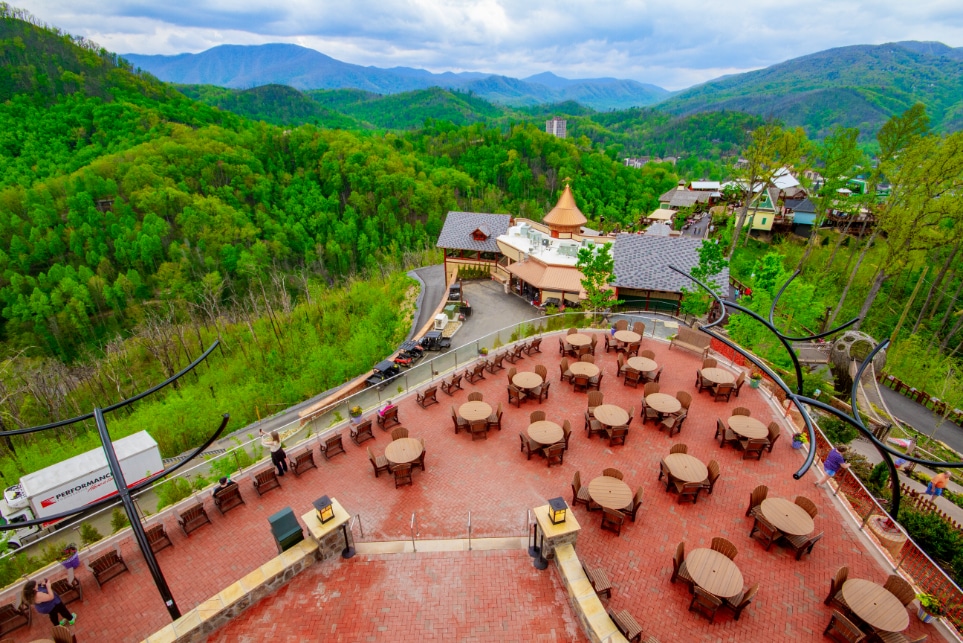


 Combo potential:
 A few practical notes that’ll save you frustration when the weather turns: