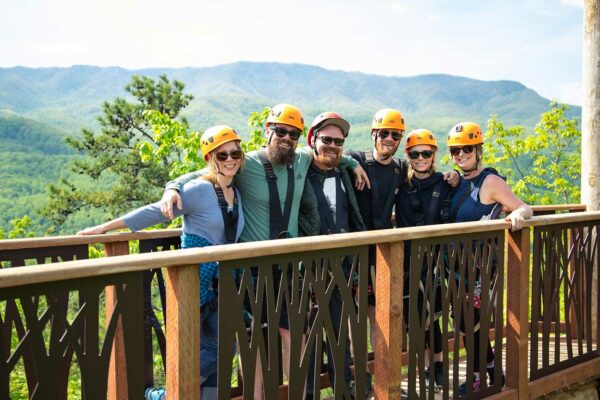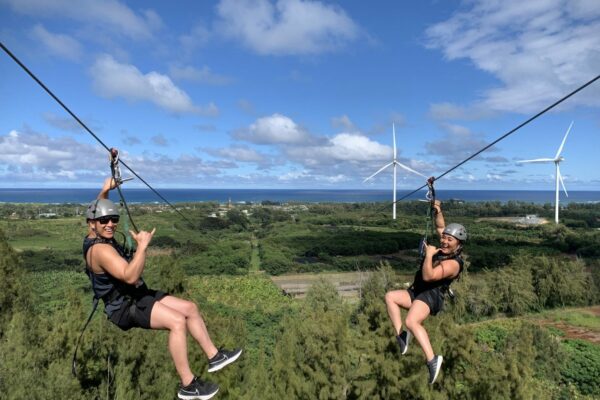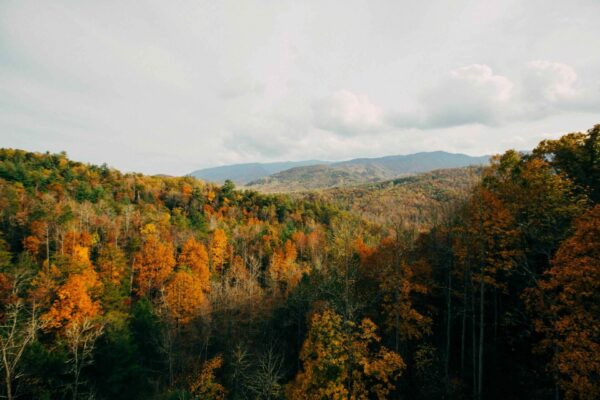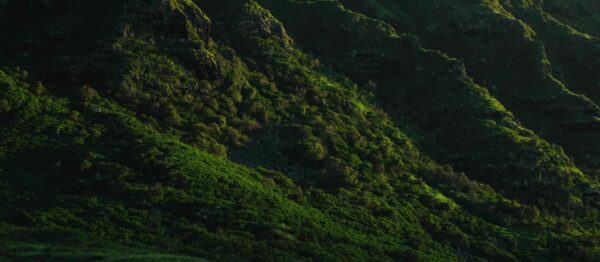


The Great Smoky Mountains see more visitors than any other national park in the country, with over 13 million a year. That means every business operating near the park has a choice: treat the landscape as a backdrop for ticket sales, or treat it as something worth protecting because it’s literally in your backyard. At CLIMB Works, we don’t have to think about eco tourism in abstract terms. Our address is 155 Branam Hollow Rd, Gatlinburg, TN 37738, and we’re surrounded on three sides by national park land. The forest isn’t a marketing asset for us, it’s across the street. It’s the air our guests breathe on the Mountaintop Zipline Tour, the view from every platform, and the reason any of this works in the first place.
This guide breaks down what eco tourism actually means, why the Smokies demand it, how our operations are designed around it, and what you can do as a visitor to make your trip a little lighter on the land.
What Is Eco Tourism And Why Does It Matter in the Smokies?
Eco tourism is responsible travel to natural areas that conserves the environment, supports local communities, and prioritizes low-impact experiences over high-volume consumption. It’s not a trendy label, it’s a framework for making sure the places people love to visit still exist for the next generation.
Now, why does this matter here specifically? Great Smoky Mountains National Park is the most visited national park in the United States. That’s not a casual distinction. Yellowstone gets roughly 4.5 million visitors a year. The Smokies triple that. And unlike parks out west with vast, spread-out acreage, much of the Smokies’ visitor traffic funnels through a relatively compact set of roads, trailheads, and gateway towns, Gatlinburg being the primary one.

Photo by Denil Dominic
That concentrated traffic creates real tension. Adventure tourism and conservation aren’t natural enemies, but they’re not automatic allies either. Every ATV trail, every souvenir shop parking lot, every tour operation that doesn’t think about runoff, noise, waste, or habitat disruption makes the problem a little worse. Multiply that across hundreds of businesses in a single corridor, and you’ve got a situation where the thing that draws people here, the wildness, the old-growth forest, the elk, the salamanders, the quiet, gets eroded by the very act of showing up to enjoy it.
But here’s the thing: they can coexist. Sustainable tourism in the Smoky Mountains isn’t about telling people to stay home. It’s about designing experiences that bring people into nature without chewing up the landscape in the process. It means small groups instead of mass tourism. Shared transportation instead of individual vehicles crawling up mountain roads. Guided formats where trained staff manage the visitor footprint. And it means businesses choosing to build with the land rather than on top of it.
That’s the lens we operate through at CLIMB Works. Not because it sounds good on a website, but because we can literally see the national park boundary from our property. If we mess up, we don’t just lose a marketing angle. We lose the thing that makes this place worth being in.
CLIMB Works’ Location: A Neighbor to the National Park

The proximity we have to the National Park shapes every operational decision we make, from how we manage stormwater to how we route our UTV trails. When your neighbor is one of the most biodiverse temperate forests on Earth — home to over 19,000 documented species, including more tree varieties than all of northern Europe combined — you don’t get to be careless. The black bears, wild turkeys, and red-tailed hawks that guests spot from our zipline platforms don’t know where our property line ends and the park begins. The watersheds certainly don’t.
Being open year-round means our team doesn’t just experience the mountain during peak tourist season. Our guides are out there in January ice, April wildflower blooms, August humidity, and October leaf-turn. They watch the same ridgeline change across twelve months. They know which platforms get the first morning frost. They know when the tulip poplars go gold before the oaks even start to think about turning. That kind of daily, seasonal familiarity builds something you can’t get from a sustainability consultant’s report. When a staff member notices unusual erosion on a trail section or a shift in where water pools after a heavy rain, they flag it because they’ve been watching that spot for years.
This isn’t theoretical environmental stewardship. It’s the kind of ground-level awareness that comes from working on a mountain, in a forest, next to a national park, 365 days a year. The geography doesn’t let us be anything other than careful.
How the Mountaintop Zipline Tour Is Designed With the Land in Mind
Our Mountaintop Zipline Tour includes 11 adventures in a single guided experience: dual side-by-side ziplines, three aerial bridges, a controlled rappel, and a scenic UTV ride that gains over 400 vertical feet. It runs about two hours, and almost every design choice behind it connects back to minimizing our footprint while maximizing what guests get to see and feel.
Shared Transportation That Reduces Individual Impact
The UTV ride to the upper platforms isn’t just fun, it’s a deliberate logistical choice. Instead of guests driving personal vehicles up a narrow mountain road (more exhaust, more road wear, more parking infrastructure needed at the top), a single shared vehicle carries the group along a maintained route. One trip up, one trip down, controlled speed, controlled path. Compare that to a scenario where every family drives their own car to a mountaintop overlook: the difference in fuel consumption, road erosion, and habitat disturbance adds up fast, especially across thousands of tours a year.
The route itself was designed to follow existing terrain contours rather than cutting new switchbacks into the mountainside. That matters for soil stability and for the root systems of the hardwoods that hold the slope together. You might not notice it as a guest, but the path you’re riding was planned with the mountain’s drainage patterns and tree canopy in mind.

An Innovative Braking System That Reduces Wear and Waste
Here’s a detail most people don’t think about: traditional zipline setups often require hand braking, which means more physical intervention, more friction on cables, more frequent cable replacement, and more wear on gloves and gear that eventually end up as waste. Our system doesn’t require hand braking for guests at all. The innovative braking technology handles deceleration automatically, which extends the life of our cables, reduces the volume of consumable gear, and (as a bonus), makes the experience accessible to people who might not have the grip strength or confidence for manual braking.
Less equipment turnover means less material heading to a landfill. It’s a small thing that scales up when you’re running tours six days a week, year-round.
Small Groups and Guided Format
We run small-group guided tours rather than high-volume, self-directed experiences. That means a trained guide is with your group the entire time, managing transitions, hooking up all safety equipment, and keeping the group on designated paths and platforms. This concentrated, supervised format means we’re not spreading visitor impact across a wide area. Guests don’t wander off-trail. They don’t leave gear behind on platforms. They don’t accidentally trample sensitive vegetation because they missed a sign.
Our expert staff handles every equipment hookup and transfer, which means there’s no fumbling with gear, no dropped hardware on the forest floor, and no need for the kind of sprawling instructional infrastructure (massive signage, paved walkways between every station) that a self-guided operation would require.
Rain-or-Shine Operations Cut Waste From Cancellations
CLIMB Works operates rain or shine. We only pause for lightning or sustained winds over 35 mph — conditions our staff monitors in real time from the mountain, not from a weather app. This isn’t just a convenience for guests; it’s an environmental consideration. When tours cancel frequently due to light rain, you get a cascade of waste: rescheduled trips mean extra driving, idling vehicles, duplicated logistics, and the frustration-driven tendency to fill the gap with some other, potentially less sustainable activity. By running through normal weather, we keep the schedule tight and the waste low.
If a weather closure does happen, guests get a reschedule or full refund — no arguments, no fine print. You can read the full booking and cancellation policy for details.
Visiting Responsibly: What Guests Can Do
Eco tourism isn’t just about what operators do, it’s also about the choices visitors make. Here’s how you can keep your Smokies trip as low-impact as possible, starting with your CLIMB Works tour.
Pack Light and Use the Free Lockers
No backpacks are allowed on the tour (except for essential medications), and we provide free lockers for keys and small items. This isn’t just a safety rule, it’s a leave-no-trace practice. Fewer personal items on the course means nothing gets dropped off a platform or blown into the canopy. It means guides aren’t searching for water bottles among the brush after a tour, keeping our activity as low-waste, low-litter as possible.
Book Ahead to Reduce Operational Waste
This one’s practical and environmental: booking at least five days ahead during peak season (especially October) isn’t just smart for availability, it helps us manage our tour capacity efficiently. Last-minute no-shows and cancellations create waste in the form of unused capacity, staff and vehicle time that can’t be recovered, and the downstream effect of guests scrambling to rebook at less-than-ideal times. When our tours run at planned capacity, everything operates more efficiently, meaning less idling, less redundancy, less waste across the board.
You can book online 24/7 or call (865) 325-8116. Our cancellation policy is straightforward: 48+ hours out gets you a full refund or reschedule. Within 48 hours, it’s final.
How to Plan Your Eco-Friendly Smokies Trip with CLIMB Works
Putting together a low-impact Smokies itinerary doesn’t require a spreadsheet. A few practical decisions go a long way.
Arrive 40 minutes early for your tour. This is required — late arrivals forfeit the tour with no refund — but it’s also good eco practice. When guests arrive on time, we avoid idling vehicles, rushed logistics, and the cascade of small inefficiencies that come from running behind. You’ll check in, get your gear, use the restrooms (there are none on the tour itself), and stash your stuff in a free locker. It’s a smooth, low-stress start.
Bring the whole family. The Mountaintop Zipline Tour welcomes ages 5 and up, and kids under 70 lbs can ride tandem with a guide or sibling. That means one experience, one group, one trip — rather than splitting up and doubling your logistics. Kids ages 5–14 need an adult on the tour; ages 15+ can go independently. There are height requirements (42 inches minimum, 6’8″ max) and weight limits (270 lbs, or 250 lbs if under 5’10”), so check those when you book.
Combine with rafting for a full day. Our Smoky Mountain Outdoors combo packages pair ziplining with whitewater rafting — two eco-friendly activities, one day, minimal driving. It’s genuinely the best way to fill a full adventure day without adding to Gatlinburg’s traffic congestion or expanding your environmental footprint across multiple locations.
Stay in the corridor. If you’re lodging in Gatlinburg or the surrounding area, try to cluster your activities geographically. CLIMB Works, the park, Laurel Falls, downtown Gatlinburg — all within a short drive of each other. You don’t need to crisscross three counties to have a great trip. And every mile you don’t drive is a little less exhaust drifting into the hollows.

Making Eco Tourism Real, Not Just Aspirational
The phrase “eco tourism” gets thrown around a lot, sometimes by businesses that slap a green label on the same old operation. We’d rather let the details speak: a location bordered on three sides by the national park, a tour designed to move with the mountain instead of reshaping it, a braking system that extends equipment life, a partnership network that keeps visitors exploring deeply instead of driving endlessly, and a team that’s been watching this particular stretch of the Smokies through every season for years.
If you’re planning a Smokies trip and want it to feel good in more ways than one, our Mountaintop Zipline Tour is a solid place to start – not because we’re telling you it is, but because you’ll be 400 feet up a mountain, looking out at one of the most biodiverse forests in the world, and knowing the experience was built with conservation and protection in mind.


Read through our Google reviews and one pattern jumps out immediately: people aren’t just talking about the views. They’re talking about guides named Slick, Beau, CC, Sylvi — real people who made their trip.